Episodios

  • Building Lovable With Anton Osika: The Power Of Simplicity, AI As A Technical Co-Founder, And Why 'Vibe Coding' Needs A New Name
    Mar 10 2026
    There’s a moment every builder remembers. You type a few lines of code.The computer responds.And suddenly you realize: I can build things. For decades, that moment was reserved for a small group of people who knew how to code. Turning an idea into working software required technical expertise, time, and often a full engineering team. AI is changing that equation. In this episode of Building One, host Tomer Cohen speaks with Anton Osika, co-founder and CEO of Lovable — a company building tools designed to dramatically reduce the friction between having an idea and turning it into working software. Lovable allows people to describe what they want to build and generate functional applications far faster than before. But Anton’s ambition goes beyond helping developers move faster. His vision is to expand who gets to build in the first place. From founders launching companies without technical co-founders to teams inside enterprises building their own internal tools, Anton believes AI is transforming software from a specialized craft into a much more accessible economic tool. Tomer and Anton discuss: Why the next wave of software creation is about enabling the 99% who don’t code The philosophy behind Lovable — and why simplicity is often the hardest product decision to defend The real tradeoffs behind AI-driven development, especially the gap between prototype and production Why Anton believes the most underrated moat in AI is trust and brand love How AI tools could unlock an entirely new generation of founders and builders This conversation explores what happens when the barriers to building start to fall — and what it means for the future of entrepreneurship and product creation. Because when building becomes easier, something bigger happens: More builders.
    Más Menos
    30 m
  • Building Heidi With Thomas Kelly: AI As A Care Partner, A Surgeon's Lessons For Building, And The Future Of Healthcare
    Feb 17 2026
    What if the biggest problem in healthcare isn’t diagnosis — it’s capacity? On this episode of Building One, Tomer Cohen sits down with Dr. Thomas Kelly, co-founder and CEO of Heidi, to unpack what it actually takes to build AI for one of the most complex, regulated, and human industries in the world. Before starting Heidi, Tom was a vascular surgeon. He saw firsthand how some of the most highly trained people on the planet were spending their days on low-value administrative work. Heidi began by listening to real patient visits and drafting clinical notes. Today, it’s expanding into the vast — and invisible — work around care: follow-ups, calls, scheduling, and coordination. In this conversation, we explore: What “doubling capacity” in healthcare really means Why personalization must be nearly perfect — measured almost like a clinical SLA What it takes to build AI that doctors actually trust How GPT-4 didn’t kill Heidi’s moat — it forced a radical pivot And how Heidi rewrote the healthcare go-to-market playbook by winning clinicians one by one Everyone talks about AI’s potential. This episode is about delivering it — in the real world, where trust is fragile, stakes are high, and a 5% edit can break the magic.
    Más Menos
    30 m
  • Building Fender With Justin Norvell: Iconic Guitars, The Art Of Restraint, And Learning To Play Faster With AI
    Jan 27 2026
    Some products don’t just succeed — they shape culture. The Fender Telecaster and Stratocaster didn’t merely define new sounds; they became creative tools that generations of musicians built their identities around. Stewarding products with that kind of legacy requires a rare balance of respect for the past and clarity about the future. Few leaders understand that balance better than Justin Norvell, President of Americas at Fender. As the company continues to evolve, Justin helps guide one of the most influential names in music through changing expectations — where musicians want not just great instruments, but better ways to learn, create, and stay connected to their craft. In this episode of Building One, host Tomer Cohen sits down with Justin Norvell to explore how iconic products endure, how product thinking applies far beyond software, and why deeply understanding your users is the throughline of great product leadership. Tomer and Justin discuss: What makes products like the Telecaster and Stratocaster timeless — and what must never change How Fender thinks about expanding the musician experience without diluting its core Applying modern product principles inside a craft-driven, legacy brand Lessons from leading teams where heritage and innovation must coexist Why trust, community, and authenticity are essential to building products that last This conversation is for builders working inside established companies, leaders navigating transformation, and anyone interested in how enduring products are built — whether they live in code, hardware, or culture. Follow & learn more: Follow Tomer Cohen on LinkedIn and check out his newsletter, Building LinkedIn Follow Justin Norvell on LinkedIn
    Más Menos
    29 m
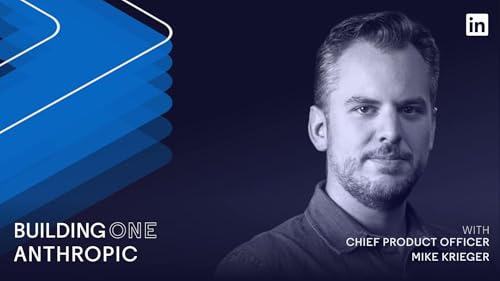
  • Building Anthropic with Mike Krieger: Product Playbooks In The Age Of AI, Why Memory Is Key, And Instagram Lessons
    Dec 9 2025
    Breakout products rarely hinge on a single moment of luck. They’re shaped by countless decisions — what to prioritize, what to cut, and how deeply you understand the people you’re building for. Few builders have navigated those decisions at the scale of Mike Krieger, co-founder of Instagram and now Chief Product Officer at Anthropic. Instagram reshaped how billions communicate visually. Today, Mike is helping redefine how we interact with technology again — this time through one of the world’s leading AI assistants. At first glance, building a global social network and building Claude might seem worlds apart. In practice, the parallels run deep. In this episode of Building One, host Tomer Cohen talks with Mike about scaling, knowing when to pivot, and why the rise of AI is transforming the craft of product-building. Tomer and Mike discuss: The inflection point that turned Instagram into a global phenomenon — and the crisis that sparked it Why Mike decided to shut down Artifact, and the lesson he believes every founder should know about when to stop vs. persevere The surprising similarities between building Instagram and building Claude How working at Anthropic changed his thinking about product design and user interfaces And so much more This conversation is for anyone building products, leading teams, or shaping AI-powered experiences — and for every builder who believes that great products come from clarity, intuition, and the willingness to evolve. Follow ⁠Tomer Cohen⁠ on LinkedIn and check out his newsletter, ⁠Building LinkedIn⁠. Follow Mike Krieger on Linkedin.
    Más Menos
    28 m
  • Building Figma with Yuhki Yamashita: Collaborative Design, AI Teammates, and Building for Builders
    Nov 18 2025
    When product teams talk about “a single source of truth,” they’re usually describing an aspiration — a kind of digital nirvana where everyone works from the same context. In engineering, that problem was solved years ago. In design, it took a fundamental mindset shift. Few people understand that shift better than Yuhki Yamashita, Chief Product Officer at Figma. When Figma launched in 2012, the idea of multiple people editing the same file, watching every keystroke in real time, felt radical. Today, Figma is used by more than 95% of the Fortune 500, powering collaboration across designers, engineers, and product teams worldwide. In this episode of Building One, host Tomer Cohen talks with Yuhki about what it takes to build products for builders and what he’s learned from his product roles at Microsoft, Google, and Uber. Tomer and Yuhki discuss: Why designing for product teams is uniquely powerful and uniquely challenging What Yuhki learned from Microsoft, Google, and Uber, and how each shaped his product philosophy How to design tools for non-designers without diluting power or precision The rise of “vibe coding” and its parallels in design Why Figma’s multiplayer model was a means, not an end How AI can evolve from a personal assistant into a true multiplayer teammate Why storytelling is one of the most underrated product skills This conversation is for anyone building products, leading teams, or shaping tools, and for every builder who believes clarity and collaboration are the real drivers of great work. Follow Yuhki Yamashita on LinkedIn. Follow Tomer Cohen on LinkedIn and check out his newsletter, Building LinkedIn.
    Más Menos
    29 m
  • Building Y Combinator with Garry Tan: What It Really Takes to Build a Successful Startup
    Jun 3 2025
    What do Airbnb, Stripe, and DoorDash have in common? They were built with support from renowned startup accelerator, Y Combinator. And Garry Tan knows exactly what made them work. In the season finale of Building One, Tomer Cohen sits down with Garry Tan, CEO of Y Combinator, to unpack what really makes a startup succeed, and why the startup journey is more about mindset, resilience, and ruthless honesty than having the “perfect” idea. Garry shares rare insights from his dual perspective: as a former founder who went through YC himself, and now as the leader of the world’s most iconic startup accelerator. He’s seen the full spectrum of startup journeys and in this candid conversation, he breaks down what sets the enduring ones apart. In this episode, Tomer and Garry cover: The difference between playing startup vs building one Why co-founders matter more than ideas, and how to find the right one How to avoid the startup “valley of despair” What YC looks for in early-stage founders and teams How to chase user truth instead of optics or false signals How to know when to persevere, when to pivot, and when to walk away Whether you're a first-time founder or a serial entrepreneur, this conversation is packed with startup wisdom you won’t hear anywhere else. Follow Garry Tan on LinkedIn. Follow Tomer Cohen on LinkedIn and check out his newsletter, Building LinkedIn.
    Más Menos
    54 m
  • Building IKEA with Fredrika Inger: Designing for Price, Experience & Real Life
    May 20 2025
    What if your product design didn’t start with form or function, but with price? That’s how IKEA has built one of the most beloved and iconic retail brands in the world. In this episode of Building One, Tomer Cohen sits down with Fredrika Inger, IKEA’s Chief Product and Commercial Officer, to explore how IKEA creates affordable, high-quality products at scale. With more than two decades at IKEA, Fredrika has seen the business from all sides: materials sourcing, supply chain logistics, store experience, and now the full product range. She reveals the behind-the-scenes process that powers IKEA’s approach to innovation, design, and customer experience. Fredrika shares how IKEA: Begins product design by setting a target price first, and reverse engineers from there Uses in-home research to understand how people really live and what problems they need solved Builds immersive retail experiences by showcasing full living solutions, not just furniture Leverages the five pillars of democratic design: function, form, quality, sustainability, and low price Continuously improves product assembly to simplify the customer experience and support circular design Balances global scale with hyper-local customer insights to stay relevant across 60+ countries This episode is a deep dive into product thinking at scale: how IKEA delivers design-driven, experience-rich, affordable solutions to millions, while staying relentlessly focused on real-life needs. Follow Fredrika Inger on LinkedIn. Follow Tomer Cohen on LinkedIn and check out his newsletter, Building LinkedIn.
    Más Menos
    44 m
  • Building AMD with Mark Papermaster: How Bold Bets and Breakthroughs Reshaped the Semiconductor Industry
    May 6 2025
    How do you revive a tech giant and reshape an entire industry? AMD Chief Technology Officer Mark Papermaster joins Tomer Cohen to share how making bold bets, exiting stagnant markets, and betting on modular chip design led to one of the most remarkable comebacks in tech. They also dig into the ways in which semiconductors are powering the AI era. Mark Papermaster is the longtime CTO of AMD, where he helped lead a dramatic product and innovation strategy that changed the company’s future. Prior to working at AMD, his career spans leadership roles at IBM, Apple (where he was recruited by Steve Jobs himself), and Cisco. Mark and Tomer discuss: AMD’s comeback and product reinvention The end of Moore’s Law and rise of modular chip design Chiplets: How AMD bet on bold architecture and won What Mark learned from IBM, Apple, and Steve Jobs Why big bets need big exit strategies Semiconductors and the AI revolution Follow Mark Papermaster on LinkedIn. Follow Tomer Cohen on LinkedIn and check out his newsletter, Building LinkedIn.
    Más Menos
    52 m