Episodios

  • 107: The Emotional Life of Organisations with Anton Obholzer
    May 28 2026

    Show Notes
    In this episode, Simon Western speaks with seasoned psychoanalyst and organisational consultant Dr. Anton Obholzer about the hidden emotional and relational dynamics shaping leadership, organisations and society. Anton is a hugely respected organisational consultant from the Tavistock tradition, and it is a delight to hear his wisdom and insights on this podcast.
    Moving beyond technical models of management and mental health, the conversation explores organisations as living systems embedded within wider social and political realities. Anton reflects on the Tavistock tradition, the influence of Eric Miller and the importance of understanding organisations not simply as structures of efficiency, but as emotional containers carrying anxiety, projection, creativity and possibility. Simon and Anton discuss leadership as a protective and generative force, creating the conditions for growth, talent and human flourishing.
    The dialogue explores the erosion of relational life in contemporary society, the dangers of organisations becoming spaces for unmanaged social anxiety, and the increasing dominance of technological and managerial rationality over human connection. They examine the importance of experiential learning, vulnerability, observation and creative practice in sustaining healthy organisations and societies.
    At the heart of the episode is a deeper question about how we live together in increasingly uncertain times. Rather than retreating into expertise, certainty or control, Anton calls for greater relational awareness, collective responsibility and societal imagination.

    Key Reflections

    • Organisations are emotional and societal systems, not simply technical machines
    • Leadership involves creating protective spaces where people and creativity can flourish
    • Psychoanalysis offers ways to understand the hidden dynamics shaping organisational life
    • Relational intelligence matters more than purely technical expertise
    • Organisations often absorb and enact wider societal anxieties and fractures
    • Creativity, art and dialogue are essential to organisational and societal health
    • Experiential learning creates deeper awareness than abstract theory alone
    • Technological advancement risks intensifying alienation and loss of human contact
    • Mental health cannot be separated from political, social and organisational conditions
    • Healthy societies require interdependence, vulnerability and collective responsibility

    Keywords
    Psychoanalysis, Leadership, Organisational Dynamics, Tavistock, Anton Obholzer, Simon Western, Eco-Leadership, Relational Intelligence, Systems Thinking, Emotional Containment, Group Relations, Society, Human Connection, Organisational Culture, Creativity, Vulnerability, Interdependence.

    Brief Bio
    Dr. Anton Obholzer is a psychiatrist, Fellow of the Royal College of Psychiatrists, and both a child and adult psychoanalyst, trained at the Tavistock Clinic and the Institute of Psychoanalysis in London. Alongside his clinical work, he trained as an organisational consultant under Eric Miller at the Tavistock Institute of Human Relations, helping pioneer the application of psychoanalytic thinking to organisations, leadership, and institutional life.
    Until 2002, he served as Chief Executive of the Tavistock & Portman Clinics in London and continues as Chairman of the Consulting to Institutions Workshop and Senior Consultant in the Tavistock Consultancy Service. He has designed and directed group relations and management conferences internationally, and lectures widely on organisational change, leadership, and resistance under conditions of stress and turbulence.
    A Visiting Professor at the Universities of Vienna, Graz, and Innsbruck, faculty member at INSEAD’s Advanced Management Programme, and teacher across Europe, Dr. Obholzer has spent decades exploring the unconscious dynamics that shape organisations - especially when systems are under pressure.
    He is also the co-editor of the influential book The Unconscious at Work, a seminal text that examines how unconscious anxieties and emotional dynamics operate within organisations and institutions. His writings and publications have profoundly shaped the fields of systems psychodynamics, organisational consultancy, and leadership studies.

    Más Menos
    30 m
  • 106: What happened to the working class?
    May 19 2026

    Show Notes
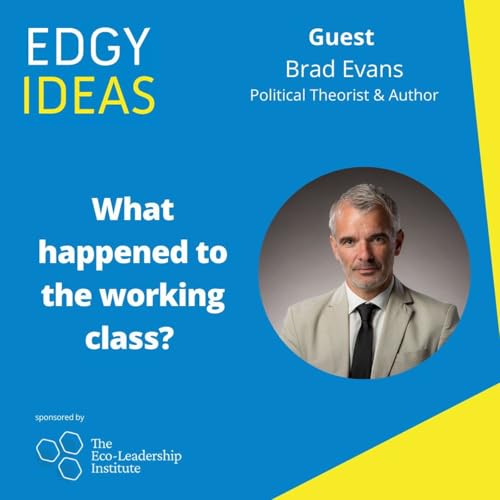
    In this episode, Simon Western speaks with political theorist and author Professor Brad Evans about the collapse of traditional working-class politics and the growing sense of abandonment across post-industrial communities. Drawing on Brad’s experiences growing up in the South Wales Valleys, the conversation explores how solidarity, class identity and community structures have been eroded by deindustrialisation, neoliberalism and the rise of precarious labour. They reflect on why many working-class communities no longer feel represented by progressive politics and why populist movements are gaining traction.
    Simon and Brad discuss the emotional and political consequences of precarity - from Brexit and nationalism to homelessness, resentment and the rise of the “precariat.” Rather than dismissing people drawn toward nationalist or populist politics, they ask what happens when communities lose dignity, voice and recognition. The conversation challenges simplistic binaries of left and right, arguing instead for deeper listening, political humility, and a renewed understanding of interdependence.
    The episode also turns toward possibility. Simon introduces ideas from his work on “precarious interdependence,” asking how we might learn to live creatively within uncertainty rather than retreat into fear, certainty, and division. They discuss the role of art, culture, dialogue, and political imagination in creating more humane futures - futures grounded not in nostalgia for the past, but in new forms of solidarity and shared becoming.

    Key Reflections

    • Working-class communities have not simply lost jobs, but also the social bonds and identities that once gave meaning and solidarity.
    • Populist movements gain power when people feel politically abandoned, unseen and culturally dismissed.
    • Precarity can produce fear and division, but it can also open possibilities for new forms of creativity, mutuality and transformation.
    • Nationalism often emerges in spaces where class consciousness and collective identity have collapsed.
    • Real political dialogue begins when we stop demonising opponents and start listening to the conditions shaping their lives.
    • Art and culture are not luxuries; they are essential for reimagining society and creating empathetic futures.

    Keywords
    Precarity, Working Class, Nationalism, Populism, Brexit, South Wales, Political Violence, Class Identity, Labour Party,Identity Politics, Mutuality, Interdependence, Neoliberalism, Community, Deindustrialisation, Arts & Politics, Political Agency, Democracy, Social Change

    Brief Bio
    Brad Evans is a Professor of Political Violence & Aesthetics at the University of Bath, United Kingdom. He is the author of 20 books and edited volumes, along with over 150 academic and international media articles. Brad has written extensively on the state of international affairs, while making major theoretical contributions to the understanding of violence. He has previously held positions at the Universities of Bristol and Leeds, and has also taught at Columbia University in New York.
    Brad is widely known for bringing critical theory into public conversation through projects with The New York Times, Los Angeles Review of Books, and American Book Review. His recent work explores the politics of disappearance, bridging art, academia, and policy through exhibitions, public events, and global collaborations. He is also the founder of the internationally recognised Histories of Violence project, which connects critical research and public dialogue across more than 140 countries.
    A frequent speaker at institutions including Harvard, NYU, Columbia, UCLA, and the Guggenheim, Brad’s work moves between philosophy, politics, art, and lived experience. He is also the author of the acclaimed semi-biographical book How Black Was My Valley, reflecting on growing up in poverty in South Wales. His work and commentary have featured across major global media including the BBC, CNN, The New York Times, The Guardian, and Newsweek.

    Más Menos
    36 m
  • 105: The Liberal Order and the Fight for the Soul
    Mar 23 2026

    Show Notes
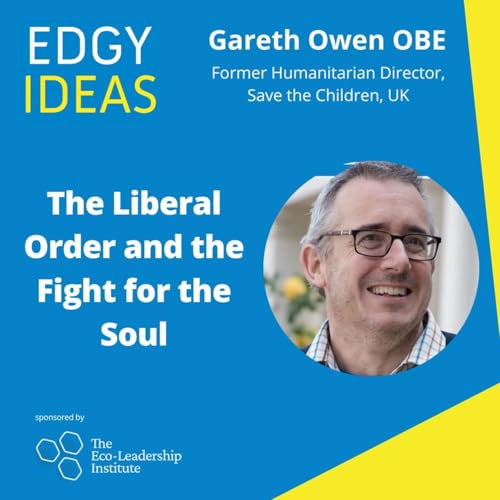
    In this episode of Edgy Ideas, Simon Western speaks with Gareth Owen OBE, former Humanitarian Director of Save the Children UK, about what it means to practice humanitarianism in a world where the global order is shifting rapidly. Drawing on more than three decades working in conflict zones - from Somalia and Angola to leadership roles shaping global humanitarian response - Gareth reflects on how humanitarian work has evolved. He describes how the aid sector grew alongside the post-Second World War liberal order, and how today that system is fragmenting under geopolitical tensions, rising authoritarianism and declining global cooperation.
    A key theme in the conversation is the growing bureaucratisation of humanitarian institutions. Gareth and Simon explore two key issues. Firstly the widening gap between frontline human suffering and the managerial systems that increasingly govern aid delivery. Secondly the breakdown of the liberal international order and what it means for humanitarian work. The discussion turns to what Gareth calls the potential “loss of the humanitarian soul” - the relational depth, moral courage and human connection that once anchored the sector. Rather than turn to nostalgia for the past, Gareth argues for a renewal grounded in solidarity, human-centred leadership, and new alliances that emerge beyond traditional institutions.
    Ultimately, the conversation asks a simple but demanding question: in an uncertain and fractured world, what are we each willing to stand up for?

    Key Reflections

    • Humanitarianism is not a role or title; it is something learned through deep proximity to suffering.
    • The humanitarian sector has become over-bureaucratised, often distancing itself from the people it claims to serve.
    • The liberal rules-based order is breaking down, and with it the structures that once gave humanitarianism legitimacy and support.
    • Aid institutions are caught between external political collapse and internal managerial systems that drain imagination and moral energy.
    • The loss of reflective space inside organisations weakens their ethical compass and disconnects them from purpose.
    • Humanitarian soul is rooted in relational depth, truth-telling, solidarity, and the willingness to remain open to pain.
    • Real hope does not come from nostalgia for the old order, but from building new alliances, mutuality, and political courage.
    • Change begins with self, but must move outward into communities, ecosystems, and collective action.
    Keywords
    Humanitarianism, liberal order, solidarity, aid sector, bureaucracy, managerialism, soul at work, ecosystems, leadership, mutuality, geopolitics, reflection, trauma, global crisis, moral courage

    Brief Bio

    Gareth Owen is the former Humanitarian Director of Save the Children UK (2007-2024). One of the sector’s most accomplished, influential and creative humanitarian practitioners; a passionate and inspirational leader of global renown; strategic thinker and critical reflector; outstanding communicator, systemic collaborator, team builder, talent developer, fundraiser and champion of change; chief architect of some of the humanitarian system’s most innovative and forward-looking collective initiatives. Over two decades, he crafted and led the growth of Save the Children UK’s humanitarian work and had a defining influence on the global Save the Children movement’s humanitarian renaissance. He built to worldwide pre-eminence a Humanitarian Department of 300 professionals then latterly initiated its consolidation and downsizing to catalyse shifting of power. In parallel, he co-founded and incubated the Humanitarian Leadership Academy, Elrha, the START Network, the Collaborative Cash Delivery Network and The Alameda Institute. A leading contemporary figure in the humanitarian sector, Gareth now offers his wealth of experience as a consultant, coach, author and lecturer.
    Más Menos
    39 m
  • 104: When Anthropology meets Therapy
    Feb 20 2026

    Show Notes
    What happens when anthropology turns its gaze on psychology and coaching?
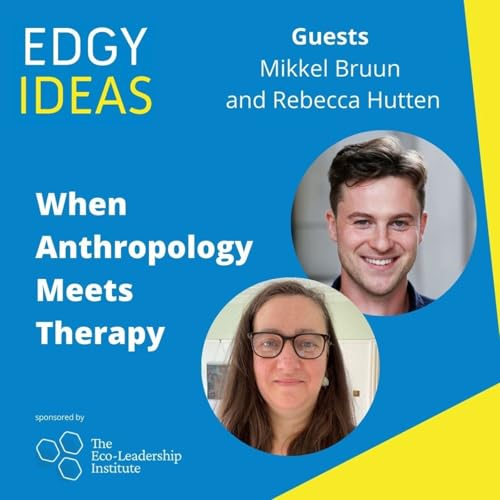
    In this episode, Simon Western is joined by social anthropologist Dr Mikkel Kenni Bruun and social scientist Dr Rebecca Hutten to explore what sits beneath contemporary mental health, therapy, and coaching practices. Together, they discuss culture, power, and the often-invisible assumptions shaping therapeutic work.
    Rather than treating psychology as universal or value-neutral, Mikkel and Rebecca show how it is culturally produced, shaped by specific histories, institutions, and ways of making meaning. From this perspective, therapy and coaching are never neutral; they are embedded in social, political, and moral worlds.
    Ethnography is central to this conversation, not just as a research method, but as a way of listening and staying with complexity. Instead of forcing distress, healing, and care into predefined psychological categories, ethnography attends to how these experiences are actually lived across contexts.
    The discussion also challenges dominant Western ideas of the self. While psychology and coaching often centre the autonomous individual, anthropological perspectives highlight relational and socially embedded selves. This raises urgent questions about what happens when Western therapeutic models travel globally - and what they may erase or misunderstand.
    Cultural competence comes under scrutiny too. Often presented as a solution, it can risk flattening culture into tidy checklists rather than engaging with lived complexity and power. As psychological language increasingly shapes public policy, workplaces, and everyday life, anthropology helps reveal the cultural and political work happening beneath the surface.

    Key Takeaways

    • Psychological and coaching practices are culturally produced, not universal
    • Therapeutic cultures vary across histories, institutions, and contexts
    • Ethnography reveals how mental health is actually lived
    • The individual self is not a universal model
    • Cultural competence can oversimplify difference
    • Psychological practice is fundamentally relational
    • Mental health discourse shapes ideas of the “good life”
    • Anthropology makes the familiar strange - and visible again


    Keywords
    Anthropology, psychology, coaching, mental health, therapeutic culture, ethnography, cultural competence, relationality, self, good life

    Brief Bios
    Dr Mikkel Kenni Bruun is a social anthropologist at the University of Cambridge, Research Associate at the Healthcare Improvement Studies (THIS) Institute, and Affiliated Lecturer in the Department of History and Philosophy of Science. His ethnographic research includes NHS Talking Therapies (IAPT) services and community mental health initiatives in the UK. He is co-editor of Towards an Anthropology of Psychology (2025) and Rhythm and Vigilance (2025).

    Dr Rebecca Hutten is an independent researcher, social scientist, and Associate Lecturer at The Open University. Trained as an anthropologist, she has worked in government policy research and Public Health at the University of Sheffield, and brings extensive fieldwork and clinical experience within NHS psychological services. She is co-editor of Towards an Anthropology of Psychology (2025).

    Más Menos
    33 m
  • 103: Lacanian Insights on AI
    Jan 21 2026

    Show Notes
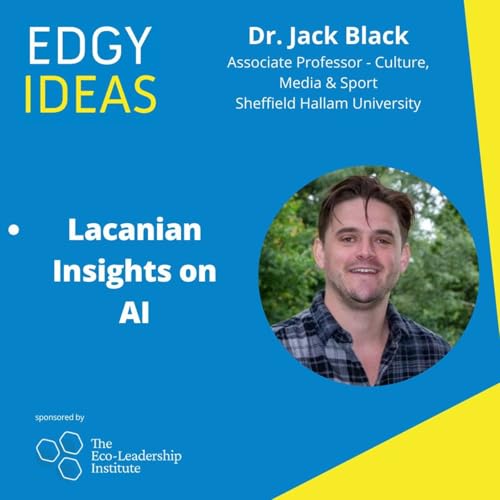
    In this episode Simon and Dr. Jack Black, Associate Professor at Sheffield Hallam University, think dangerously about AI through the unsettling lens of Lacanian psychoanalysis. This is a conversation about desire, discourse, power and the fantasies we project onto machines.
    Drawing on Lacan, Jack reframes AI not as a neutral tool or intelligent object, but as a relational phenomenon - one that speaks into us, structures us, and increasingly stands in for authority itself. Together, Simon and Jack interrogate how AI comes to occupy the place of the Big Other: the supposed holder of knowledge, truth, and certainty in a fragmented world.
    They explore Lacan’s four discourses, particularly the discourse of the hysteric, as a way of resisting AI’s creeping authority and the ideological narratives that present it as omniscient, objective, or inevitable. AI, they argue, does not know in any human sense - it recombines, repeats, and reflects back our own symbolic order, including its exclusions, biases and violences.
    The conversation moves into education, where AI is rapidly being positioned as a new master signifier. What happens when learning is outsourced to algorithmic systems? What kinds of subjects are being produced? And whose knowledge is being legitimised - or erased - in the process?
    Throughout the episode, AI is revealed as a site where cultural anxiety, political power, and unconscious desire collide. Rather than rejecting technology, Simon and Jack argue for a more critical, psycho-social engagement - one that keeps the human, the relational, and the ethical firmly in view.
    This is a conversation about AI, but it is also about us: our longing for certainty, our fear of lack, and our temptation to hand over authority to machines. Lacan, unexpectedly, offers not despair but hope - a way to stay with complexity and resist the fantasy that technology can save us from being human.

    Key Takeaways

    • Lacanian psychoanalysis offers a radical way to rethink AI beyond hype and fear.
    • AI is relational - it emerges within human discourse, not outside it.
    • The discourse of the hysteric provides a critical stance toward AI as authority.
    • AI does not “know”; it mirrors and amplifies existing symbolic systems.
    • Education must resist uncritical adoption of AI as a master solution.
    • Algorithmic systems reproduce social bias, including racism and exclusion.
    • Technology increasingly objectifies the Big Other.
    • AI exposes deep tensions around desire, knowledge, and power.
    • Ideology sits quietly behind the push to normalise AI everywhere.
    • Lacan helps us stay critical, hopeful, and human in a technological age.

    Keywords
    AI, Lacan, psychoanalysis, discourse, education, culture, technology, relationality, society, human experience

    Brief Bio
    Dr. Jack Black is Associate Professor of Culture, Media, and Sport at Sheffield Hallam University. An interdisciplinary researcher, working across the disciplines of psychoanalysis, media and communications, cultural studies, and sport, his research focuses on topics related to race/racism, digital media, and political ecology. He is the author of The Psychosis of Race: A Lacanian Approach to Racism and Racialization (Routledge, 2023) and co-editor of Sport and Psychoanalysis: What Sport Reveals about Our Unconscious Desires, Fantasies, and Fears (Lexington Books, 2024). He is also Senior Editor for the Journal, Sport and Psychoanalysis (Cogent Social Sciences).

    Más Menos
    37 m
  • 102: Humanism in Psychometrics
    Jan 9 2026

    Show Notes
    In this episode of Edgy Ideas, Simon talks with Stewart Desson, founder of Lumina Learning, whose work has reshaped the field of psychometrics by bringing a deeply humanistic, culturally sensitive, and relational approach to understanding personality at work.
    Stewart reflects on the evolution of psychometrics, from traditional trait-based systems to more nuanced, emergent models that honour human complexity rather than reduce it. Simon and Stewart explore how leadership, workplace culture, and collective performance are shaped by the ways we measure and make meaning from human behaviour. Drawing on large-scale data sets, Stewart shares insights into gendered leadership patterns, highlighting how women frequently bring more collaborative strengths to the fore and questions how organizations reward or neglect such capacities.
    The conversation ranges widely: from the cultural biases embedded in psychological tools, to the rise of AI and its disruptive impact on assessment practices, to the philosophical question at the heart of both leadership and psychometrics: How do we live a good life and build a good society?
    Stewart invites us to reconsider how organisations balance the drive for individual performance with the need for collective thriving, urging leaders to cultivate workplaces grounded in collaboration, kindness, and continuous self-development.

    Key Reflections

    • Psychometrics is expanding as a discipline that bridges science and humanism, offering deeper insights into human behaviour.
    • Many organisations continue to reward individualistic traits over relational or collective strengths.
    • Psychometry should empower individual uniqueness and avoid the reductive labelling common in traditional models.
    • Cultural sensitivity is essential when designing and applying psychometric assessments.
    • AI is rapidly transforming the psychometry, raising both opportunities and concerns about quality and validity.
    • Leadership models must be adaptable to diverse cultural contexts and organisational needs
    • A good society is built on collaboration, shared purpose, and relational leadership.

    Keywords
    psychometrics, leadership, AI, workplace culture, individual performance, collective performance, cultural sensitivity, organisational psychology, human behaviour, collaboration

    Brief Bio
    Dr Stewart Desson, Board Member of the Association for Business Psychology and Founder & CEO of Lumina Learning, is a leading voice on how people’s behaviour drives organisational performance. Drawing on decades of experience and a PhD in Organisational Psychology, he revolutionised workplace psychometrics by empowering individuality through the Lumina Spark model. Over the past 15 years, he has built a global community dedicated to moving beyond traditional assessments toward a more nuanced, human-centred approach that helps organisations create adaptable, resilient, high-performing teams.

    Más Menos
    33 m
  • 101: The Future of Coaching: AI, Ethics, and Belonging
    Dec 10 2025
    Show Notes
    In this episode Simon speaks with Tatiana Bachkirova, a leading scholar in coaching psychology. They explore how AI is impacting on the field of coaching and what it means to remain human in a world increasingly driven by algorithms. The discussion moves fluidly between neuroscience, pseudo-science, identity, belonging, and ethics, reflecting on the tensions between performance culture and authentic human development.
    They discuss how coaching must expand beyond individual self-optimization toward supporting meaningful, value-based projects and understanding the broader social and organisational contexts in which people live and work.
    AI underscores the need for ethical grounding in coaching. Ultimately, the episode reclaims coaching as a moral and relational practice, reminding listeners that the future of coaching depends not on technology, but on how we choose to stay human within it.

    Key Reflections
    • AI is often a solution in search of a problem, revealing more about our anxieties than our needs.
    • Coaching must evolve with the changing world, engaging complexity rather than retreating to technique.
    • The focus should be on meaningful, value-driven projects that connect personal purpose with collective good.
    • AI coaching risks eroding depth, ethics, and relational presence if not grounded in human awareness.
    • Critical thinking anchors coaching in understanding rather than compliance, enabling ethical discernment.
    • The relational quality defines coaching effectiveness - authentic dialogue remains its living core.
    • Coaching should move from performance and self-optimization to reflection, purpose, and contribution.
    • Human connection and ethical practice sustain trust, belonging, and relevance in the digital age.
    • The future of coaching lies in integrating technology without losing our humanity.
    Keywords
    Coaching psychology, AI in coaching, organisational coaching, identity, belonging, neuroscience, critical thinking, human coaching, coaching ethics, coaching research

    Brief Bio
    Tatiana Bachkirova is Professor of Coaching Psychology in the International Centre for Coaching and Mentoring Studies at Oxford Brookes University, UK. She supervises doctoral students as an academic, and human coaches as a practitioner. She is a leading scholar in Coaching Psychology and in recent years has been exploring themes such as the role of AI in coaching, the deeper purpose of organisational coaching, what leaders seek to learn at work, and critical perspectives on the neuroscience of coaching. In her over 80 research articles in leading journals, book chapters and books and in her many speaking engagements she addresses most challenging issues of coaching as a service to individuals, organisations and wider societies.
    Más Menos
    37 m
  • 100: Soul at Work: Living a Good Life in a Disruptive Age
    Oct 15 2025
    Show Notes
    In this special 100th episode of Edgy Ideas, we mark a moment of reflection and celebration. Simon is joined by a panel of thoughtful voices; Chris Yates, Leslie Brissett, Eleanor Moore and Hetty Einzig, to explore a topic close to the heart, the soul at work and what it means to live a good life amidst the turbulence of our times. They reflect on the quiet yet powerful force of soul, not as something otherworldly, but that which connects us more deeply to ourselves, to each other, and to the work we do. The panel discusses: how do we re-enchant the workplace? How do we speak about 'soul' without falling into cliche or sentimentality? And how do we cultivate a spirituality that is lived, relational, and grounded in everyday acts?
    Their conversation weaves personal stories with collective insights, inviting you into a space where the sacred and the secular meet.
    Enjoy this rich and resonant conversation as we mark a century of episodes, and step forward soulfully into what comes next.

    Key Reflections
    • Edgy Ideas has evolved to meet the moment - seeking pathways to live well in disruptive times.
    • Soul at work is not a luxury, but a necessity - a call to engage the whole person: mind, body, and essence.
    • Everyday spirituality matters. It's found not in lofty ideas, but in presence, care, and connection.
    • Work can uplift or diminish the soul - context and culture matter.
    • Relational dynamics are the hidden architecture of soulful work.
    • Activism and soul are not opposites - activism can be a soulful practice.
    • Grace appears in the ordinary fleeting moments that illuminate meaning.
    • Sacred spaces can be created anywhere we choose to be present.
    • Soul embraces the paradox - the light and the dark, joy and struggle, both shaping who we are.
    • To witness another with kindness is perhaps the most radical act of all.
    Keywords
    Soul, Spirituality, Connection, Presence, Grace, Wholeness, Meaning, Authenticity, Relationships, Transformation, Soul at Work, Everyday Spirituality

    Más Menos
    43 m