Episodios

  • Episode 502: Christa Hillstrom Takes Pride in Her Rejections
    Dec 5 2025

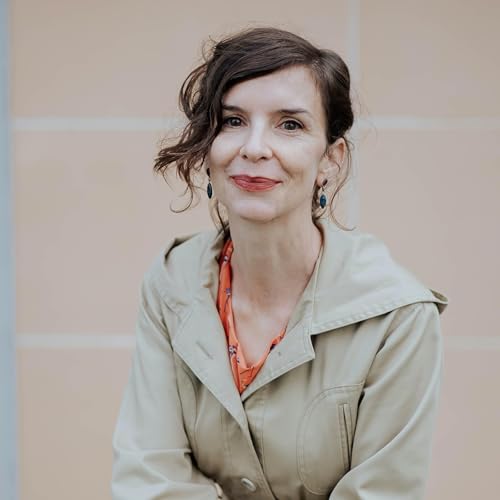
    "Take pride in your rejections. It's a tough industry for putting yourself out there. You're like, doing a ton of work up front, not knowing if anyone will be interested in it. It's very easy to feel deflated about it. Your rejections are reaching for things that maybe aren't easy reaches," says Christa Hillstrom, writer of 14,445 and Counting for The Atavist.

    It’s that Atavistian time of the month. Not much by way of spoilers, but you know you’re in for a double dose of CNFin’ insights as we will hear from editor-in-chief Seyward Darby and, of course, the writer of this month’s feature, Christa Hillstrom. Her story is titled 14,445 and Counting: Inside a Texas nurse’s quest to document the life and death of every woman killed by a man in America. You can read the story at magazine.atavist.com. A sub is only $25 a year. No, I don’t get kickbacks; yes, I pay to subscribe as well. I’m the hipster doofus of the people.

    The Atavist doesn’t usually do profiles, per se, but this profile is of Dawn Wilcox and her “sacred work” of logging every femicide in the country, which is to say violent deaths directly against women by men. It’s a tough one, not gonna lie. Not because it’s not well done, but because, well, read the title.

    OK, so this piece is pretty heavy, but it’s a story of obsession and what the central figure calls her “sacred work” to bring attention to this epidemic of sorts.

    The credits for this piece are: Ed Johnson was the art director, Sean Cooper copy edited it, Emily Injeian fact checked it, Naheebah Al-Ghadban illustrated it and Jonah Ogles and Seyward Darby edited this suckah.

    Christa Hillstrom is a freelance journalist based in the Pac Northwest, but hailed from Minnesota originally and even attended Northwestern’s grad program in journalism. Doesn’t get better than that.

    She’s an award-winning reporter, editor, and multimedia producer in human rights, global health, gender-based violence, and trauma/resilience.

    We talk about:

    • The little treasures in research
    • The cost of doing this kind of reporting
    • Outlining
    • Task initiation
    • How she wrote herself into this story
    • Justing doing the writing
    • And taking pride in your rejections

    Check out her story at magazine.atavist.com and check out this conversation … right now.

    Order The Front Runner

    Newsletter: Rage Against the Algorithm

    Welcome to Pitch Club

    Show notes: brendanomeara.com

    Más Menos
    1 h y 18 m
  • Episode 501: Julian Brave NoiseCat Aimed for a Woven Text
    Nov 28 2025

    "It's not actually about the questions you ask. It's about shutting up," says Julian Brave NoiseCat, author of We Survived the Night.

    It’s episode 501 with Julian Brave NoiseCat, author of the memoir We Survived the Night. It’s published by Knopf. It’s a pretty spectacular debut and we have a lively chat about it and the writing and structuring of it. Julian is a writer, filmmaker, powwow dancer, and student of Salish art and history.

    Julian, man, what a cool dude. He really came to play ball, which is fun for me. His memoir blends personal history, family history, cultural history, coyote lore, and even some journalistic spurs in the storytelling, which makes it a shapeshifting text, much like his coyote ancestors. The book has been getting a lot of attention and deservedly so.

    His work has appeared in The New York Times, The New Yorker, The Washington Post. He has won many awards for his journalism and his debut documentary, Sugarcane, premiered at the 2024 Sundance Film Festival. He is a proud member of the Canim Lake Band. He is @jnoisecat on IG and in this conversation we talk about:

    • His early vision for the book
    • Hidden histories
    • How he aimed for a woven text
    • How the book was a study in transformation
    • Non-uni-direction assimilation
    • Writing what you don’t know
    • And his Bob Caro story

    Order The Front Runner

    Newsletter: Rage Against the Algorithm

    Welcome to Pitch Club

    Show notes: brendanomeara.com

    Más Menos
    1 h y 12 m
  • Episode 500: Structure, Spec, and Panic with John McPhee
    Nov 21 2025

    "Anything beats writing. Writing is tough," says John McPhee, staff writer for The New Yorker and author of more than thirty books of nonfiction.

    Hey CNFers, this is Episode 500 of The Creative Nonfiction Podcast, the show where I speak to tellers of true tales about the true tales they tell. There are kilometer stones like 100, 200, 300, and 400, but this one, this is a milestone and it features the writer and journalist who made me want to write narrative nonfiction in the first place: John McPhee.

    John is a titan, a soft-spoken titan. He is the author of more than 30 books, including A Sense of Where You Are, Levels of the Game, his Pulitzer Prize-winning Annals of the Former World, and the book that made me want to write nonfiction: The Survival of the Bark Canoe. John is 94 years young, still lives in Princeton where he has taught an exclusive masterclass on factual storytelling, a class taken by the likes of David Remnick and the late Grant Wahl, I believe, among countless people who have gone on to write and report with distinction.

    He's been a staff writer for The New Yorker since the 1960s when William Shawn was the editor. Not long thereafter, he was offered a job to teach at his alma mater Princeton University and he famously edited students’ submissions not unlike how Shawn edited him at The New Yorker. He’s written about such wide ranging topics from basketball, to tennis, to bark canoes, to Alaska, to lacrosse, to oranges, to myriad topics in geology.

    John is synonymous with thinking through structure and coming up with unique structures for most of his stories, each one something of a fingerprint: no two are alike and the facts borne out from this intensive, slow reporting dictate the shape of the story he has locked into.

    His work is methodical and patient. He hangs out. He fills notebook after notebook, rarely uses a recorder, maybe only if there’s someone speaking in such technical jargon that there’s no way to keep pace. His career has been this wonderful balance of give and take: teach for most of the year and not write; then write and not teach. John is unassuming and gentle and an example of how you can do this work without bombast or pyro and still be riveting and sometimes downright hilarious.

    So we talk about:

    • The influence of his high school English teacher Olive McKee
    • Living room fighters
    • Writing on spec
    • The notebooks he’s used for decades
    • How a lack of confidences is an asset
    • What a good editor does
    • Writing as teaching
    • How having a plan frees you to write
    • The panic of having not written leads to productivity
    • And how proud of his daughters he is

    Parting shot on what it all means at 500 and maybe where I see the show going for the next 500.

    Order The Front Runner

    Newsletter: Rage Against the Algorithm

    Welcome to Pitch Club

    Show notes: brendanomeara.com

    Más Menos
    1 h y 5 m
  • Episode 499: The Post-Book Malaise is Real with Maggie Mertens
    Nov 14 2025

    "You start to wonder was it all worth it? Or what's the point in trying to do it again? You know, if there's going to be more disappointment in the future. I think it is something that you know probably just changes as you go on, regardless, right? I want to get that second book under my belt so it's not all just on this one, this one baby, you know?" says Maggie Mertens.

    Maggie is the author of Better, Faster, Farther: How Running Changed Everything We Know About Women (Algonquin Books). It’s a brilliant book that traces the advancement of women’s athletics through running. Hard as it is to believe, but it was thought that women couldn’t, nay, shouldn’t run farther than 800 meters. Running might affect their fragile constitution, they might even ruin the work place … there’s a name for headlines like that one: They’re called subscription cancellers. [Context: The New York Times ran a podcast headline with its conservative columnist asking “Did Women Ruin the Workplace?” Anyhoo …

    Maggie is making the freelance workplace a good time, thank you very much, and it’s a pleasure to get to celebrate her approach to the work and her incredible book that came out in 2024.

    So Maggie’s work has appeared in the Wall Street Journal, The Atlantic, NPR, Sports Illustrated, ESPNw, Creative Nonfiction, among others. She has a Substack called My So Called Feminist Life at maggiemertens.substack.com and she does much of social media-ing on IG @maggiejmertens and you can learn more about her and her work at maggiemertens.com.

    So Maggie and I talk about:

    • The long book writing process
    • Community
    • Time pegs
    • Strict deadlines for the self
    • How she named her chapters in Better Faster Farther
    • Taking the wins
    • And the post-book malaise

    Order The Front Runner

    Newsletter: Rage Against the Algorithm

    Welcome to Pitch Club

    Show notes: brendanomeara.com

    Más Menos
    1 h y 6 m
  • Episode 498: Sasha Bonét on Not Holding Back
    Nov 7 2025

    "I have this desire to write as a novelist might write but write nonfiction," says Sasha Bonét, the author of The Waterbearers: A Memoir of Mothers and Daughters (Knopf).

    Today we have the brilliant writer, the brilliant mind, Sasha Bonét, author of The Waterbearers: A Memoir of Mothers and Daughters. This book is a masterpiece that chronicles the matriarchal lineage of Sasha’s family, and the pain, and the struggle, and the triumph of will, of the slow, methodical, generational march forward and the residue of generational trauma, what we can outrun and we can never outrun. Damn, man, it’s something of a family epic that brought to mind A Hundred Years of Solitude to me in its scope, in its sweep. I don’t know. Maybe I have no clue what I’m talking about.

    Sasha is a writer, critic, and editor living in the socialist hellscape of New York City, woot, woot!

    Her essays have appeared in the Paris Review, Aperture, New York Magazine, Vogue, and BOMB, among others. She earned an MFA from Columbia University and teaches nonfiction writing at Columbia’s School of the Arts and Barnard College. You can learn more about Sasha at sashabonet.com and follow her on the gram @sasha.bonet.

    This is a rich conversation about:

    • Community
    • The in-between place
    • Not holding back
    • Her influences
    • Her writing practice
    • And how jazz informs her writing

    She’s also good friends with G’Ra Asim, who appeared on these podcast airwaves way back on Ep. 256.

    Order The Front Runner

    Newsletter: Rage Against the Algorithm

    Welcome to Pitch Club

    Show notes: brendanomeara.com

    Más Menos
    1 h y 19 m
  • Episode 497: The Seduction of Art Thievery with Jack Rodolico
    Oct 31 2025

    "I kinda hate it when people say writing is fun," says Jack Rodolico, author The Atavist original "The Blue Book Burglar."

    Today we feature Jack Rodolico, who is a bit of an audio maven, but he comes to us hot off the Atavist presses to talk about "The Blue Book Burglar: The Social Register was a who’s who of America’s rich and powerful— the heirs of robber barons, scions of political dynasties, and descendants of Mayflower passengers. It was also the perfect hit list for the country’s hardest-working art thief."

    It’s a fun, rollicking read, not too heavy, not really heavy at all, merely a great caper.

    Batting leadoff is lead editor Jonah Ogles, so we talk about his side of the table about what less experienced writers can learn about pitching the Atavist and how Jonah worked with Jack to fix the structure of the piece. As always, really rich stuff from the editing side of things.

    A bit more about Jack Rodolico, the dude’s got it going on … His work has appeared in The Boston Globe, NPR, 99% Invisible, and NHPR … He’s earning an MFA in fiction, and that’s really helping him with his nonfiction writing, as you’ll hear in a moment.

    You can learn more about Jack at his website journalistjack.com. In this conversation we talk about his Atavist piece, writing fiction, earning trust, why you can’t pay sources for information, how he organizes his research and cites his work, beginnings and endings, and how he didn’t necessarily want to be a journalist, rather he wanted to be a writer.

    Order The Front Runner

    Newsletter: Rage Against the Algorithm

    Welcome to Pitch Club

    Show notes: brendanomeara.com

    Más Menos
    1 h y 6 m
  • Episode 496: Jeff Pearlman Finds the Little Guys
    Oct 24 2025

    “So much misery. It is so much misery. It is so hard. It's not natural, locking yourself in your room for three years to focus on one person is not mentally healthy. Leigh Montville, great, great writer, said to me years ago, he's like, ‘It's an unnatural thing. You spend two years in a hole to come out for two weeks, you know?’” — Jeff Pearlman, author of Only God Can Judge Me.

    Today we have Jeff Pearlman returning to the show to talk about his 11th book, his latest book, Only God Can Judge Me: The Many Lives of Tupac Shakur (Mariner Books). Jeff has made a career out of being a sports writer, so when I heard he had turned his biographical eye toward a hiphop icon from the 1990s, I was especially intrigued by how he would approach it. It’s the kind of book he could pursue after having proved himself ten times before, with a few of his books becoming coveted NYT bestsellers. He interviewed close to 700 people for the book … that’s how you do this. THAT is how it’s done.

    The first time he was on, I think I annoyed him a bit with my questions on “craft.” He kind of bristled at the idea that it was a “craft,” which maybe he thought was too cute a word to put on it. To him, it’s fucking work. You make all the calls. Then you make more. You go to the locations. You knock on doors. You report, report, report. It has more to do with tenacity and rigor than art … so I made sure I steered clear of things that felt too crafty this time around.

    Jeff is all over the place. By that I mean he’s got a YouTube presence with The Press Box Chronicles, a TikTok presence with more than 300,000 followers. He has a podcast, Two Writers Slinging Yang (still waiting for my invite), a political Substack called The Truth OC, and his writing/journalism Substack The Yang Yang. He’s a writer in his 50s and he’s tremendously nimble. He understands, even with his platform and profile, that nobody is going to champion your book like you can. Honestly, we can all take a page out of his book and how he has embraced the ever-changing playbook for book promotion.

    In this conversation Jeff and I talk about:

    • Book promotion
    • Finding the little guys
    • How he handled another Tupac biography publishing during his research for this book
    • The misery of it all
    • Conversations he had with Jonathan Eig, the PP winning author of King: A Life
    • Jeff’s favorite “version” of Tupac
    • And hitting the “fuck-it” stage.

    All great stuff, as you might come to expect from speaking to Jeff Pearlman. His audio was a bit muddy. It’s not as great as I would have liked but I think the message carries the day.

    Order The Front Runner

    Newsletter: Rage Against the Algorithm

    Welcome to Pitch Club

    Show notes: brendanomeara.com

    Más Menos
    1 h y 8 m
  • Episode 495: On Being Merciless with Peter Rubin of Longreads
    Oct 17 2025

    "When I came in [to Longreads], I didn't come in and say, I think we need to grow aggressively. I said, 'Let's figure out who we are. Let's figure out what other people aren't doing, that we do , and that we can do better.' And so the only real thing that changed when I first came in was to try to make the editors known quantities," says Peter Rubin, head of publishing at Automattic, where he works primarily with Longreads, but also The Atavist Magazine.

    Today we have Peter Rubin. He’s on the pod to talk about a lot of things, but he’s also drumming up attention for a membership drive for longreads.com, a hub of curation for the best longreads on the web, first started by Mark Armstrong. Longreads has since gone onto publish original works of criticism, journalism, and personal essays and won a National Magazine Award for best digital illustration in 2020. In conjunction with with Oregon Public Broadcasting, they produced Bundyville, the hit podcast that made Leah Sottile something of a household name (shoutout to her new season of Hush).

    He spent many years at Wired Magazine and he’s also the author of Future Presence: How Virtual Reality is Changing Human Connection, Intimacy, and the Limits of Ordinary Life, which came out in 2018, but with Chat GPT going full porn for verified adult users (what could possibly go wrong?), Peter’s book seems oddly of the moment … also it’s only seven years old, but I guess in tech that’s like the stone age.

    You can learn more about Peter from his very stripped down website ptrrbn.com, yeah, he hates vowels, don’t come at him with vowels, or on the gram @provenself.

    In this conversation we talk about:

    • Finding diamonds in the rough
    • How he cultivated his editor eye
    • Being merciless in the edit
    • Figuring out the new identity of Longreads when he took over in 2021
    • Curation
    • And the Longreads membership drive

    Visit longreads.com to read more and to pony up … that’s what I’m going to do, for you people who think I get handouts, just know that I’m not that savvy.

    Order The Front Runner

    Newsletter: Rage Against the Algorithm

    Welcome to Pitch Club

    Show notes: brendanomeara.com

    Más Menos
    1 h y 9 m