Episodios

  • Why Knowing Your Enneagram Isn’t Enough
    Apr 14 2026
    We’re continuing our month-long Enneagram series with Ian Morgan Cron and getting into what most people miss. What does “healthy” actually look like? And what does it look like when you’re off, and everyone else can see it before you do? Every type has a pattern, a tell, a default that feels right…until it starts working against you. Underneath each of those patterns is the same lie: When I finally get this, I’ll be okay. Knowing your number isn’t the work. Seeing your patterns and choosing differently is. Life Happens. Let’s Talk About It. Listen in to learn more : [0:00:00] Healthy Isn’t Changing Your Type, It’s Growing Awareness [0:04:29] The “I’ll Be Okay When…” Lie for All Nine Types [0:07:38] Using the Passions and Deadly Sins as Warning Lights [0:18:20] SNAP: Stop, Notice, Ask, Pivot Toward Health [0:21:40] Information Isn’t Transformation—Doing the Work (and Next Up: Relationships & Parenting) In this episode, we are digging into becoming a healthy version of your Enneagram type, signs of unhealth in each Enneagram type, a simple framework to help you move towards health when you notice unhealthy patterns, and why understanding your type alone isn’t enough for lasting transformation. LINKS: Connect with Paula on Instagram Get Paula's personal newsletter– win Ian’s book! Meet Ian Morgan Cron Take Ian’s Enneagram Assessment: Code PAULA for 15% off THE CARRY™ ALL NEWSLETTER by and for working moms Paula’s Favorite Protein Powder 15% off Learn more about your ad choices. Visit megaphone.fm/adchoices
    Más Menos
    29 m
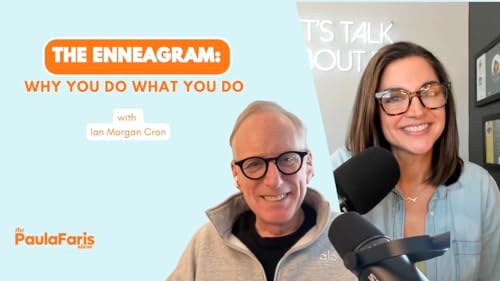
  • The Enneagram: Why You Do What You Do
    Apr 7 2026
    We’re kicking off a month-long series on the Enneagram, and we’re starting with the basics. I’ll be honest: I was skeptical at first. But after seeing how it’s transformed my own self-awareness and relationships, I’m convinced it’s one of the most powerful personality tools out there. I’m sitting down with author and Enneagram expert Ian Morgan Cron to break it all down. This isn’t just another personality test. The Enneagram reveals the why behind your behavior: your unconscious motivations that drive how you think, act, and show up in your relationships. We cover the nine types, where this framework actually comes from (it’s older than you think), why so many people mistype themselves, and what makes this different from tools like StrengthsFinder or Myers-Briggs. If you’re skeptical, curious, or just want to understand yourself better, this is where to start. Life Happens. Let’s Talk About It. Listen in to learn more : [0:00:00] Anecdotal Evidence and the Enneagram’s Impact [0:04:31] Why the Enneagram: Motivation Over Behavior [0:06:30] Quick Tour of the Nine Types [0:15:21] Origins, Science, and “Woo-Woo” Concerns [0:18:22] Blind Spots, Stress, and Using Type for Growth In this episode, we are diving into the Enneagram personality system, the origins of the Enneagram, the nine Enneagram numbers or types, how to find your enneagram type, uncovering our blind spots using the Enneagram, why and how people mistype themselves, and why the enneagram does not excuse behavior. Connect with Paula on Instagram Get Paula's personal newsletter– win Ian’s book! Meet Ian Morgan Cron Take Ian’s Enneagram Assessment: Code PAULA for 15% off THE CARRY™ ALL NEWSLETTER by and for working moms Paula’s Favorite Protein Powder 15% off Learn more about your ad choices. Visit megaphone.fm/adchoices
    Más Menos
    31 m
  • Finally, a System for the Domestic Load
    Mar 31 2026
    The endless tasks at home aren’t small—they’re the hidden strain on most relationships, quietly building stress, frustration, and resentment. It’s no secret that women often shoulder the majority of invisible work, from meal planning to school schedules to household upkeep, while trying to juggle careers and parenting. In honor of Women’s History Month, I’m talking about things that matter to women—and this is at the top of the list. Eve Rodsky, creator of Fair Play, joins me to explain how to break the cycle of overwhelm, take full ownership of tasks, and share the load without guilt, nagging, or resentment. She walks through a practical system for boundaries, accountability, and communication that restores trust, strengthens partnerships, and makes running a home fair—and yes, actually possible—for real families. Listen in to learn more : [00:00] The Blueberries That Broke the Camel's Back [02:00] Domestic Load – Invisible, Unequal, Unsustainable [09:19] Run Your Home Like a World-Class Organization [11:57] The Tooth Fairy Redemption Arc [23:19] Minimum Standard of Care – Goodbye Weaponized Incompetence In this episode, we are digging into how to build healthy relationships through clear boundaries, effective systems, and strong communication, why communication about the domestic load can feel when when it is important, the two essential elements of a successful relationship, the value of having tough conversations when emotions are low and thinking is clear, and how to start the conversation with your partner about sharing the domestic load. Connect with Paula on Instagram Get Paula's personal newsletter THE CARRY™ ALL NEWSLETTER by and for working moms Paula’s Favorite Protein Powder 15% off Connect with Eve Rodsky Watch the FairPlay Documentary Learn more about your ad choices. Visit megaphone.fm/adchoices
    Más Menos
    31 m
  • Why Equal Partnership Is Possible—Even With Kids and Careers
    Mar 24 2026
    Being equal partners isn’t just a nice idea—it’s how marriage and family actually work. John and I share what it took to get here: putting careers, expectations, and traditional roles on the table, figuring out who owns what at home, and finally treating each other like true teammates. In honor of Women’s History Month, we talk about what equal partnership really looks like, why it matters for women and families, and how it changes the way you show up—for your spouse, your kids, and yourself. Life Happens. Let’s Talk About It. Listen in to learn more : 0:00:00] – Spousal Equity Is a Unicorn—But Possible [0:05:44] – How the 1950s Broke Both Men and Women [0:10:10] – Following Her Career, Not the Script [0:21:07] – The Real Fight: Who Does What at Home? [0:18:54] – Ditch ‘Breadwinner’—We’re Just Partners In this episode, we are diving into the importance of being a supportive partner, supporting your partner in career changes, how taking risks together can strengthen your relationship, the impact of traditional gender roles on men and women, and a proven method for sharing household responsibilities that has been a lifesaver. LINKS Connect with Paula on Instagram Get Paula's personal newsletter THE CARRY™ ALL NEWSLETTER by and for working moms Paula’s Favorite Protein Powder 15% off Learn more about your ad choices. Visit megaphone.fm/adchoices
    Más Menos
    31 m
  • Why I Finally Went to Therapy
    Mar 17 2026
    Life has a way of catching up with you. I’ve lost both of my parents. And last year, after the loss of my mom, I found myself in a really dark place. I was still showing up for life—but underneath it all, something wasn’t right. John (my husband) was the one who finally said it: it might be time to talk to someone. So I did. In this conversation, John and I talk about why I went to therapy, the stigma that still surrounds it, and what happens when we avoid processing what life hands us. Because if you don’t process grief, you carry it. Most of us are dragging around a U-Haul of unprocessed pain without even realizing it—and it eventually shows up somewhere: in our moods, our reactions, our relationships, even our performance. In honor of Women’s History Month, this episode highlights a topic that matters deeply for women: making space to process loss, grief, and the pressures we carry every day. We also talk about how to find the right therapist, why therapy isn’t just for when life falls apart, and how it helped me walk through the anniversary of my parents’ deaths. Your body is designed to process what life brings you. But it can’t do that work if we never slow down long enough to face it. Life Happens. Let’s Talk About It. Listen to learn more : [0:00:00] Therapy Isn’t Just for “When Life Falls Apart.” [0:04:19] Midlife, Hormones, and the Hidden Weight of Women’s Grief [0:08:29] How to Actually Find the Right Therapist (and Advocate for Yourself) [0:12:21] Metabolizing Grief: Turning U-Hauls of Pain into Rituals of Remembrance [0:19:58] Therapy as Lifelong Maintenance, Not a One-Time Fix In this episode, we are digging into changing the stigma around therapy, how to find the right therapist and why that matters, the impact of unprocessed emotions, what to expect during your first therapy appointment, practical ways to process grief and loss, being honest about your needs, and the importance of caring for your mental and emotional health. Listen to Paula’s episodes on Grief/Loss: Episode 1, Episode 2, Episode 3, Episode 4 Connect with Paula on Instagram Get Paula's personal newsletter THE CARRY™ ALL NEWSLETTER by and for working moms Paula’s Favorite Protein Powder 15% off Learn more about your ad choices. Visit megaphone.fm/adchoices
    Más Menos
    28 m
  • GLP-1s: Why I Tried Them, What Really Happened
    Mar 10 2026
    GLP-1s—Ozempic, Wegovy, Zepbound—are everywhere right now. And so is the debate. Some people call it a breakthrough. Others say it’s cheating. So let’s talk about it. In this episode, I’m sharing my personal experience taking a GLP-1 as a 50-year-old woman navigating perimenopause, inflammation, and a body that suddenly stopped responding to all the things that used to work. My CARRY Media colleague Kristen White joins me to ask the questions so many women are asking privately: What are the side effects? Does it actually work? And what happens when you stop? It’s also Women’s History Month, and all March long, we’re talking about the issues that matter to women. No hype. No shame. Just an honest conversation about women’s health—and what I’ve learned so far. Life Happens. Let’s Talk About it. Listen in to learn more : [0:04:58] "GLP-1s Aren’t Cheating—They’re a Tool." [0:05:30] "Doing ‘All the Right Things’ but Still Struggling." [0:14:18] "Slow, Steady Weight Loss and Inflammation Down." [0:19:35] "Muscle Loss Is the Biggest GLP-1 Red Flag." [0:18:30] "Protein and Heavy Lifting Are Non‑Negotiable." In this episode, we are diving into my personal experience with GLP-1s, why I share my experiences publicly, the stigma associated with GLP-1 medications and other weight loss drugs, benefits of GLP-1s in addition to weight loss, negative side effects of GLP-1s, practical ways to balance the risks and benefits of GLP-1 medications, having healthy expectations about weight loss, and two habits to focus on if you use a GLP-1. LINKS Connect with Paula on Instagram Get Paula's personal newsletter THE CARRY™ ALL NEWSLETTER by and for working moms Paula’s Favorite Protein Powder 15% off Connect with Kristen! Learn more about your ad choices. Visit megaphone.fm/adchoices
    Más Menos
    32 m
  • The Paula Faris Show 2026 Trailer
    Mar 10 2026
    Welcome to "The Paula Faris Show", where life happens, so let’s talk about it! Join Emmy-award-winning journalist Paula Faris as she brings you candid conversations to help you live your best life. From personal journeys to societal issues, Paula talks to guests from all walks of life. Tune in to explore the unfiltered truths, inspiring moments, and thought-provoking discussions that make us human. It's time to dig deep, laugh, cry, and most importantly, let's talk about it. Learn more about your ad choices. Visit megaphone.fm/adchoices
    Más Menos
    1 m
  • Find Your People: Why Deep Friendship Is a Health Essential
    Mar 3 2026
    This conversation hit me hard — because of the loneliness so many women quietly carry? It’s real. And you are not alone. The month of March is Women’s History Month, and we’re talking about what truly matters to women. Friendship is at the top of that list. In this conversation with author Jennie Allen, we unpack why so many of us have plenty of acquaintances but still feel deeply disconnected. The research is clear: meaningful friendship isn’t optional — it’s essential to our mental, emotional, and physical health. We talk about why we’ve lost the art of initiation, how to find your people, and what to do if building deep friendships feels harder than it should. Life Happens. Let’s Talk About It. Listen in to learn more: [0:00:00] Humans Are Starving for Connection, Not Convenience [0:02:07] We’re “Connected” Yet Lonely: The Friendship Gap for Women [0:09:58] Loneliness Is More Dangerous Than Drugs or Alcohol [0:16:43] Your Inner Circle: Why You Only Need 3–5 Deep Friends [0:23:38] You Can Be Lonely, or You Can Initiate—Those Are Your Options In this episode, we are digging into the growing loneliness epidemic, how the quality of your friendships affects every aspect of your health, the biggest barriers to building meaningful friendships, the difference between having a village and having an inner circle (and why we need both!), five different types of friends you need in your life, three qualities to look for in a friend, how to handle conflict in friendship, and healthy boundaries in relationships with friends and family. Connect with Paula on Instagram THE CARRY™ ALL NEWSLETTER by and for working moms Jennie Allen Learn more about your ad choices. Visit megaphone.fm/adchoices
    Más Menos
    39 m