Episodios

  • Why Teenagers Take Sides in Divorce: Understanding Parental Alienation
    Apr 8 2026

    Is your high-conflict divorce taking a toll on your relationship with your child? It is heartbreaking for any parent of a teen to feel like they are being pushed out of their child's life, especially when it feels like the other parent is pulling the strings. In this episode of The Positively Healthy Mom, host Laura Olinger—a dedicated teen and parent well-being coach—interviews groundbreaking expert Ginger Gentile to uncover the painful reality of child estrangement and how to find a path back to connection.

    Laura knows that the teen years are already a whirlwind of identity seeking and social pressure. When a difficult split adds emotional triangulation to the mix, the results can be devastating. She sits down with Ginger to provide parents with a toolkit for navigating these "resist and refuse" dynamics and breaking the cycle of family conflict.

    In this episode of The Positively Healthy Mom, we discuss:

    • The Alienation Spectrum: Identifying parental alienation, emotional triangulation, and the subtle "micro-actions" that cause a teen to pull away.
    • The Victim Trap: How the "spiral of instability" can make a rejected parent look "unstable" in the eyes of the court and professionals.
    • The "Unbothered" Strategy: Why processing your pain in private and staying calm in public is the most effective way to protect your parental rights.
    • Why Teenagers Take Sides: The specific reasons older children are often easier to alienate, including the "reward" of a lack of rules or the material item they’ve been wanting.
    Common Questions About High-Conflict Divorce & Alienation

    Why do teenagers take sides in divorce? Teenagers often take sides due to a combination of social pressure and a search for autonomy. In high-conflict situations, a teen may align with one parent to simplify a complex emotional environment or because they receive "rewards," such as fewer boundaries or more freedom.

    What are the signs of parental alienation? Parental alienation often manifests through "micro-actions" rather than one single event. Signs include a teen calling a parent by their first name instead of "Mom" or "Dad," a parent hiding gifts or letters from the other side, or one parent constantly pointing out the other’s flaws to the teen.

    How can I stop my teenager from pulling away after a divorce? To stop a teen from pulling away, a parent must pivot from a "fix-it" or "victim" mindset to an "unbothered" approach. This involves regulating your own emotional pain response so that you remain a calm, safe harbor for your child.

    About Our Guest Ginger Gentile

    Ginger Gentile is a groundbreaking expert and the director of the documentary Erasing Family. Her mission is to provide proven strategies and compassionate guidance to help parents heal and reconnect with their children.

    Learn more about about Ginger Gentile at: https://reversingparentalalienation.com
    Connect with Ginger on Instagram @erasingfamily
    Watch Ginger on YouTube at: https://www.youtube.com/@erasingfamily

    Connect with Laura:

    • Free Webinar: Get Through May Without Losing Your Joy, Your Mind, Or Yourself
    • Instagram: @positivelyhealthycoaching
    • Rate This Podcast!
    Más Menos
    27 m
  • Improving Teen Communication: How to Hold Space Instead of Fixing Problems
    Mar 30 2026

    In this episode of The Positively Healthy Mom, host Laura Olinger is joined by TEDx speaker and Cloud9 founder Sonia Suthar to discuss the art of improving teen communication.

    Sonia shares her unique "bridge" perspective as a young adult working directly with teens, explaining why holding space is more effective than offering immediate solutions. You will walk away with a practical toolkit for navigating social pressure and emotional outbursts, ensuring your teen feels respected, heard, and supported.

    Does it feel like your well-intended advice is being met with resistance or even resentment from your teen? Many parents jump into "fix-it" mode the moment their teen shares a struggle, but this often leads to the teen pulling away to protect their autonomy.

    What You’ll Learn:
    • The "Three H’s" Framework: A simple communication tool to use whenever your teen comes to you with a problem.
    • The 60/30/10 Rule: How to help your teen navigate social circles and find the confidence to be their authentic self.
    • Identity vs. Influence: Why teens view "solutions" as a threat to their developing independence.
    • The Role of Emotional Intelligence: How to move from a parent-child hierarchy to a partnership of mutual growth.
    Common Questions About Teen Communication

    How can I stop my teenager from pulling away when I try to help? To stop a teenager from pulling away, parents should pivot from "fixing" to "holding space." When a parent immediately offers a solution, it can unintentionally signal that they don't trust the teen's competence. By simply listening without judgment, you validate their experience and protect their need for autonomy, which keeps the lines of communication open.

    What is the "Three H’s" framework for parenting teenagers? The "Three H’s" is a communication tool where a parent asks their teen: "Do you want to be Heard, Helped, or Held?" This gives the teenager the power to define the support they need in the moment. If they want to be Heard, they just need to vent. If they want to be Helped, they are open to solutions. If they want to be Held, they simply need physical or emotional comfort.

    How does the 60/30/10 rule help teenagers with social anxiety? The 60/30/10 rule is a mindset shift for social confidence. It suggests that 60% of people will like you if you put in the effort, 30% will like you no matter what, and 10% will likely not like you regardless of your actions. Understanding this helps teens stop "performing" for everyone and instead focus on the 90% who value their presence, reducing the pressure of social perfectionism.

    • Learn more about Sonia Suthar and Cloud 9: https://cloud9go.com/
    • Connect with Cloud 9 on Instagram: @cloud9go
    • Learn about Laura’s Get Through May Webinar: Let’s Do It With Joy
    • Connect with Laura on Instagram: @positivelyhealthycoaching
    • Rate this podcast: https://ratethispodcast.com/tphmom
    Más Menos
    27 m
  • Beyond the Game: How Youth Sports Build Life-Long Mental Skills
    Mar 25 2026

    What are the best ways to build resilience in young athletes? How can I help my teen handle pressure? In this episode of The Positively Healthy Mom, host Laura Ollinger sits down with Nick Gumpert—author of Starting, podcast host, and former collegiate athlete—to discuss the vital importance of proactive mental skill building.

    While many parents focus on physical stats, the real "win" in youth sports is the development of a mindset that lasts a lifetime. Nick shares how we can move away from toxic positivity and instead give our children the tools to navigate heavy emotions, high expectations, and the "athlete-to-life" transition.

    In this episode, we discuss:
    • The Power of Proactive Mental Health: Why we need to teach kids mental toughness before a crisis hits, rather than reacting to the fallout.
    • Navigating High Expectations: How young adults (ages 14-24) can take ownership of their own story and manage the weight of external pressure.
    • The "Starting" Framework: Lessons from Nick’s book on laying the groundwork for success in business, sports, and personal growth.
    • The Rat Race of youth sports and how it impacts parents and families.
    It’s Never Too Late to Start

    One of the biggest sources of "parent paralysis" is the fear that if a child hasn't specialized in a sport by age five, they’ve already lost the race. Nick debunks this myth with the powerful story of a high-level athlete who didn't even start playing competitively until the age of 14. This episode serves as a reminder that development isn’t a straight line. Whether your child is 8 or 18, they can still "catch up" and excel. It’s about the mindset and the willingness to start, not just the years on the field.

    Are you ready to help your teen build a resilient mindset? Tune in to learn how to transition from a reactive parent to a proactive partner in your child's mental well-being.

    Resources For Parents Of Teens
    Nick Gumpert’s Book Starting
    Connect with Nick Gumpert on Instagram @realgump365
    Connect with Laura on Instagram @positivelyhealthycoaching
    Join Laura’s webinar on April 30thMeet Laura Ollinger
    Laura is the founder of Positively Healthy Coaching and host of The Positively Healthy Mom Podcast. She is a Teen & Parent Well-Being Coach who is passionate about helping teens and parents thrive.

    She specializes in guiding teenagers and young adults toward a path of self-discovery, self-esteem, and resilience. She is here to help them navigate life's challenges and social skills with confidence and purpose.

    Laura helps parents find the balance of supportive parenting versus overparenting. She helps them set healthy boundaries with their teens, teach positive communication techniques, and provide other tools and strategies to help them strengthen their bond with their teens.

    Más Menos
    34 m
  • How 4 Days Can Reset a Broken Parent-Teen Relationship
    Mar 18 2026

    Are you a teen parent who feels like you’ve lost the lead in your own home? If your family is stuck in a cycle of shouting matches, shut-down rooms, and constant power struggles, it is time to move from reactivity to certain leadership.

    In this episode of the Positively Healthy Mom Podcast, Laura Ollinger sits down with international family transformation coach Veenu Keller, creator of the Parent-Child Whisperer® Method for part 2 of their conversation. Veenu shares the details of her groundbreaking "In-Home Turnaround" program—an intensive, 4-day intervention that helps families reset their dynamics from the inside out.

    As a parent of teen children, you know that traditional methods often fail when disconnection runs deep. Veenu explains that many families fall into "friend mode" as a way to avoid conflict, yet teenagers actually develop challenging behaviors as a survival mechanism when they don't sense a certain and secure leader in the home. This episode explores how to reclaim your role by moving out of the "friend zone" and into a position of leadership that balances firm, non-negotiable boundaries with deep emotional validation.

    In this episode, we dive into:

    • The 4-Day Framework: A day-by-day look at how moving a coach into your home can fast-track family healing and identify missed opportunities for connection.
    • Getting to the Cause: Why yelling, talking back, and even self-harm are effects of deeper issues that require trust and emotional safety, not just coping skills.
    • The Friend vs. Parent Trap: Why your teen needs a mother or father more than a best friend, and how to set non-negotiable standards of respect.
    • The Power of Modeling: How to reset screen-time habits and household attitudes by becoming the powerful role model your children need to see.

    Whether you are dealing with a child who has completely disconnected or a household that feels fraught, this episode provides the opportunity for self reflection that you might need to bring some unity back to your household.

    Ready to transform your home?

    • Learn more about Veenu Keller: www.veenuinspires.com
    • Connect with Veenu Keller on Instagram: @veenuinspires
    • Free Resource: Download the E-book "Teach Your Kids They Are Enough"
    • Learn about Laura’s In Home Family Transformation Experience: Let’s Talk
    • Connect with Laura on Instagram: @positivelyhealthycoaching
    • Rate this podcast: https://ratethispodcast.com/tphmom
    Más Menos
    29 m
  • How to Stop Parenting in Survival Mode: Help for Your Struggling Teen with Veenu Keller
    Mar 11 2026

    If parenting your teen feels like a constant battle, it’s time to step out of survival mode and back into connection.

    If you are stuck in a cycle of yelling, punishing, and "policing" your children, you are likely parenting in survival mode. In this powerful episode of the Positively Healthy Mom Podcast, host Laura Ollinger sits down with her long-time mentor and internationally renowned family transformation coach, Veenu Keller.

    As the creator of the Parent-Child Whisperer® Method, Veenu has spent over 20 years helping families move from chaos to connection. She joins us to share her personal journey from a "survival mode" parent to a leader who fosters deep emotional safety and trust within her home.

    In this episode, we dive deep into:
    • The Trust Gap: Why your teen might feel "safe" physically but doesn't actually trust you with their inner world.
    • Survival Mode vs. Leadership: How to stop reacting to behavior and start leading with curiosity over control.
    • The Performance Trap: Why many struggling teens feel love is conditional and are paralyzed by the fear of disappointing their parents.
    • A New Perspective on Pain: Veenu shares a heart-wrenching and hopeful look at teen mental health, explaining why the "desire to die" is often actually a desperate "desire for the pain to end."

    Whether you are dealing with a defiant teenager, a child who has shut down, or you simply want to rebuild the family unit before they head off to college, this episode provides the gentle push you need to stop surviving and start thriving as a parent.

    Resources Mentioned in This Episode:
    • Veenu Keller’s Website: www.veenuinspires.com
    • Follow Veenu on Instagram: @veenuinspires
    • Free Resource For Parents: E-book Help Your Child Feel Seen, Heard, and Valued
    Connect with Laura Ollinger:
    • Follow on Instagram: @positivelyhealthycoaching
    • Visit the Website: ThePositivelyHealthyMom.com
    • In Home Family Transformation Link: Let’s Talk

    Rate this episode: https://ratethispodcast.com/tphmom

    Más Menos
    28 m
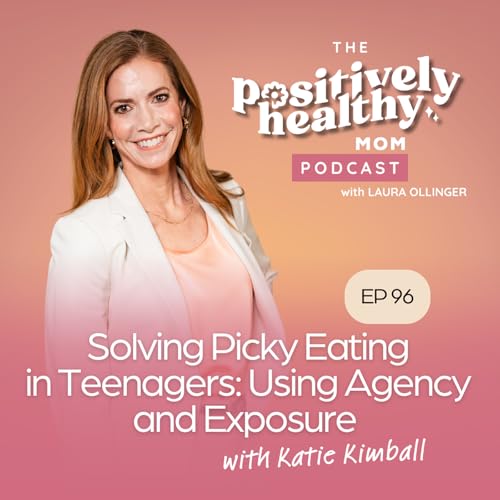
  • Solving Picky Eating in Teenagers: Using Agency and Exposure with Katie Kimball
    Mar 4 2026

    Are power struggles over the dinner table draining your energy?

    If you think picky eating is just for toddlers, think again. For many moms of teens and preteens, the battle over nutrition only gets harder as kids seek more independence. In this episode of the Positively Healthy Mom Podcast, host Laura Ollinger sits down with TEDx speaker and creator of Teens Cook Real Food, Katie Kimball, to discuss how to transform your teen from a passive consumer to a confident chef.

    We dive deep into the transition of responsibility—the moment in adolescence when parenting teenagers shifts from doing everything for them to preparing them for independent living.

    In this episode, we answer your most pressing questions:
    • “What do I do when my teen refuses to try new foods?”
    • “How do I stay connected to my teen without nagging about their diet?”
    • “How do I reduce the “what’s for dinner?” overwhelm and burnout by reducing the stress of family meals?”
    • “How can I help my teenager build confidence through cooking?”
    The Two Secrets to Ending the Food Fight: Agency & Exposure

    Katie Kimball reveals her research-backed strategies for raising resilient teenagers who actually want to be in the kitchen:

    • The "Hook" Strategy: How to connect cooking to the things your teen already cares about—whether it’s fueling for student athletes, the chemistry of baking, or saving money for their first car.
    • Agency over Authority: Why letting your teen choose the seasonings or the cooking method can stop a power struggle before it starts.
    • The Power of Exposure: How simply having your teen wash produce or prep a side dish provides the sensory exposure they need to eventually try new things.
    • Reducing the Mental Load: Why teaching life skills in the kitchen is the ultimate mom burnout recovery tool, turning your family into a "team" rather than a restaurant.

    Tune in every Wednesday for more deep-dive conversations with experts designed to help you navigate the high-pressure years of parenting teens with more connection and less stress.

    Resources Mentioned in This Episode:
    • Exclusive Link for Listeners: https://raisinghealthyfamilies.com/PositivelyHealthyMom
    • Katie Kimball: Follow her at on Instagram @raisinghealthyfamilies
    Connect with Laura Ollinger:
    • Follow on Instagram: @positivelyhealthycoaching
    • Learn More: ThePositivelyHealthyMom.com
    Más Menos
    35 m
  • Is Your Teen Calculus Ready? The 'Five-Four' Rule for College Prep
    Feb 25 2026

    Are you sitting at the kitchen table with your teen this week, staring at a course registration sheet and wondering, "Does this actually matter for college?" In Part 2 of our deep dive into the college admissions landscape, host Laura Ollinger continues her conversation with Jenna Schebell, founder of The College Navigators. While our last episode focused on the "limbo" of senior year, today we’re looking at the strategic foundation every student needs to build long before they hit "submit" on a college application.

    The "Five-Four" Rule & The Calculus Goal

    Jenna breaks down the gold standard for high school course selection: The "Five-Four" Rule. We discuss why staying in the five core academic subjects—Math, Science, English, History, and World Language—for all four years is the secret to a competitive transcript. Plus, we tackle the big question for future STEM and Business majors: How do we get to Calculus?

    Admissions are Evolving (AI & Video Prompts)

    The game is changing. As AI begins to influence (and read) college essays, universities are fighting back with high-tech "hoops." Jenna reveals a new trend: on-the-spot video prompts in student portals. We discuss how these interviews are becoming the new trend for admissions officers and how they mirror the modern corporate hiring process.

    Why This Matters for Parents of ALL Ages

    If your student is still in middle school or just starting high school, this episode is for you. Understanding the "math trajectory" and the business mindset of admissions early on allows you to help your child reach their goals without the last-minute panic of senior year. Whether you are signing up for courses this spring or just beginning to think about the future, Jenna’s insights will help you trade "application anxiety" for a clear, manageable plan.

    Inside This Episode:
    • The Five-Four Rule: Why consistency in core classes beats "niche" electives every time.
    • Calculus Readiness: How to map out a math path that keeps elite colleges interested.
    • AI vs. The Human Factor: How video prompts are replacing (or supplementing) the traditional essay.
    • The Business Puzzle: Why a 3.8 GPA looks different depending on your specific high school "profile."
    • Comparison Trap: How to help your teen "stay in their lane" and focus on personal fit over prestige.
    Connect with Our Guest:
    • Jenna Schebell: The College Navigators | Instagram: @‌thecollegenavigators
    • The Navigator Network: Join Jenna’s month-to-month membership for virtual college counseling and expert webinars.
    Connect with Your Host:
    • Laura Ollinger: Positively Healthy Coaching | Instagram: @‌positivelyhealthymom
    Más Menos
    25 m
  • The College Decision Phase: Navigating Deferrals, Yield Protection, and "The Limbo" (Part 1)
    Feb 18 2026

    It’s February, and for many high school seniors and their parents, the "college limbo" has officially set in. Between waiting on regular decision letters and navigating unexpected deferrals, the stress at home can be at an all-time high. In Part 1 of this two-part series, Laura Ollinger sits down with Jenna Schebell, founder of The College Navigators, to pull back the curtain on the final stages of the college admissions process.

    Jenna, an independent education consultant with over 20 years of experience, explains why the power dynamic is finally shifting. Now that the applications are in, it’s time for your teen to move from "applicant" to "decision-maker."

    In this episode, we discuss:

    • The "Decision Central" Mindset: How to handle the anxiety of not knowing where you’re going while peers are already posting their roommates.
    • The Truth About Deferrals: What is "yield protection" and why do colleges keep students in limbo even when they are highly qualified?
    • Choosing the Right Major: The strategic difference between direct-admit programs (like nursing and engineering) versus exploratory paths.
    • Evaluating College Fit: Why attending an admitted students day is the best way to test the "vibe" and community values.
    • The Summer Start Advantage: Why starting college in the summer might actually lead to a smoother social transition for your teen.

    Whether you are navigating college application stress or trying to help your child choose between two different majors, Jenna provides the logical and emotional roadmap parents need right now.

    Resources Mentioned:

    • The College Navigators
    • Follow Jenna Schebell on Instagram
    • Positively Healthy Coaching: Connect with Laura Ollinger for parent and teen well-being support, including coaching around the college admissions time of life.

    Next Steps: Stay tuned for Part 2 next week, where we dive deeper into this conversation with Jenna Schebell, founder of The College Navigators. If your teen is selecting high school courses and not quite in the college admissions phase, this one is for you!

    Más Menos
    31 m