Episodios

  • #72 Ana Maria and the sloths (Mexico)
    Nov 30 2025

    Dr Ana Maria Villada has spent years unraveling the mysteries of sloths—creatures so physiologically unique that they're closer to chimpanzees than they are to each other. But her work treating electrocution injuries, creating rope highways through fragmented forests, and tracking hand-raised orphans released into the wild reveals something surprising: sloths are far more adaptable than science once believed.

    Right now, Ana is in Uzbekistan fighting to protect sloths from international wildlife trade. Yet back in Costa Rica, her biggest challenge isn't the dramatic rescues, it's answering a fundamental question: we still don't know if sloth populations are thriving or declining in the wild.

    Discover how the Sloth Institute's "sloth speedways" benefit jaguars, monkeys, and porcupines. Hear why hand-raised sloths can survive in the wild. And learn what makes treating a three-fingered sloth 31% more complicated than treating a two-fingered one.

    Links

    Learn more about the Sloth Institute

    Ana Maria's professional Instagram page.

    Check out more details about Ana Maria's PhD at Andres Bello University, Chile.

    Read the press release and information about sloth trafficking for CITES here.


    We'd love to hear from you ... share your thoughts, feedback and ideas.

    Más Menos
    23 m
  • #71 Alex and the Bandicoots: Redefining the Wildlife Veterinarian (Australia)
    Nov 16 2025

    By day, Dr. Alexandria Bullen treats cattle and cats at a veterinary clinic on Tasmania's rugged northwest coast. By night, she's out tracking platypuses and bandicoots in the wilderness. In this episode, host Dr. Cat Vendl meets Alex at the Australasian WDA conference to explore how she bridges clinical practice with wildlife research.

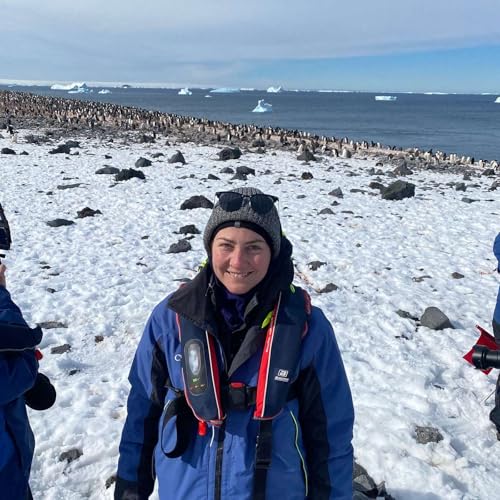
    Discover why golf courses and urban dog parks are unexpected bandicoot hotspots, what a decade of platypus health monitoring reveals, and how Alex's research uncovered these marsupials' surprising cold tolerance. From her transformative Antarctic journey with Homeward Bound – where migrating seabirds reminded her how interconnected our world truly is – to volunteering with Vets Beyond Borders in Indonesia, Alex shares how stepping outside traditional veterinary roles opened doors she never imagined.

    With a PhD on quoll health ahead, Alex delivers an empowering message: you don't need fancy resources or prestigious positions to contribute to wildlife health. Life is a choose-your-own-adventure, and the key is refusing to let imposter syndrome hold you back.

    Links

    Learn about Conservation Medicine in Regional Tasmania here

    Interested to learn more about the homeward bound journey? Check it out here.

    We'd love to hear from you ... share your thoughts, feedback and ideas.

    Más Menos
    25 m
  • #70 Leanne and the Swift Parrot's Future: Reimagining Wildlife Health Before Crisis (Australia & Vietnam)
    Nov 2 2025

    What if we could prevent wildlife health crises instead of always racing to respond to them? Dr. Leanne Wicker has spent decades asking this question – from anesthetizing seals in Tasmanian car parks during lunch breaks to tracking ocean temperatures through Antarctic seal movements, from nearly a decade managing confiscated wildlife during Vietnam's bird flu outbreaks to pioneering the field of veterinary ecology back home in Australia.

    Through her work with critically endangered swift parrots, Leanne reveals how a single photo of a lonely nest tree standing in a logged forest transformed her approach to conservation. She's championing a radical shift: understanding that nest failure isn't just about numbers – it's about healthy parents, viable eggs, and well-fed chicks thriving in intact ecosystems. After experiencing the wildlife health frontlines across three continents, Leanne shares her vision for proactive conservation where veterinary expertise helps create conditions for wildlife to flourish, rather than waiting for disaster to strike.

    Links
    Check out Leanne's current employer and their work: Enviro-Dynamics

    Learn more about the swift parrot project here.


    We'd love to hear from you ... share your thoughts, feedback and ideas.

    Más Menos
    28 m
  • #69 Mya and the penguins (USA & Peru)
    Oct 19 2025

    From Peru's copper mines to penguin colonies, PhD candidate Mya Daniels-Abdulahad tracks a toxic trail that threatens an entire species. Winner of the 2025 BioOne Ambassador Award, Mya reveals how mining waste travels through ocean food chains – with iron accumulating at four times normal levels in Humboldt penguin eggs and cadmium weakening their shells.

    Working between Peruvian field sites and Chicago's Brookfield Zoo, Mya uncovers how penguin embryos become trapped in "toxic time capsules" while these vulnerable birds serve as sentinels for contamination affecting entire coastal ecosystems. Discover how populations crashed from hundreds of thousands to just 16,000 birds, and why zoo surplus eggs became crucial for understanding wild population risks in this compelling One Health story.

    Links

    Check out Mya's winning video here

    Mya's paper on the topic

    Check out the lab's website Mya works with here

    We'd love to hear from you ... share your thoughts, feedback and ideas.

    Más Menos
    24 m
  • #68 Ralph and HPAI in the Southern hemisphere (Argentina)
    Oct 5 2025

    Join host Dr. Cat Vendl as she follows Dr. Ralph Vanstreels tracking high pathogenicity avian influenza from South America to Antarctica. Ralph shares insights from surveying remote coastlines and documenting the virus's impact – over 600,000 wild birds and 55,000 marine mammals affected, with elephant seal populations experiencing 95% pup mortality in some colonies. Learn how viral mutations enabled the jump to marine mammals, the ecological importance of Antarctica's scavenging skuas, and the challenges of conducting disease surveillance in one of Earth's most remote regions while monitoring the virus's continued eastward spread toward Australia and New Zealand.

    Links

    Ralph's academic profile: https://whc.vetmed.ucdavis.edu/people/ralph-vanstreels

    We'd love to hear from you ... share your thoughts, feedback and ideas.

    Más Menos
    27 m
  • # 67 Pat and the parrots (USA)
    Sep 21 2025

    Nearly one-third of all parrot species are threatened with extinction, yet most people picture these charismatic birds as noisy pets in cages rather than the complex, emotionally intelligent wild creatures they truly are. In this captivating episode, host Dr. Cat Vendl speaks with Dr. Pat Latas, a founding member of the newly founded IUCN Wild Parrot Specialist Group, whose four-decade journey spans from rescuing a tiny house sparrow as a child to working with critically endangered kakapo on remote New Zealand islands.

    Pat reveals how the illegal wildlife trade has exploded into a $40-60 billion global business fueled by social media. Discover why there's a "parrot people stigma" in conservation science, how 14 naturalized parrot species are thriving in Los Angeles (with some endangered Mexican species now more abundant in California than their native range), and why Pat combines her scientific illustration skills with conservation work to protect these beloved yet threatened birds.

    Links

    Newly founded IUCN Wild Parrot Specialist Group

    Parrot Crisis Summit

    Pat’s art work

    Wanna get in touch with Pat Latas? Email her here: Patricia.Latas[at]ssc.iucn.org

    We'd love to hear from you ... share your thoughts, feedback and ideas.

    Más Menos
    29 m
  • #66 Kate and the albatrosses (USA)
    Sep 7 2025

    A snowstorm that closed highways led English literature student Kate Huyvaert to an unexpected path—becoming one of North America's leading experts on wild sheep disease. From discovering that 25% of albatross chicks aren't raised by their biological fathers to unraveling the devastating cycle of respiratory disease threatening bighorn sheep across the American West, Kate's journey spans fleas on prairie dogs, boobies with complete sexual agency, and the deadly mycoplasma bacteria creating chronic carriers in wild sheep populations.

    Kate introduces her innovative "kaleidoscope" approach to disease ecology, moving beyond simple models to embrace the beautiful complexity of host-pathogen interactions. This episode showcases how choosing your own adventure in science can lead to transformative wildlife health research, offering hope for cracking the code on chronic disease carriers while highlighting the interconnected world of domestic animals, wildlife, and human health.

    Links

    https://vetmed.wsu.edu/our-team/wsu-profile/kate.huyvaert/

    https://www.wildsheepfoundation.org/about/praboard

    We'd love to hear from you ... share your thoughts, feedback and ideas.

    Más Menos
    31 m
  • #65 Nick and the Lord Howe Island stick insects (Australia)
    Aug 24 2025

    Join host Dr. Cat Vendl as she meets Dr. Nick Doidge, zoo veterinarian and researcher, working to save the world's rarest insect – the Lord Howe Island Stick Insect, nicknamed the "tree lobster."

    Thought extinct for 80 years, these living fossils were dramatically rediscovered on a volcanic rock stack in the Pacific Ocean. But after bringing them back from just two individuals, a new threat emerged: deadly bacterial infections threatening the entire captive population.

    Discover how Nick has developed cutting-edge diagnostic tools to detect the pathogenic bacterial strains ahead of the insects' planned reintroduction to Lord Howe Island next year.

    This episode reveals the intricate science behind saving a species that survived impossible odds on a cliff face in the middle of the ocean.

    Links

    Nick's profile on the One Health Research Group at Melbourne Uni


    We'd love to hear from you ... share your thoughts, feedback and ideas.

    Más Menos
    28 m