Episodes

  • Education as a Lifetime Pursuit of Virtue with Dr. Keith Buhler
    Feb 12 2026

    About the Guest
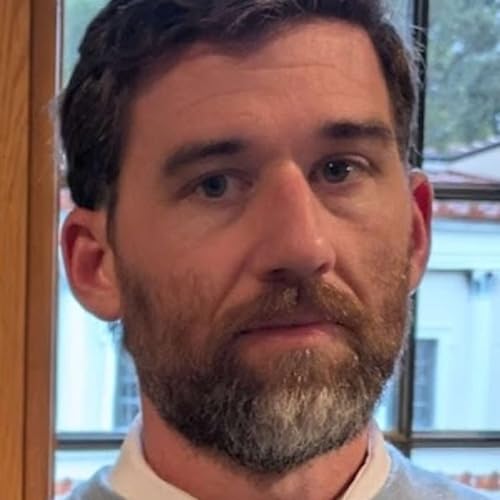
    Dr. Keith Buhler
    is an entrepreneur, philosopher, and teacher. He co-founded the Saint Andrew Academy in Riverside CA, where he serves at Director of Advancement. When he is not teaching Great Books at Azusa Pacific University Honors College, he coaches other start-ups and serves in the west coast Alcuin Fellowship. His writings include Into the Light (a chapter on education); Virtue and Wisdom as Natural Ends (philosophy); and Sola Scriptura: A Dialogue (theology). He attends St Andrew Orthodox Church in Riverside, with his wife Elizabeth and their four children.

    Show Notes
    Orthodox Christian educator, Dr. Keith Buhler joins Adrienne to discuss his chapter in the new anthology compiled by David V. Hicks (author of Norms & Nobility).

    Some topics covered include:

    • Education is a life, not just a pursuit of academics
    • The role of the teacher as a role model and mentor in virtue
    • Orthodox traditions
    • Growing children in good habits in the classroom
    • Education is a lifelong pursuit that does not end upon graduation


    Resources and People Mentioned
    Into The Light: Classical Education and Orthodox Christianity, compiled by David V. Hicks and Anthony Gilbert
    The Republic by Plato
    A Dish of Orts, Essays by George MacDonald (The Fantastic Imagination Essay)
    Sir Gibbie, George MacDonald
    G.K. Chesterton
    poems by C.S. Lewis
    The Awakening of Miss Prim
    Norms and Nobility by David Hicks

    Ten Traits of a Good Teacher by Chris Perrin

    C. S. Lewis Poetry

    Kevin Clark and Ravi Jain The Liberal Arts Tradition
    Peter Kreeft
    Poem on Oxford by C. S. Lewis

    After Prayer by Malcom Guite (A Kind of Tune Poem)
    George Herbert

    Sir Gibbie by George MacDonald

    Aristotle


    Podcast Episode on Nature Journaling with John Muir Laws
    Podcast Episode on Norms & Nobility with David V. Hicks

    _____________________________________

    This podcast is produced by Beautiful Teaching, LLC.
    Support this podcast: ★ Support this podcast ★ _________________________________________________________

    Credits:
    Sound Engineer: Andrew Helsel
    Logo Art: Anastasiya CF
    Music: Vivaldi's Concerto for 2 Violins in B flat major, RV529 : Lana Trotovsek, violin Sreten Krstic, violin with Chamber Orchestra of Slovenian Philharmonic

    © 2026 Beautiful Teaching LLC. All Rights Reserved

    Show more Show less
    1 hr and 2 mins
  • Advice for Opening a New Classical School with Chad and Melody Fowler
    Jan 29 2026
    About the GuestsMELODY FOWLER: Roots Farm Education Founder, Director, Form III Instructor Ages 10-12Melody is a happy wife of 28 years, a proud mother of three and now an over-the-moon grandma of four grandchildren. She was born in El Paso, Texas, and moved to Redding when she was five years old. She loved learning as a child and her favorite pastime was to play school in her garage with younger siblings and neighborhood friends on vintage desks her father bought at local yard sales.After receiving her Bachelor's Degree in Liberal Studies and teaching credential from Simpson University, Melody taught a self-contained fifth grade classroom for 11 years before moving on to the 8th grade teaching English and U.S. History for four years. She finds it essential to teach the next generation to revere and protect the rich inheritance of liberty they have been gifted. She also completed her administrative credential in Educational Leadership and wrote her Master's paper on Charlotte Mason.She participated in the Northern California Arts Project, the Shasta County Math Grant, and a three-year ELL grammar program teaching English as a second language. Melody was involved in her site’s leadership team, acted as a site council member, and successfully advocated for funding creative problem-solving programs like Odyssey of the Mind for the gifted and talented. She also volunteered to coach other activities like student government, softball, and cheer. In her free time, she enjoys learning about education, philosophy, economics, history, gardening, and spending time with her family and six dogs.CHAD FOWLER: Roots Farm Education Founder, Director, and Form II Instructor Ages 8-9Chad was born and raised in Shasta County. He and his wife Melody have three children with the youngest almost 16. From an early age, Chad had an interest in gardening and animals and participated in Shasta County 4-H. Chad worked his family business as well as other working retail management for many years. After helping in his son's kindergarten class and coming from a family of teachers, Chad decided his place needed to be in the classroom and he went back to school. He received his BA in Liberal Studies and teaching credential through Simpson University. He later completed his administrative credential and Masters degree in Educational Leadership through National University. He has been a public school educator since 2008 and served as a Master Teacher, Teacher in Charge, Activities Director and Lead Teacher. He has participated in the Shasta County Math Grant, the Northern California Arts Project for teachers, Gates Literacy Grant and other teacher development trainings since 2008. Chad enjoys time in the garden growing vegetables, fruits and flowers, camping with his family and spending time with his Nigerian Dwarf Goats and chickens. Roots Farm Education In the year 2020 they started with 57 students and now have nearly 100 students. They are building slow with in-depth training for their teachers and mission alignment with the incoming families. Their mission states: Roots Farm Education provides home-educated families with a learning environment that integrates agriculture and academics. Stemming from a Christ-centered, Charlotte Mason education, the curriculum embodies western thought with the instruction that pursues truth, promotes wisdom and beauty, creates a pathway to responsibility, and fosters individual initiative and ingenuity. With the land as the laboratory and assistance from experts within the community, factual knowledge in math and science will be hands-on along with essential life skills such as: producing, processing, and marketing food, animal husbandry, sewing, and basic construction. Roots aim is to cultivate a generation of children ready to succeed in higher education, career, and life, while positively impacting the world around them and preserving the lost art of self-reliance. Show NotesTwo seasoned teachers from the public school system decided to break away and start a school that would focus on agriculture and a Christian classical pedagogy. This inspiring episode of challenges, faith, and vision tells their story. Some topics covered include:Practical advise on how to start a new school: how to create a clear vision, realistic expectations, and acceptance of trialsHow to hire the right teachersHow did the first year go and where are you now?What struggles did you face during the planning process?How Temple Grandin helped them develop a purpose for agriculture studiesHow Charlotte Mason's philosophy influenced their approach and purposeVisit Ambleside EnglandJoys of learning and Focus on education in faithForms for classes and their flexibilityWhat a generous curriculum according to Charlotte Mason really looks like in practiceAdvice to Classical Education and Faith based SchoolsClassroom teachers and how they adaptedBible StudyNot using Chromebooks and studies that prove why notHerzog Foundation...
    Show more Show less
    1 hr and 10 mins
  • Narration in The Classroom with Classical Educator, Charlene Thompson
    Oct 23 2025

    About the Guest
    Charlene Thompson is a first grade teacher in her fourth year at Founders Classical Academy in Rogers, Arkansas. She holds a bachelor's degree in Elementary Education from Harding University and is a passionate learner of classical education. She believes in cultivating wisdom and virtue through rich literature, narration, and the development of lifelong habits of attention and expression. Her goal is to help young students grow into thoughtful, articulate, and joyful learners.

    Show Notes
    I met Charlene when I led a full-day workshop on narration at Founders Classical Academy in Rogers, Arkansas a few years ago. During a recent classical education conference, Charlene approached me to share how narration was working with her students. The stories she shared were so beautiful that I had to get her on the show to help encourage other teachers and parents about how narration works in the classroom.

    Some questions that were covered include:

    • What was the process you took to get started in narration--or did you just jump right in?
    • Tell us what happened from the teacher's perspective.
    • What did you notice happening with students' art of attending?
    • How many times a day do you ask the students to narrate?
    • Is it your experience that narration covers critical thinking skills, analysis, and all the standards?
    • Let's talk about the art of narration in math, and some questions to ask.
    • Tell our listeners how you play with narration and some fun things you've done.
    • Would you say something encouraging to other teachers?
    • Do you see a difference in new inexperienced students? How do you help them feel comfortable?


    Resources, Books, and People Mentioned

    • Jason Barney
    • Karen Glass
    • Charlotte Mason
    • The Thanksgiving Day by Alice Dalgliesh
    • The Ugly Duckling
    • Hansel and Gretel
    • Cinderella
    • Narration: The Voice of the Trivium by Adrienne Freas
    • Mathematician, Paul Lockhart math books
    • The Little Boy Who Cried Wolf, scripted drama
    • Aesop's Fables

    Favorite quotation: " Read the best books first"--Henry David Thoreau

    Book she wishes she had read sooner: The Bible

    _____________________________________

    Beautiful Teaching NARRATION CONFERENCE:


    2025 Online Conference with the Beautiful Teaching Team- Narration: The Art of Learning with Keynote Guest, Jason Barney, October 24-25, 2025 https://beautifulteaching.coursestorm.com/


    ★ Support this podcast ★
    Show more Show less
    48 mins
  • The Role of Memory Through Commonplace Notebooking with Dr. John Ahern from The Wilberforce School
    Aug 15 2025

    About the Guest
    Dr. John Ahern holds a PhD from Princeton University in historical musicology. He currently teaches at The Wilberforce School as an Upper School Humanities and Latin instructor. He is also faculty at the Theopolis Institute and directs their Te Deum Fellows Program in Liturgical Music. His writings on a variety of topics have appeared in First Things, Ad Fontes, The Lamp, Mere Orthodoxy, Eidolon, the Theopolis Institute blog, and the CiRCE Institute blog. He lives in New Jersey with his wife and four children.

    Show Notes
    John Ahern has successfully implemented the practice of keeping a commonplace book with his students. In this episode he explains why it is an important practice, how to create time to do it, and how to establish best practices in a school setting.

    If you have wondered how to succeed at keeping a commonplace book, this episode is incredibly practical and will help you confidently get started in this beautiful practice.

    Resources Mentioned

    Link to the Circe Institute article: https://circeinstitute.org/blog/how-to-make-a-commonplace-book/

    Notebooks the school uses: https://www.leuchtturm1917.us/classic-notebooks-1.html

    Also: https://www.amazon.com/Leuchturm1917-Journal-Hardcover-Notebook-Numbered/dp/B09T75BG8L?ref_=ast_sto_dp&th=1


    The Book of Memory by Mary Carruthers
    Leisure the Basis of Culture by Josef Pieper
    Bleak House by Charles Dickens
    To Kill a Mockingbird
    Isaac Newton's Common Place Notebook

    19C Common Place Notebooks

    Bleak House by Charles Dickens
    A Man for All Seasons by Robert Bolt

    Authors Mentioned

    Charlotte Mason

    Plato

    Aristotle

    St Augustine

    Homer

    Quintillion

    Cicero

    Romans

    Dostoevsky

    Dante

    Aquinas

    John Winthrop


    _____________________________________
    Beautiful Teaching online courses & narration conference:

    • BT online webinars, interactive courses, and book studies registration: https://beautifulteaching.coursestorm.com/
    • 2025 Online Conference with the Beautiful Teaching Team- Narration: The Art of Learning with Keynote Guest, Jason Barney, October 24-25, 2025
    • Reading Josef Pieper with Dr. Fred Putnam will take place on Thursday evenings Sept-Dec. Space is very limited. This is a seminar experience. Interaction with Dr. Putnam is essential for this online course. If you are interested in having this immersive experience with him, you can enroll here: https://beautifulteaching.coursestorm.com/course/reading-josef-pieper-with-fred-putnam
    ★ Support this podcast ★
    Show more Show less
    42 mins
  • How Language Works with Philologist Dr Erik Ellis from the University of Dallas
    May 29 2025
    Dr. Erik Ellis is Assistant Professor of Classical Education at the University of Dallas. After graduating from the University Scholars Program at Baylor University with concentrations in Greek and Latin, Dr. Ellis received an MA in History from the same institution and served as a middle school and high school Latin teacher for five years in Tulsa, Oklahoma. Along with Latin, Dr. Ellis was privileged to teach history, logic, and French, the last of which had a decisive effect on his teaching of Latin. Two years into his teaching career, Dr. Ellis began researching and investigating communicative language pedagogy and its application to classical languages. After attending and offering workshops with the Oklahoma Foreign Language Teachers Association, SALVI, and Fr. Reginald Foster, Dr. Ellis left secondary teaching to continue his education. He received an MA in Classics, a Master of Medieval Studies, and a Doctorate in Medieval Studies at the Medieval Institute of the University of Notre Dame and studied at the Polis Institute and the Vatican Library in Rome. One of his research specializations was the history of education with a focus on the history of classical language teaching. Upon graduation, he worked for a year at Notre Dame’s Center for the Study of Languages and Cultures, where he received a certificate in Second Language Acquisition Theory and Methodology. Following this, he taught Latin, Greek, and general humanities courses at Universidad de los Andes in Santiago, Chile, and Hillsdale College before moving to his current role in the program in Classical Learning at the University of Dallas.Show NotesI had a delightful discussion with Dr. Ellis last year and invited him on to the show to discuss some really important concepts within the classical education movement. In order to rightly understand the tradition of a liberal arts education, we need to rightly define and understand the meaning of particular words. We discuss some wonderful words that are important to our understanding of the tradition which impacts how we teach. Some topics included:Expanding on how the mind works while teaching the liberal arts.Fascinating word studies on Greek and Latin as spoken languages.The inclusion of a wealth of material from Constantine VII, Historically, Philosophically, and Theologically. Explaining anamnesis ( recollection): How this recollection through dialogue, song, and habituation, brings or makes things present. Writing; Is the focus on analysis and understanding, or is the aim to be able to speak wisely with an idea or account of a story that is understood and will bring about a greater reality? The meaning of the word "Logos."UPCOMING SUMMER ANCIENT LANGUAGE WORKSHOPS AT THE UNIVERSITY OF DALLAS Join Dr. Ellis at the University of Dallas for their summer intensive courses in Latin and Greek that they are hosting in partnership with the Polis Institute in Jerusalem.More info here:https://www.polisjerusalem.org/programs/international/Resources(Dr. Ellis's dissertation) The Historical Semantics of the Contemporary Classical Education Movement: Principia: A Journal of Classical Education, Volume 2, Issue 1, 2023- https://www.pdcnet.org/principia/content/principia_2023_0002_0001_0025_0041What is Classical Education? By: Erik Ellis - https://theimaginativeconservative.org/2023/07/what-is-classical-education-erik-ellis.htmlAre the Great Books Enough to Revive Our Education System? By: Erik Ellis - https://theimaginativeconservative.org/2020/04/great-books-enough-classical-education-erik-ellis.html_____________________________________Beautiful Teaching online courses:BT online webinars, interactive courses, and book studies registration: https://beautifulteaching.coursestorm.com/2025 Annual Online Classical Education Conference with the Beautiful Teaching Team - October 24-25, 2025Reading Josef Pieper with Dr. Fred Putnam will take place on Thursday evenings Sept-Dec. Space is very limited. This is a seminar experience. Interaction with Dr. Putnam is essential for this online course. If you are interested in having this immersive experience with him, you can enroll here: https://beautifulteaching.coursestorm.com/course/reading-josef-pieper-with-fred-putnam________________________________________________________This podcast is produced by Beautiful Teaching, LLC.Support this podcast: ★ Support this podcast ★ _________________________________________________________Credits:Sound Engineer: Andrew HelselLogo Art: Anastasiya CFMusic: Vivaldi's Concerto for 2 Violins in B flat major, RV529 : Lana Trotovsek, violin Sreten Krstic, violin with Chamber Orchestra of Slovenian Philharmonic © 2025 Beautiful Teaching LLC. All Rights Reserved.
    Show more Show less
    49 mins
  • Teaching Classically & Reading Josef Pieper with Dr. Fred Putnam
    May 8 2025
    About the Guest: Dr. Fred PutnamFred Putnam retired after forty years of teaching high school, college, and graduate school; for twelve of those years he was Professor of Bible & Liberal Studies in the Templeton Honors College at Eastern University (2012-2024), where he helped to design, and taught in, the program leading to the MA in Teaching [MAT] in classical education. Beginning as a seminary professor of Biblical Hebrew and Koiné Greek, his teaching expanded to include not only the languages and interpretation of the Bible, but also linguistics, translation theory and practice, English literature, philosophy, etc. During those years of teaching, experiences with students led him from being a fairly conventional teacher (lectures, quizzes, tests, grades, attendance, etc.) to a text- (or subject-) and student-centered pedagogy that others have identified as “classical”. The main thrust of his teaching has always been helping students learn to read-learning to attend to, reflect on, and respond to texts, whatever those texts may be (including poems, novels, Scripture, works of art and music, etc.). In the Templeton Honors College, he led undergrad courses on the Old and New Testaments, Hebrew, Greek, and seminars on Joseph Pieper, The Count of Monte Christo, and philosophy of education, and five masters-level courses in the MAT: "Classical Pedagogy I: The Culture of the Classroom", "Philosophy & History of Education II: The American Public School System", "The Ethos of a School", "Drama in the Classical School (With an Emphasis on Shakespeare)", and "Teaching the Bible as a Classic Text" (online through the Templeton Honors College). While homeschooling their daughters, Fred and his wife met weekly with homeschooled high-schoolers; he taught Shakespeare, poetry, literature, philosophy, Hebrew, and Greek, while his wife tutored individual students in reading and creative writing. Born in New Hampshire, he grew up on farms in northeast Connecticut, emigrated to PA in 1970, and insists that he is a New Englander on "southern assignment". He knows that hills are made of granite, Guernseys give the best milk, and continues to await a real northern-style winter. An ordained minister, he preaches in various churches in southeastern Pennsylvania, where he and his wife live near their daughters and grandchildren, and where he also reads, translates and analyzes the Hebrew and Greek Bible, and putters. Show NotesIn this episode, Adrienne and Dr. Putnam discuss the seminal works of Josef Pieper. They also do a deep dive into what a beautiful way of teaching really looks like. Some highlights include:How Dr. Putnam teaches (What is classical pedagogy?)Teaching & learning are relational activities-- the teacher's view of a student is central to the pedagogyHis course: The Ethos of a School-- how a school can establish and maintain a humane identity even during major changesHow Pieper can help teachers understand virtues and their applications in teachingHow Pieper can help us understand what it really means to learn and how it affects being a teacherUnderstanding the nature of being a person and its implications for teachingResources MentionedAn Anthology by Josef PieperOnly the Lover Sings by Josef PieperLeisure, The Basis of Culture by Josef PieperThe Courage to Teach: The Inner Landscape of a Teacher's Life by Parker J. PalmerHow Children Learn by John HoltTeaching with Your Mouth Shutby Donald L. Finkel TedTalk: Kathryn Shultz on Being Wrong https://www.ted.com/talks/kathryn_schulz_on_being_wrong?language=en________________________________________________________Beautiful Teaching online courses:BT online webinars, interactive courses, and book studies registration: https://beautifulteaching.coursestorm.com/Reading Josef Pieper with Dr. Fred Putnam will take place on Thursday evenings Sept-Dec. Space is very limited. This is a seminar experience. Interaction with Dr. Putnam is essential for this online course. If you are interested in having this immersive experience with him, you can enroll here: https://beautifulteaching.coursestorm.com/course/reading-josef-pieper-with-fred-putnam________________________________________________________This podcast is produced by Beautiful Teaching, LLC.Support this podcast: ★ Support this podcast ★ _________________________________________________________Credits:Sound Engineer: Andrew HelselLogo Art: Anastasiya CFMusic: Vivaldi's Concerto for 2 Violins in B flat major, RV529 : Lana Trotovsek, violin Sreten Krstic, violin with Chamber Orchestra of Slovenian Philharmonic © 2025 Beautiful Teaching LLC. All Rights Reserve
    Show more Show less
    1 hr and 11 mins
  • Jonathan Pageau: A Deep Dive Into Teaching Fairy Tales
    Mar 20 2025

    About the Guest
    Jonathan Pageau is a French Canadian liturgical artist, icon carver, writer, and public speaker. With a YouTube following of 191K, he has become a sought out interpreter of the deep patterns in stories. His podcast entitled The Symbolic World features, in both English and French, Jonathan's interpretations and conversations with other artists, thinkers and culture champions who are interested in restoring a collective respect for and use of these patterns as the very stuff of the cosmos.

    The Symbolic World Press is Jonathan Pageau’s new collaborative publishing venture specializing in skillfully bound and well-crafted books you can hold and read with your family and friends. SWP publications recall some of the most important and ancient stories out of the digital space and onto the printed page in masterfully designed books. The books are inspired by classic tales that are re-told in surprising ways that both compel the modern reader and resonate with the ancient traditions of storytelling.

    Jonathan's Resources Mentioned Include:
    God’s Dog by Jonathan Pageau

    Jonathan Pageau Fairy Tale Series

    https://www.thesymbolicworld.com/


    Show Notes
    I invited Jonathan Pageau back on my show to revisit fairy tales and go deeper than I did with my first interview (Season 3, Episode 14). I also wanted to expand a bit on his presentation for The Great Hearts Conference on how fairy tales reflect "The Music of the Spheres." I also wanted to dive a bit more into how to teach fairy tales to students. Some of the key points we covered include:

    - Fairy Tales and “ Music of the Spheres” (His original presentation at The Great Hearts Conference is on YouTube)

    - Patterns forming experiences and behavior

    - Narration: Retelling stories

    - Developing an imagination

    - Relationships, Analogies, & Faith

    - Celebrate fairy tales with tea time

    - Attention , Memory, Transmission

    - Teaching Fairy Tales to High School Students

    - Noticing symbolism in Fairy Tales and Bible Stories


    Authors and Books Mentioned

    Jonathan Pageau

    Snow White

    J. R. Tolkien essay "On Fairy Stories" (Free in the public domain)

    Martin Heidegger

    Charlotte Mason

    Albert Einstein

    Brothers Grimm

    "The Fantastic Imagination" essay by George MacDonald (the last chapter in A Dish of Orts in the public domain)

    Walking on Water Reflections on Faith and Art by Madeleine L’Engle
    Until We Have Faces by C.S. Lewis


    ________________________________________________________
    Beautiful Teaching online courses:

    • BT online webinars, interactive courses, and book studies registration: https://beautifulteaching.coursestorm.com/

    ________________________________________________________
    This podcast is produced by Beautiful Teaching, LLC.
    Support this podcast: ★ Support this podcast ★ _________________________________________________________

    Credits:
    Sound Engineer: Andrew Helsel
    Logo Art: Anastasiya CF
    Music: Vivaldi's Concerto for 2 Violins in B flat major, RV529 : Lana Trotovsek, violin Sreten Krstic, violin with Chamber Orchestra of Slovenian Philharmonic

    © 2025 Beautiful Teaching LLC. All Rights Reserve

    Show more Show less
    1 hr and 3 mins
  • Is Charlotte Mason Classical? A Response to Memoria Press with Kolby Atchison
    Feb 27 2025

    About the Guest
    Kolby Atchison serves as the head of school at Clapham School, a classical Christian school in Wheaton, Illinois, that implements the educational philosophy of Charlotte Mason. He is a founding director of Educational Renaissance where he speaks, writes, and podcasts on classical Christian education, Charlotte Mason, and modern research. He lives with his wife and three children in Chicagoland.

    Show Notes
    In this episode, Kolby and Adrienne dive into the philosophy of a person and the role of a teacher according to Charlotte Mason. Recently, several neoclassical programs (Memoria Press and Classical Conversations) released videos answering the popular question, "Is Charlotte Mason Classical?" We decided to dive directly into what we believe is the fundamental difference in the tradition of classical ed (which Mason is closely aligned to) and the the progressive classical movement (otherwise known as neoclassical).

    Resources Mentioned

    • Neoclassical Vs. Classical Tradition: a comparison on Beautiful Teaching's website: https://www.beautifulteaching.com/neoclassical-vs-classical
    • Memoria Press Latin Study
    • The Core by Leigh Bortins (founder of Classical Conversations)
    • Charlotte Mason Vol VI & Vol I
    • Aristotle
    • The Bible
    • A Thinking Love: Studies from Charlotte Mason's Home Education by Karen Glass
    • Till We Have Faces by C.S. Lewis
    • Educational Renaissance

    ________________________________________________________
    Beautiful Teaching online courses:

    • BT online webinars, interactive courses, and book studies registration: https://beautifulteaching.coursestorm.com/

    ________________________________________________________
    This podcast is produced by Beautiful Teaching, LLC.
    Support this podcast: ★ Support this podcast ★ _________________________________________________________

    Credits:
    Sound Engineer: Andrew Helsel
    Logo Art: Anastasiya CF
    Music: Vivaldi's Concerto for 2 Violins in B flat major, RV529 : Lana Trotovsek, violin Sreten Krstic, violin with Chamber Orchestra of Slovenian Philharmonic

    © 2025 Beautiful Teaching LLC. All Rights Reserve


    Show more Show less
    1 hr and 5 mins