• 206: Emotional Caretaking: How to Care Without Carrying Everyone Else’s Burden
    Apr 2 2026

    Send us Fan Mail

    Were you taught that you are responsible for others emotions?

    Maybe you were told things like “Don’t hurt their feelings,” “Go give them a hug or they’ll be sad,” or “You need to help them—that’s what good people do.” While these messages were often meant to teach kindness and empathy, many of us internalized something very different: that it’s our job to keep everyone else emotionally comfortable.

    In this episode, life coach MaryAnn Walker explores the conditioning behind people-pleasing and emotional responsibility. You’ll learn the crucial difference between caring about someone’s feelings and believing you’re responsible for managing them, and why letting others experience their emotions is actually healthier for both of you.

    What You’ll Learn in This Episode

    • Why many people grow up believing they are responsible for other people’s emotions
    • How childhood messages like “don’t hurt their feelings” shape people-pleasing behaviors
    • The difference between compassion for someone’s feelings and taking responsibility for them
    • How constantly managing others’ emotions can prevent them from developing emotional resilience
    • Why people-pleasing often leads to burnout, resentment, and emotional exhaustion
    • The hidden “silent contracts” that create resentment in relationships
    • Why emotional maturity means taking responsibility for your own emotional experience

    True kindness does not require sacrificing your own needs or constantly preventing other people from feeling uncomfortable. Healthy relationships happen when each person takes responsibility for their own emotions.

    When you stop trying to manage everyone else’s emotional experience, something powerful happens:
    You stop walking on eggshells.
    You communicate more honestly.
    And your relationships become healthier and more authentic.

    Challenge for the Week

    Start noticing two patterns in your life:

    1️⃣ Where are you taking responsibility for someone else’s emotions?
    Are you saying yes when you really want to say no? Avoiding honest conversations to prevent discomfort?

    2️⃣ Where might you be expecting others to manage your emotions?
    Are you waiting for someone else to change before you allow yourself to feel peaceful or happy?

    Real emotional maturity happens when each person learns to manage their own emotional experience.

    Recommended Episodes:

    Guilt vs Discomfort for Highly Sensitive People https://www.buzzsprout.com/2028767/episodes/18327300

    The Stories we Tell Ourselves & The Meanings We Create: Separating Fact from Fiction https://www.buzzsprout.com/2028767/episodes/18113784

    Ayni: Sacred Reciprocity in Relationships https://www.buzzsprout.com/2028767/episodes/17895032

    How to Stop Fixing, Controlling and Over-Accomodating Everyone https://www.buzzsprout.com/2028767/episodes/17147279

    Work With Me

    If this episode resonates with you and you’re realizing how much energy you’ve spent managing other people’s emotions, you’re not alone. This is exactly the work I help my clients with.

    Together we can help you:

    • Stop feeling responsible for everyone else’s moods
    • Learn how to regulate and manage your own emotions
    • Communicate your needs with confidence
    • Create healthier, more balanced relationships

    Join my waitlist by emailing me at maryann@maryannwalker.life
    or visit

    Show more Show less
    16 mins
  • 205: The Real Reason You Show Up The Way You Do
    Mar 26 2026

    Send us Fan Mail

    How you feel determines how you show up in your life. In this episode, MaryAnn Walker explores how emotions shape your reactions, relationships, and daily experiences.

    What You’ll Learn in This Episode

    • Why your emotions drive your reactions and behaviors
    • How the same situation can feel different depending on your emotional state
    • The “cup” analogy that explains why certain reactions spill out during stressful moments
    • How identifying your emotions helps you respond more intentionally
    • How choosing a more supportive emotion can change your relationships and daily life
    • Why your temperament may simply be emotions you’ve practiced repeatedly

    Challenge for the Week
    Take a moment today to identify three emotions you’re experiencing. Notice where each emotion shows up in your body and how it influences your thoughts and behavior. Then ask yourself: Which emotion do I want to turn the volume up on today? Practicing emotional awareness is the first step toward changing how you show up in your life.

    Work With Me
    If you’re a deep-feeling person who wants help learning how to understand, manage, and work with your emotions, coaching can make a powerful difference. Together we can explore your emotional patterns and help you intentionally practice emotions that create more peace, confidence, and connection in your life.

    You can apply to work with me at www.maryannwalker.life
    or email me directly at maryann@maryannwalker.life
    .

    Don’t Forget to Subscribe
    If you enjoyed this episode, make sure you’re subscribed so you never miss a new one. New episodes are released regularly to help highly sensitive people and recovering people-pleasers create healthier relationships and more emotional balance.

    FREEBIE: Are you ready to state boundaries without fear and anxiety? Click now to get my FREE boundary setting master class! https://maryannwalker-life.kit.com/ef2bbf6158

    Show more Show less
    15 mins
  • 204: The Real Source of All Your Problems
    Mar 19 2026

    Send us Fan Mail

    What if there was one simple thing at the root of almost every problem you face? In this episode, MaryAnn Walker explains how your thoughts—simple sentences in your brain—shape the way you feel, interpret situations, and show up in your life.

    When you learn how to separate the facts of a situation from the story your mind creates about it, you can stop unnecessary emotional spirals, reduce anxiety, and create more peace in your life. This episode is especially powerful for highly sensitive people and recovering people-pleasers who tend to overthink, assume the worst, or take things personally.

    What You’ll Learn in This Episode

    • Why your thoughts are often the real source of emotional pain
    • The difference between facts vs. the stories your brain tells
    • Why highly sensitive people often default to worst-case thinking
    • Real-life examples of how assumptions create conflict and anxiety
    • How questioning your thoughts can improve your relationships and emotional well-being

    Challenge for the Week
    The next time you feel upset or anxious, pause and ask yourself:

    • What actually happened?
    • What is the story I am telling myself about it?

    Separating the facts from your interpretation can instantly create more clarity and emotional freedom.

    Work With Me
    If you’re tired of overthinking, assuming the worst, or feeling emotionally drained by your relationships, MaryAnn Walker offers coaching to help highly sensitive people and recovering people-pleasers change the thought patterns that are creating stress.

    Learn more or apply to work with MaryAnn at https://maryannwalker.life/

    Don’t Forget to Subscribe
    If you enjoyed this episode, be sure to subscribe for more tools to help you manage emotions, set healthy boundaries, and create more peaceful relationships.

    FREEBIE: Are you ready to state boundaries without fear and anxiety? Click now to get my FREE boundary setting master class! https://maryannwalker-life.kit.com/ef2bbf6158

    Show more Show less
    15 mins
  • 203: Are You Keeping the Peace or Avoiding Conflict? A Guide for Highly Sensitive People
    Mar 12 2026

    Send us Fan Mail

    Protecting Your Peace or Avoiding Discomfort?

    Many highly sensitive people and recovering people pleasers believe they’re protecting their peace when they stay quiet, accommodate others, or avoid difficult conversations. But sometimes what looks like “keeping the peace” is actually avoiding discomfort in the moment—and that short-term relief can create bigger problems later.

    If you’ve ever stayed quiet to avoid conflict or said yes when you really wanted to say no, this episode will help you rethink what true peace in relationships actually looks like—and how to start creating it.

    Work With Me

    If boundary setting makes you uncomfortable, you’re not alone. It’s one of the most common challenges for highly sensitive people and recovering people pleasers.

    That’s why I created a free mini webinar on boundary setting to help you communicate your needs with more confidence and less drama.

    As an added bonus, you’ll also receive direct links to all of my favorite podcast episodes on boundaries to deepen your understanding.

    FREEBIE: Are you ready to state boundaries without fear and anxiety? Click now to get my FREE boundary setting master class! https://maryannwalker-life.kit.com/ef2bbf6158

    Show more Show less
    9 mins
  • 202: When the World Feels Too Loud: Supporting Your Nervous System as a Highly Sensitive Person
    Mar 5 2026

    Send us Fan Mail

    When the World Feels Too Loud: Supporting Your Nervous System as a Highly Sensitive Person

    Do you ever feel overstimulated by the world around you?

    Maybe certain foods make you feel foggy, strong smells overwhelm you, loud environments drain you, or crowded spaces leave you anxious. If you’re a highly sensitive person, these reactions aren’t “in your head.” They’re signals from your nervous system.

    In this episode, we talk about how to start listening to those signals and supporting your body so your sensitivity becomes a strength instead of a drain.

    What You’ll Learn in This Episode

    • Why highly sensitive people often feel overstimulated by foods, sounds, smells, and environments
    • How your nervous system communicates through physical and emotional reactions
    • Why pushing through overstimulation can lead to burnout
    • The connection between emotional processing and physical wellbeing
    • Small ways to support your nervous system so you feel calmer and more grounded

    Challenge for the Week

    Start noticing how your body responds throughout the day.

    Ask yourself:

    • What environments, foods, or situations leave me feeling drained?
    • What helps my body feel calm and supported?

    Then make one small adjustment—drink more water, step outside, take a few deep breaths, or add a moment of quiet to your day. Small changes can make a big difference for highly sensitive people.

    Work With Me

    If you’re a highly sensitive person who feels overwhelmed or emotionally reactive, I’d love to support you.

    My 12-week one-on-one coaching program helps highly sensitive people learn how to regulate emotions, set boundaries without guilt, and create more balanced, energized lives.

    Visit:
    www.maryannwalker.life to apply to work with me now

    FREEBIE: Are you ready to state boundaries without fear and anxiety? Click now to get my FREE boundary setting master class! https://maryannwalker-life.kit.com/ef2bbf6158

    Show more Show less
    17 mins
  • 201:Stop Trying to Earn Love: Redefining Love for Recovering People Pleasers
    Feb 26 2026

    Send us Fan Mail

    Stop Trying to Earn Love

    What if your relationships feel exhausting not because you love too much… but because you were taught the wrong definition of love?

    Many highly sensitive people learned that love must be earned — through self-sacrifice, over-accommodation, and being “low maintenance.” But that belief creates burnout, resentment, and imbalance.

    In this episode, we untangle the truth about love — and why you don’t have to exhaust yourself to deserve it.

    What You’ll Learn in This Episode:

    • The 3 core beliefs people pleasers were taught about love
    • Why self-sacrifice as a default leads to self-erasure
    • The difference between survival love and sustainable love
    • What balanced, healthy love actually looks like

    Love that requires self-erasure isn’t love. It’s people pleasing dressed up as devotion.

    You are already worthy — not because you’re useful, agreeable, or self-sacrificing — but because you’re human.

    Work With Me

    If you’re ready to stop over-accommodating and start creating balanced, secure relationships, I would love to help you.

    Coaching helps you retrain your nervous system, untangle guilt, and redefine love so it no longer requires self-betrayal.

    Email me at maryann@maryannwalker.life
    to ask about current availability and next steps.

    You deserve love that feels steady — not earned.

    FREEBIE: Are you ready to state boundaries without fear and anxiety? Click now to get my FREE boundary setting master class! https://maryannwalker-life.kit.com/ef2bbf6158

    Show more Show less
    9 mins
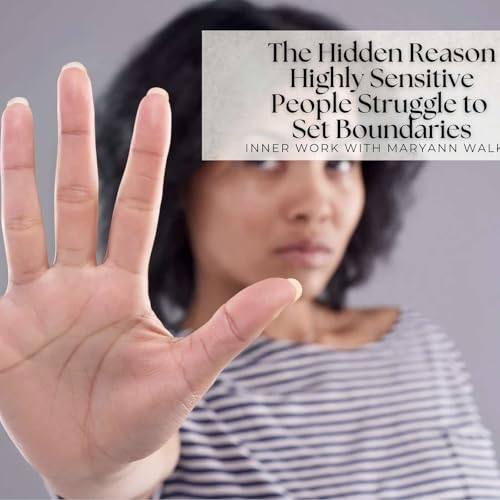
  • 200: The Hidden Reason Highly Sensitive People Struggle to Set Boundaries
    Feb 19 2026

    Send us Fan Mail

    Why People Pleasers Tolerate Disrespect (And How to Finally Set Boundaries)

    What if the very thing you’re doing to keep the relationship… is the thing slowly eroding your self-respect?

    If you’re a highly sensitive person or a recovering people pleaser, you’ve likely tolerated behavior that didn’t feel good. You minimized it. You excused it. You smoothed it over. Not because you’re weak — but because your nervous system was trying to protect you.

    In this episode, I’m breaking down why people pleasers tolerate disrespect, how the freeze and fawn responses keep you stuck, and what it actually looks like to set boundaries without guilt.

    If you’ve ever thought:

    • “I don’t want to make a big deal out of it.”
    • “I’m probably just being too sensitive.”
    • “They didn’t mean it.”
    • “If I’m patient enough, they’ll change.”

    …this episode is for you.

    Because in trying not to lose the relationship, you may be losing yourself.

    Why Highly Sensitive People Struggle With Boundaries

    When someone makes a cutting comment or dismisses your experience, your body doesn’t always respond with confrontation.

    Many highly sensitive people default to:

    Freeze – You go into shock. You can’t believe they would treat you that way.
    Fawn – You rush to reassure the person who hurt you.
    “It’s okay.”
    “I know you didn’t mean it.”

    This isn’t weakness. It’s a stress response.

    But when you repeatedly smooth things over instead of addressing the behavior, you unintentionally teach others that your boundaries are optional. And your body feels it — anxiety, tension, walking on eggshells.

    4 Sneaky Ways You Say “Yes” When You Mean “No”

    1. You Accept Words Without Watching for Change

    They say, “I’m sorry. I’ve changed.”

    You want to believe them, so you focus on their words instead of their behavior. You forgive without evidence. You accept apology without accountability.

    Kindness without accountability keeps unhealthy patterns alive.

    2. You Minimize the Impact to Protect the Relationship

    You tell yourself:

    • “It’s not that bad.”
    • “They’re just stressed.”
    • “I’m overreacting.”

    But every time you minimize their behavior, you also minimize your boundary. Over time, your needs matter less.

    3. You Overexplain Your Boundaries

    Instead of saying,
    “That doesn’t work for me,”

    you add context and reassurance.

    You take on the emotional labor so they don’t have to self-reflect. Clear boundaries don’t require a long defense. They require calm clarity.

    4. Your Body Has Checked Out And is Saying No— But You’re Still Saying Yes

    You feel tightness in your chest.
    You feel drained.
    You walk on eggshells.

    Your body is saying no, but your mouth keeps saying yes.

    Sometimes you don’t realize a boundary was crossed until later. That delayed awareness doesn’t invalidate the violation. Your body keeps the score.

    Boundaries don’t push the right people away. They filter out the wrong ones.

    A true yes doesn’t feel anxious or heavy.
    It feels steady. Clear. Expansive.

    Boundaries don’t destroy healthy relationships.
    They reveal which ones are.

    If this episode resonated and you’re ready to stop people pleasing, strengthen your boundaries, and rebuild self-trust, I’d love to support you.

    Book your free clarity call here:
    👉 https://calendly.com/maryannwalkerlife/freeconsult

    You do not have to betray yourself to be loved.

    FREEBIE: Are you ready to state boundaries without fear and anxiety? Click now to get my FREE boundary setting master class!

    Show more Show less
    14 mins
  • 199: You're Not Too Sensitive. You're Just Dysregulated
    Feb 12 2026

    Send a text

    You’re Not Too Sensitive — You’re Just Unregulated

    If you’ve ever whispered to yourself, “I’m just too sensitive,” this episode is going to change everything.

    Crying at the slightest tension. Replaying conversations in your head. Feeling guilty for saying no. Shutting down in conflict. Overexplaining. People-pleasing. Walking on eggshells so no one else feels uncomfortable. Sound familiar?

    What if your sensitivity isn’t the problem?

    In this episode, I’m breaking down the truth about being a highly sensitive person (HSP) and why the real issue isn’t your deep emotions — it’s nervous system dysregulation. I’ll show you the difference between suppression and regulation, how emotional reactivity leads to self-betrayal, and what it actually looks like to turn your sensitivity into your greatest strength.

    Because your sensitivity is not a weakness. It’s a superpower — when you know how to regulate it.

    In This Episode, We Cover:

    • Why highly sensitive people are often mislabeled as “too sensitive”
    • The difference between emotional suppression and emotional regulation
    • Signs of nervous system dysregulation (fight, flight, freeze, fawn)
    • How people-pleasing becomes a form of self-abandonment
    • How to increase your tolerance for discomfort without shutting down
    • The cost of staying emotionally reactive (burnout, resentment, anxiety, indecision)
    • How to act instead of react in triggering situations
    • Why upgrading your nervous system is the key to healthy boundaries and emotional maturity

    The Truth About Sensitivity and Emotional Regulation

    Highly sensitive people feel deeply. That’s not the issue.

    The issue is that most of us were never taught how to process what we feel.

    And because only about 15–20% of the population is highly sensitive, many of us grew up in environments where our depth wasn’t understood — and sometimes wasn’t welcomed.

    But here’s the shift:

    Regulation does not mean feeling less.
    It means feeling safer as you feel.

    It means:

    • Experiencing sadness without drowning
    • Feeling anger without exploding
    • Noticing guilt without turning yourself into the villain
    • Staying present in discomfort without self-abandoning

    Suppression pushes emotions away.
    Regulation stays with yourself through them.

    What Emotional Regulation Looks Like in Real Life

    Emotional regulation isn’t about being calm 24/7. It’s about recovery time. Capacity. Integrity.

    It’s learning to separate your emotions from your actions.

    Because when your emotions run the show, you betray yourself.
    But when you regulate, you act in alignment with who you want to be.

    If You’re a Highly Sensitive Person, Hear This:

    You are not broken.
    You are not dramatic.
    You are not weak.

    You simply require a different set of tools.

    Work With Me

    If you’re tired of:

    • Emotional reactivity
    • People-pleasing
    • Overthinking every interaction
    • Feeling guilty for having needs
    • Shutting down in conflict

    My 12-week coaching program is designed specifically for highly sensitive people who want to:

    • Act instead of react
    • Set boundaries without guilt
    • Express needs without anxiety
    • Stop self-abandoning in relationships
    • Build emotional resilience and regulation

    Click here to book your free clarity call, and let’s see if coaching is the right next step for you. https://calendly.com/maryannwalkerlife/freeconsult

    You don’t need to feel less. You need to feel safer as you fe

    Show more Show less
    15 mins