(don't) Waste Water! | Water Tech to Solve the World Podcast Por Antoine Walter arte de portada

(don't) Waste Water! | Water Tech to Solve the World

(don't) Waste Water! | Water Tech to Solve the World

De: Antoine Walter
Escúchala gratis

❓ Ever wondered how the #WaterIndustry was reacting to our World's Water Challenges? Water Scarcity? #SDG6? PFAS? Climate Change? Circular Economy? Digitization and Smart Water? 💪 Get the Water Market pulse for free. In one hour per week, while you do the dishes! 📈 We talk water investment, water tech, water entrepreneurship and water market with entrepreneurs, thought leaders, book authors, scientists, investment funds, VCs, and C-Level experts from water majors. ➡️ Leverage their insights, advice & experience and ensure to stay on top of best practices 🗓️ Tune in every Wednesday (don't miss out! 😅) 🌐 Find all the detailed episode notes, interviews, infographics, and more at http://dww.show Currently in its 10th Season, the "(don't) Waste Water" podcast has already welcomed around 250 guests from Water Majors (SUEZ, Veolia, Jacobs, Xylem, Kemira, Evoqua, Aquatech, SKion Water...), Scale-Ups (Cambrian Innovation, Epic Cleantec, Gradiant, Liqtech, 374Water, Gingko Bioworks...), Start-Ups (Puraffinity, KETOS, 120Water, ZwitterCo, Membrion, Source...), Universities (Berkeley, the Columbia Water Center), Investment Funds (Sciens Water, Mazarine, Burnt Island Ventures...), Business Accelerators (Imagine H2O, Elemental...), Book Authors (Seth Siegel, David Sedlak, David Lloyd Owen...) or Market Intelligence Companies (BlueTech Research, Global Water Intelligence, World Bank, OECD, Isle Utilities...). Or simply water legends like Gary White, Mina Guli or Andrew Benedek! On the "(don't) Waste Water" podcast, I strive to make the Water Industry easy to understand for everyone, starting with water professionals, executives, and investors. Hence, he opens the microphone to seasoned, inspirational water experts to discuss their field of excellence. No one can claim an all-around in-depth understanding of a matter as complex as Water. But piece by piece, you can rebuild the puzzle. With curiosity, patience, and passion, Antoine Walter explores topics such as Advanced Treatment Technologies, Water-Energy Nexus (Hydrogen, Lithium...), PFAS removal, Nature-Based Solutions, Wastewater Reuse, Distributed Water Treatments, Water Finance, and Water Entrepreneurship. I actually firmly believe that regular listeners of the "(don't) Waste Water" podcast may, in the end, claim a "Water MBA!" A particular field of interest is how innovation forms, grows and gets widely adopted in a complex and conservative field like the Water Industry. This may be one of the keys to achieving the United Nations Sustainable Development Goal n°6 - #SDG6. Oh, and in short, about me: I'm a water engineer turned avid student of the water business, market, finance, and tech. I'm married, a happy father of three, and I'm French (nobody's perfect 😅). Hosted on Ausha. See ausha.co/privacy-policy for more information.Antoine Walter Ciencia Historia Natural Naturaleza y Ecología
Episodios
  • Why a Broke Football Club Spent Millions on Water (Gucci's Water Reuse Strategy)
    Apr 8 2026

    Why Did a Broke Football Club Owned by Gucci's Family Invest Millions in Water Reuse?


    Stade Rennais, the French football club owned by the Pinault family behind Kering (Gucci, Balenciaga, Bottega Veneta...), buried a €1.5 million closed-loop water system under its renovated La Piverdière training complex in February 2025. This investment, during French football's worst financial crisis, reveals a widening gap between what water costs and what water is truly worth - using water reuse as its vehicle.


    🌶️ KEY SPICES 🌶️

    ⚽ How French football's TV rights collapsed from €1.1B to €142M — a 90% decline that's forcing clubs to cancel flights and lay off staff

    💧 Why a closed-loop water system with a 20-year payback was approved during an existential financial crisis (and what water reuse enables)

    🏗️ The three hidden "currencies" — drought insurance, brand equity, and regulatory preemption — that never show up on a utility invoice

    📉 Why a €14M goalkeeper depreciates 43% in a year while the pipes beneath him appreciate for decades

    💰 How BCG projects $7 trillion in returns from $1 trillion in water infrastructure investment, yet less than 1% of climate tech VC flows to water

    📊 The 10-100x gap between what water costs (€4.70/m³) and what water is actually worth


    🥜 IN A NUTSHELL 🥜


    Why did Rennes invest in water during a financial crisis? The Pinault family signed off on a €1.5-2M closed-loop water system not for the €100K/year savings, but for drought insurance, brand alignment with Kering's sustainability thesis, and regulatory positioning ahead of France's Plan Eau.

    How bad is French football's financial situation? TV rights revenues collapsed from €1.1 billion to roughly €142 million per year after the Mediapro deal fell apart, and the financial watchdog projects combined Ligue 1 and Ligue 2 losses of €1.2 billion for 2025 alone.

    What's the connection between Gucci and water infrastructure? Kering's tanneries must cut absolute water consumption 35% by 2035, making the football club's water loop a visible demonstration that the Pinault ecosystem practices what the luxury division preaches.

    Why is water so underpriced? France charges €4.70 per cubic meter regardless of the customer's actual value at stake, creating a 10-100x gap between price and worth — a structural underpricing that BCG's 7:1 return ratio confirms across global water infrastructure.

    Is water a good investment opportunity? Despite a projected 7:1 return ratio, less than 1% of climate tech venture capital goes to water while energy captures 25% with only a 6:1 ratio — a structural imbalance that early-stage reuse deals are starting to correct.


    #️⃣ Mentioned Links #️⃣

    🔗 Podcast Episode: Water's Place in the Global Economy with Nicolas Lei Ravello https://www.youtube.com/watch?v=k5Ayc94bNf0

    🔗 Podcast Episode: Amazon and Water https://www.youtube.com/watch?v=jN6sHC45DRo


    Hosted on Ausha. See ausha.co/privacy-policy for more information.

    Más Menos
    17 m
  • By 2050, Clean Water Will Cost You $3'700 a Year (I Recalculated the US EPA Numbers)
    Apr 1 2026

    How Much Does The USA Really Need to Fix Its Water Infrastructure? And Why Is Nobody Talking About the Real Number? (Hint: the US EPA has it wrong!)

    I built a bottom-up predictive model spanning 32 federal datasets, 433,000 water systems, and 15.1 million regulatory violations to determine the true cost of bringing US water infrastructure back to shape. The answer: $3.9 trillion over twenty years (that's three times the EPA's official estimate of $1.25 trillion)

    🌶️ KEY SPICES 🌶️

    📊 A model reproducing the US EPA's own $625B drinking water estimate with 0.00% deviation - then extending it to domains the surveys structurally omit
    🔧 $1.63 trillion in physical pipe failures that no federal survey captures - cast iron mains break 10x more than modern plastic
    🏚️ 5,112 wastewater plants "rotting in place" serving 22 million Americans - the US EPA says $8.5B, the real number is $80B
    💰 Full cost-recovery requires a $26/m³ tariff - roughly $310/month per household, which is 4.4x today's rate (will anyone pay for that?)
    🧪 $139 billion for PFAS compliance, absent from all current federal estimates (no scandal, makes sense!)
    📈 PE-backed platforms (CSWR, Nexus Water Group, Inframark) are silently consolidating the fragmented utility tail (and it's a good thing!)

    🥜 IN A NUTSHELL 🥜

    **How big is the real infrastructure gap?** The combined water and wastewater need is $3.9 trillion over twenty years, three times the EPA's $1.25 trillion official estimate.

    **Why is the EPA's number so low?** The surveys ask utilities what they plan to spend, not what aging infrastructure physically demands - and they cover only 891 of approximately 39,500 small water systems.

    **What about pipes?** One-third of America's 2.2 million miles of water mains are over 50 years old, and 860,000 miles need replacement at roughly $1 million per mile - a $1.6 trillion bill the surveys entirely miss.

    **Is the gap closing?** No - drinking water coverage stays locked at 28 cents per dollar across every twenty-year window, and wastewater coverage actually deteriorates from 16 to 14 cents per dollar by the 2040s.

    **Where does this leave investors?** Consolidation is accelerating - American Water Works and Essential Utilities are merging into a $63 billion entity, PE platforms are rolling up rural systems, and water tariffs grow at 4.77% annually, well above inflation.

    #️⃣ Mentioned Links #️⃣

    Water Finance: https://www.youtube.com/watch?v=sd2tCuwMKfk
    PFAS: https://www.youtube.com/watch?v=sd2tCuwMKfk
    Utah State University 2023 Break Rate Study: https://engineering.usu.edu/news/main-feed/2024/new-report-says-lack-of-funding-for-critical-water-mains-is-452-billion-over-260000-breaks-annually
    ASCE 2025 Infrastructure Report Card: https://infrastructurereportcard.org/
    Global Water Intelligence's tariff survey: https://www.globalwaterintel.com/documents/tariff-survey-2025


    Hosted on Ausha. See ausha.co/privacy-policy for more information.

    Más Menos
    34 m
  • Forget Russia & Qatar: Europe has a New Gas Source (spoiler: it's wastewater biogas)
    Mar 27 2026

    Can Europe's Sewage Plants Replace Russian Gas? (aka: the €1.9 Billion Biomethane Opportunity)


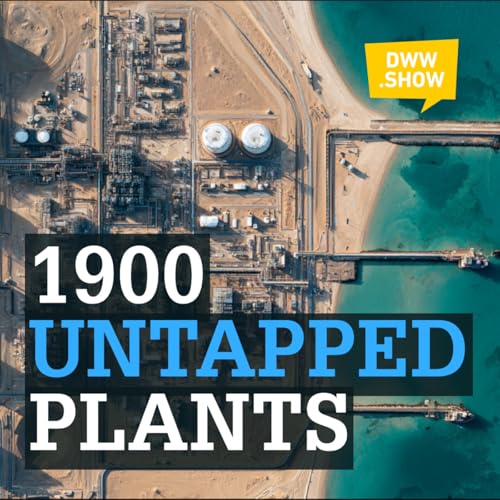
    Europe's wastewater treatment plants are sitting on a massive untapped energy reserve. With the right upgrades, roughly 1,900 facilities across Europe could produce 13.4 billion cubic meters of biomethane per year — matching Russia's remaining pipeline gas deliveries in 2024. Let me break down the economics, the technology, and the investment landscape driving this shift.


    🌶️ KEY SPICES 🌶️

    ⛽ One oil price spike dropped profitable plant thresholds by 15-47% and made ~600 additional facilities viable for biomethane grid injection overnight

    📊 Only 30% of cost-competitive plants have installed grid injection equipment — Denmark leads at 88%, Poland trails at 6.7% ⚖️ The EU's recast Urban Wastewater Treatment Directive mandates energy neutrality by 2045, creating a regulatory demand floor independent of gas prices

    🏭 Cambi's thermal hydrolysis revenue trajectory points to their first €100M year, with EBITDA jumping from near-zero to €20M in two years

    💰 NextGen biogas companies are funded by energy infrastructure capital (ENGIE, Pennybacker, Hitachi), not water-focused VCs


    🥜 IN A NUTSHELL 🥜

    Why did 600 European wastewater plants suddenly become profitable gas producers? The Iran-triggered gas crisis pushed TTF prices from €32 to €60 per MWh, dropping minimum viable plant sizes by 15-47% and making biomethane grid injection economically attractive across most of Europe.

    How much gas could European wastewater produce? Europe's ~1,900 unequipped wastewater plants could produce 13.4 billion cubic meters of biomethane per year, equivalent to Russia's 2024 pipeline gas to Europe, worth €1.9 billion annually.

    What is the regulatory driver behind this shift? The EU's November 2024 recast of the Urban Wastewater Treatment Directive mandates energy neutrality for all European wastewater utilities by 2045, making biogas production a compliance requirement regardless of gas prices.

    Who is winning in the biogas technology space? Cambi leads thermal hydrolysis with revenue potentially reaching €100M, while Veolia and SKion Water pursue platform approaches. Anaergia's bankruptcy serves as a cautionary tale that timing matters as much as thesis.

    Where is the investment capital coming from? Energy infrastructure funds and corporate venture arms (ENGIE New Ventures, Pennybacker Capital, Hitachi) dominate NextGen biogas funding, while traditional water VCs remain largely absent from the space.


    ***


    Europe faces a significant energy challenge, highlighted by a potential natural gas shortage following recent events. This situation underscores the broader global energy crisis and its impact on energy markets. We also touch upon the unusual idea of Europe's sewage as a potential gas source, a concept that could impact oil and gas discussions moving forward. The discussion includes analysis from the International Energy Agency regarding supply disruptions and an update on the iran war.


    Hosted on Ausha. See ausha.co/privacy-policy for more information.

    Más Menos
    26 m
Todas las estrellas
Más relevante
Exactly what it says on the tin. A great resource for people interested in wastewater or who want to keep up with recent developments particularly from an environmental perspective. Only negative is that sometimes mic quality can be noticeably low, though it varies depending on the speaker and does not impact ability to understand.

Great resource

Se ha producido un error. Vuelve a intentarlo dentro de unos minutos.