Episodios

  • 85.Injured, Busy, or Just Surviving — How to Keep Your Toe in the Game
    Mar 10 2026

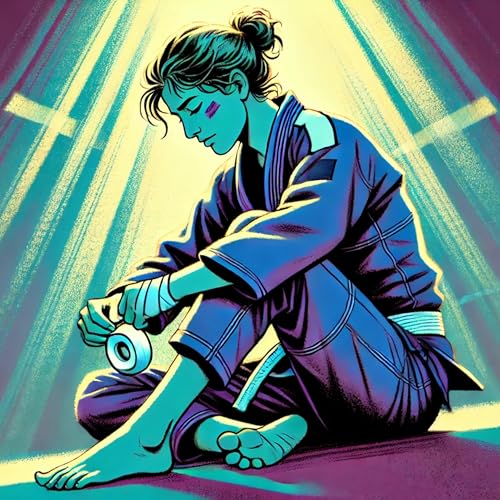
    You’re injured. Work is chaos. Kids arrived. Life is throwing heel hooks and you tapped early.

    So what happens to your jiu-jitsu when you’re not actually doing jiu-jitsu?

    In this episode of The Gi Spot, we dive into the uncomfortable but universal grappler experience: being forced off the mats. Whether it’s a blown knee, a newborn baby, burnout, or just life doing life things, most practitioners hit a stretch where training consistently just isn’t possible.

    We talk about:

    • The mental side of being sidelined

    • Why people disappear from the sport completely

    • Ways to stay connected to the game even when you can’t train

    • Studying matches, coaching, drilling light, or just staying in the gym ecosystem

    • Avoiding the “I’ll come back when I’m fit again” trap

    Because in jiu-jitsu, the biggest danger isn’t the injury —
    it’s drifting away long enough that returning feels impossible.

    Even when you can’t roll, you can still keep a toe in the game.

    Más Menos
    1 h y 19 m
  • 84. It doesn't matter who you are. It doesn't matter where you go. It will find you and it will.......
    Mar 1 2026

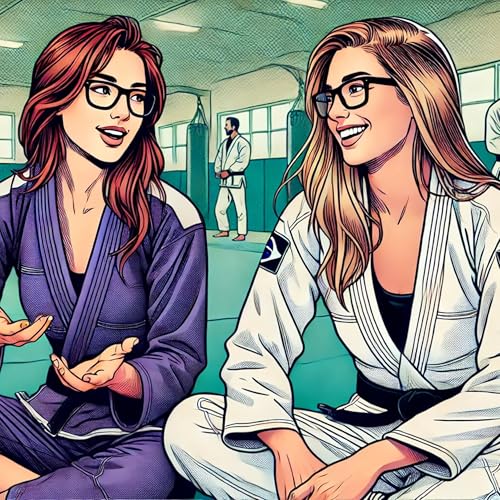
    In this episode of The Gi Spot, Rach and Kaz tackle a truth every grappler eventually meets — whether you’re white belt enthusiastic or black belt battle-worn.

    Injury isn’t a possibility in jiu-jitsu. It’s a certainty.

    This isn’t fear-mongering — it’s reality. If you train long enough, hard enough, or even just consistently enough, something will tweak, tear, strain or snap. The question isn’t if. It’s when — and how you respond.

    Rach brings the perspective of a full-time instructor watching bodies cycle through setbacks and comebacks. Kaz brings the athlete lens — ego bruises, actual bruises, and the mental spiral that follows time off the mat.

    Together they unpack the psychology of injury, the culture around “toughing it out,” the difference between resilience and recklessness, and how to train for longevity in a sport that rewards intensity.

    Because surviving jiu-jitsu isn’t about avoiding injury forever.
    It’s about building a game — and a mindset — that survives it.

    Más Menos
    1 h y 18 m
  • 83. The 3 Juijiteiros......... Ole!
    Feb 25 2026

    In this world-first roundtable episode of The Gi Spot, Rach and Kaz bring together three academy leaders — not to debate territory, but to redefine it.

    In studio:
    Grant & Rachel Bradshaw from Iconic Jiu Jitsu Academy,
    Brian Lewis & John MacAleer from House of Water Jiu Jitsu and Other Musings,
    and Peter Jackson from Nura Brazilian Jiu Jitsu Academy.

    This isn’t an episode about who has the biggest competition team or the loudest Instagram presence. It’s a deep dive into what leadership in jiu-jitsu looks like in 2026.

    The team explores a growing shift in academy ownership — one built on confidence without ego, curiosity without insecurity, and collaboration without territorial nonsense.

    Cross-training is encouraged. Doors are open. The mindset is simple: we can’t help everyone — but we’ll help you find someone who can.

    No peacocking. No mat politics. No bar-storming bravado.
    Just grappling — and building awesome people into even more awesome people.

    This isn’t just a conversation about running academies.
    It’s a marker of a new era in jiu-jitsu.

    Más Menos
    2 h y 29 m
  • 82. Built Different: Cerys Finch & the Rise of Artemis Grappling
    Feb 18 2026

    In this episode of The Gi Spot, Rach and Kaz sit down with Cerys Finch, creator of the Artemis Grappling Challenge, for a conversation that goes beyond brackets and medals.

    While unpacking the origin and vision behind Artemis, the team also address some of the harder conversations shaping the sport right now — including the recent increase in members of the grappling community coming forward with allegations of sexual assault and misconduct.

    Rather than sensationalising headlines, this episode explores what accountability, leadership, and athlete safety should look like in 2026. How do we build competitions — and communities — that prioritise integrity as much as performance? What responsibility do event organisers, coaches, and teammates carry? And how can grassroots initiatives like Artemis contribute to safer, more transparent environments?

    Cerys speaks candidly about creating intentional spaces in jiu-jitsu, the cultural shifts required for real change, and why representation in leadership matters now more than ever.

    This is a conversation about sport — but it’s also about culture, courage, and the kind of future we’re willing to fight for.

    Más Menos
    1 h y 13 m
  • 81. The Husbands Return: 2025 in review & 2026 goals
    Feb 11 2026

    In this special episode of The Gi Spot, Rach and Kaz hand the mics back to their long-suffering and much-loved partners: Grant (Rach’s husband) and Producer Matt (Kaz’s husband and behind-the-scenes wrangler of audio chaos).

    Together, the crew reflects on the year that was — from highs and chokes to those “why am I still doing this?” moments — and set their sights on what 2026 might hold.

    Whether it’s dealing with comp prep nerves, evolving gym culture, or training while juggling life/kids/work/bodies that don’t always cooperate, this is a conversation full of insight, a few spicy takes, and many laughs.

    Think of it as the end-of-year roundtable you didn’t know you needed: four people, one shared obsession with the mat, and wildly different coping strategies.

    Más Menos
    1 h y 43 m
  • 80. From World Championships to Community Change with Shantelle Thompson OAM. Part 2
    Feb 3 2026

    Listen in for the second instalment of Chantelle's powerful story.

    Más Menos
    1 h y 9 m
  • 79. From World Championships to Community Change with Shantelle Thompson OAM. Part 1
    Jan 28 2026

    In this two part episode the team sit down and chat with Female Black Belt, Shantelle Thompson, a proud Barkindji and Ngyampaa woman, celebrated as a world‑class athlete, community advocate, mother of five and recipient of the Medal of the Order of Australia (OAM) for her service to Victoria’s Indigenous community.

    She began training in Brazilian Jiu‑Jitsu in 2011 initially as a way to manage post‑natal depression and quickly rose through the ranks to become a three‑time Brazilian Jiu‑Jitsu world champion — known as the “Barkindji Warrior.”

    Shantelle has also achieved success in wrestling competition and was recognised as the 2019 National NAIDOC Sportsperson of the Year, highlighting her impact beyond BJJ.

    Apart from athletic achievements, Shantelle has been a powerful voice for self‑determination, mental health and cultural empowerment, founding programs such as the Kiilalaana (Growth) initiative to support young Indigenous women through leadership, life skills and empowerment programs.

    Her work spans storytelling, mentorship, cultural teaching and community activism — all deeply rooted in breaking cycles of trauma and creating pathways for First Nations people and women in sport.

    Más Menos
    1 h y 24 m
  • 78. Retention Starts with Us: How to Help Newbies Stay.
    Jan 20 2026

    It’s a new year, the mats are packed, and your gym just got a fresh crop of hopeful, stiff, terrified new grapplers. In this episode of The Gi Spot, co-hosts Rach and Kaz take aim at the all-too-familiar churn of New Year’s resolutioners — and what we, as teammates, coaches, and community members, can actually do to help them stick around.

    Instead of mocking January joiners or letting them sink in the deep end of positional sparring despair, Rach (as a full-time coach) and Kaz (as someone who survived her own clumsy start) break down the mindset, language, and actions that help beginners go from “just trying it out” to “I’m in.”

    From gym culture to partner behavior, expectation management to subtle signals that scream “you don’t belong here,” this episode is a guide for everyone who wants their team to grow — not just in numbers, but in real connection.

    Because keeping new people isn't about coddling them. It's about recognising what it takes to be brave enough to start, and not making that harder than it already is.

    Más Menos
    1 h y 16 m