Episodios

  • OCIO in Practice: Jeff Croteau on Total Portfolio Thinking and Manager Due Diligence
    Apr 8 2026

    Join dakota Live! as we sit down with Jeff Croteau, Founder & CIO of Tide Cycle Resources, to discuss building durable portfolios, the evolution of the OCIO model, and why patience—not prediction—drives long-term success.

    We explore what it means to step away from a traditional institutional consulting career and launch a focused, high-conviction investment platform designed for families and foundations navigating increasingly complex markets.

    With approximately $3 billion advised across client portfolios, Tide Cycle is built on a simple idea: stability, discipline, and thoughtful asset allocation matter more than complexity or constant change.

    Jeff explains how decades of experience across market cycles—from the dot-com bubble to the Global Financial Crisis—have shaped his approach to portfolio construction, manager selection, and client relationships.

    We explore:
    • Why “stability” is the most underrated driver of long-term investment success.
    • How the OCIO model is evolving toward deeper integration with families, boards, and advisors.
    • Why Tide Cycle indexes public equities—and where they choose to spend their active risk and fee budget instead.
    • Risks in private credit and the importance of aligning liquidity with underlying investments.
    • How governance and education shape better decision-making during periods of market stress.

    Throughout the conversation, Jeff returns to a core idea:
    Sometimes nothing is broken— the tide just hasn’t come back in yet.

    Whether you’re an allocator, asset manager, or student of the markets, this episode offers a clear, experience-driven perspective on how portfolios are actually built, managed, and sustained over full cycles.

    Listen now for a grounded conversation on patience, discipline, and the frameworks that endure.

    Más Menos
    1 h y 1 m
  • The PE Guy (April Fool’s Day Special) | A Serious Lesson on Content Creation in Financial Services
    Apr 1 2026

    This episode starts as a parody.


    An April Fool’s take on private equity, financial media, and the way we position ourselves in the investment industry.

    It’s exaggerated. It’s intentional. And it might feel too familiar.

    Then we shift.

    Because behind the character is a real conversation about something that matters—

    how content is created, how differentiation actually works, and why most financial firms get it wrong.

    What You’ll Get:


    • A satirical look at private equity culture and messaging

    • The thinking behind one of the fastest-growing finance parody brands

    • Practical insight on building content that actually cuts through

    • Why copying trends doesn’t work—and what does

    • Advice for students, allocators, and managers navigating a changing landscape


    Why This Episode Matters:

    In a market where everyone sounds the same, content is no longer optional—it’s a strategic advantage.

    This episode is about understanding that shift.

    Through humor first—then through experience.

    Guest:

    Johnny Hilbrant — creator of “PE Guy,” a rapidly growing parody brand across LinkedIn, Instagram, and YouTube, known for its sharp take on private equity culture and communication.

    Más Menos
    27 m
  • Governance Over Everything: Inside the CIO Seat (WVU Live)
    Mar 25 2026

    What does it look like to sit in the CIO seat?

    This episode of Dakota Live was recorded on campus at West Virginia University, bringing students directly into the room with institutional investors responsible for billions in capital.

    Rob Morier sits down with:

    • Jim Bethea, CIO of the WVU Foundation

    • Craig Slaughter, CIO of the West Virginia Investment Management Board

    • Josh Hall, Dean of the WVU Business School

    This is not a surface-level discussion.

    It’s a behind-the-scenes look at how portfolios are actually built—and what matters far more than most people think.

    We cover:

    • How endowments and pensions allocate capital

    • The real role of governance in investment outcomes

    • How CIOs evaluate managers (and why it’s not a pure science)

    • Private markets vs public markets today

    • Active vs passive: where the opportunity may be shifting

    • What students and young professionals need to know to break into investing

    One of the biggest takeaways:

    Most CIOs don’t spend their time talking about managers.

    They talk about governance, process, and decision-making.

    If you’re an allocator, asset manager, or student trying to understand how institutional investing actually works—this episode is for you.

    Más Menos
    1 h y 10 m
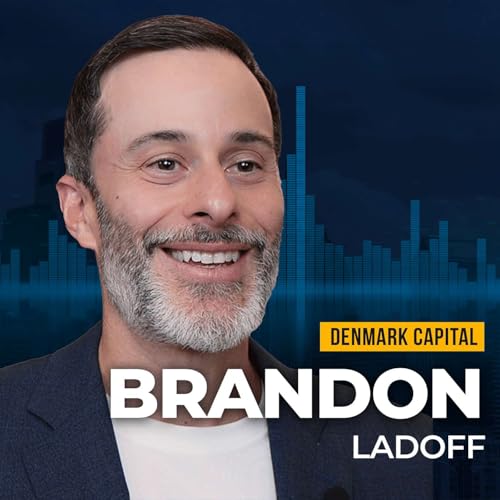
  • Inside an Emerging Manager: Building from the Ground Up
    Mar 18 2026

    Instead of sitting across from an allocator, this week we flip the table—and sit in the seat of an emerging manager building a firm from the ground up.
    In this conversation with Brandon Ladoff, Founder & Portfolio Manager of Denmark Capital, we explore what it actually looks like to launch a boutique investment firm in today’s market—where every decision mirrors the exact questions allocators ask behind closed doors.

    From fundraising realities to portfolio construction, from volatility to conviction, this episode is a case study in what emerging managers must get right to survive—and win.

    What we cover:
    • The leap from established firm to founder: “burning the boats”
    • How emerging managers think about alignment, patience, and capital base
    • The tension between unconstrained investing and allocators’ expectations
    • The reality of fundraising when your strategy embraces volatility

    Why this episode is different:
    Most conversations focus on how allocators evaluate managers.

    This one shows you the other side:
    👉 What it feels like to be the emerging manager
    👉 The trade-offs you don’t see in pitch decks
    👉 The conviction required when there’s no institutional safety net

    As discussed in the episode, launching a firm is less about theory and more about execution under uncertainty—a real-time test of everything we try to understand in emerging manager due diligence.

    Más Menos
    1 h
  • Seeding the Next Generation of Asset Managers: Hedge Funds, VC, and Private Equity Compared
    Mar 11 2026

    What does it really take to back the next generation of investment managers?

    In this special live recording of the Dakota Live Podcast from Drexel University’s Boathouse Row, host Robert Morier moderates a rare discussion on GP seeding across three different asset classes—hedge funds, venture capital, and lower-middle-market private equity.

    While GP seeding is often discussed within a single asset class, this conversation brings together three distinct perspectives to explore how the strategy evolves depending on the market, the structure of capital, and the type of investor being backed.

    The panel examines how seed investors identify emerging talent, structure alignment with founders, and help new firms overcome the “chicken-and-egg” challenge of launching a fund.

    Joining the discussion:

    Scott Schweighauser, Founder & Managing Partner of Borealis Strategic Capital Partners – sharing the hedge fund seeding perspective and the importance of identifying talent early.

    Andrea Lo, Founder & Managing Partner of Main Character Capital – discussing GP seeding in venture capital and how to back the next generation of specialized VC managers.

    Dan Pogue, Vice President at Catalyst Partners – explaining how seed investors support first-time private equity managers and help institutionalize emerging firms.

    Together, they explore:

    ✓ How GP seeding differs across hedge funds, venture capital, and private equity
    ✓ Why alignment, structure, and value-add matter in early-stage asset management
    ✓ The evolving economics of GP stakes and revenue-share structures
    ✓ How investors identify emerging managers before they become household names
    ✓ The challenges of launching a firm in an increasingly competitive fundraising environment

    For allocators, emerging managers, and anyone interested in the institutional investment ecosystem, this episode offers a rare cross-asset look at how early capital shapes the future of asset management.

    Más Menos
    55 m
  • Underwriting Consumer VC: Early-Stage Due Diligence and the Operator Edge
    Mar 4 2026

    In this episode of dakota Live!, we step into a space where venture capital meets operator realism.

    While we often sit with allocators and emerging manager gatekeepers, today we turn the lens toward the managers themselves — and examine how early-stage consumer investing mirrors the same discipline allocators demand in emerging manager due diligence.

    Robert Morier sits down with Sean Kelly and Christine Wang of Family Fund to unpack what underwriting consumer brands can teach us about underwriting people — and why early-stage due diligence in venture is less about trend-chasing and more about pattern recognition, character assessment, and disciplined execution.

    This conversation moves beyond surface-level “consumer is back” narratives. Instead, we explore:
    • Why Series A consumer investing may offer asymmetric risk/reward in a valuation-compressed environment
    • How data-rich consumer businesses reduce “taste risk” through measurable retention, velocity, and unit economics
    • The difference between community as a vanity metric and community as a moat
    • How emotional resonance paired with rational economics creates durable companies
    • What allocators often misunderstand about consumer venture — and why specialization may be the real edge

    For institutional investors and consultants evaluating emerging managers, this episode offers a parallel lens:

    Just as consumer VCs must separate fad from durable trend, allocators must separate storytelling from scalable process.

    If you allocate to venture, evaluate emerging managers, or think deeply about how consumer behavior drives GDP and exit pathways, this conversation offers a structured view of what early-stage investing looks like beneath the narrative layer.

    Más Menos
    59 m
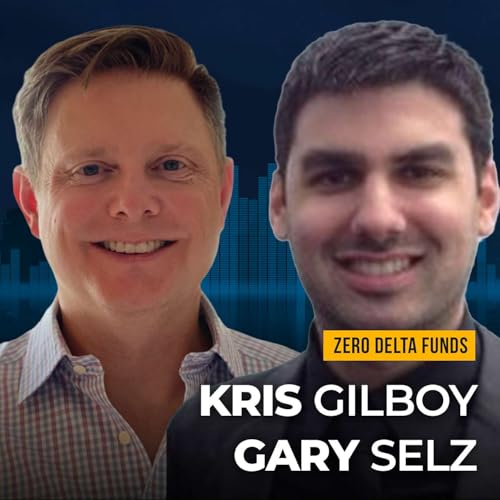
  • Understanding Volatility in a Structurally Shifting Market
    Feb 25 2026

    In the latest episode of dakota live!, we step into a part of the market that rarely gets explained well — the mechanics of volatility trading.

    As equity markets move through higher dispersion, regime shifts, and increasingly systematic flows, some of the most interesting price discovery is happening in derivatives.

    Volatility isn’t just a hedge or a headline metric. It’s an asset shaped by positioning, liquidity, and structural supply-demand imbalances.

    We discuss how firms like Zero Delta, a hedge fund of funds, allocating to specialists trading single-name and index options — evaluate markets where dealer gamma positioning, liquidity fragmentation, and flow-driven distortions can create temporary pricing inefficiencies.

    This is a conversation about process.

    How experienced volatility traders:

    ✓ Interpret skew and term structure
    ✓ Think about convexity and asymmetric payoffs
    ✓ Adjust exposure as opportunity sets expand or compress
    ✓ Trade relative value rather than directional views

    The broader takeaway for institutional allocators is structural. As passive flows grow and options volumes reach record levels, derivatives markets increasingly reflect stress and opportunity in real time.

    Volatility trading — when executed as disciplined relative value — can become a way to engage dislocations created by crowding and hedging demand, rather than simply reacting to them.

    If you allocate to hedge funds — or evaluate them — understanding how volatility traders actually think beneath the surface of the VIX is imperative.

    If you’re an individual market participant trading your own account, appreciating how professionals interpret skew, positioning, liquidity, and convexity can sharpen how you think about risk.

    This episode is about framework — a closer look at the mechanics that drive derivatives markets and the discipline required to navigate them.

    Más Menos
    53 m
  • How University Endowments Invest | Private Equity & Institutional Strategy
    Feb 18 2026

    In this special “On the Road” episode of the Dakota Live! Podcast, Robert Morier travels to the University of Tennessee in Knoxville for a live CIO panel discussion on endowment management, private equity, private credit, asset allocation, and manager research & due diligence.
    Featuring:

    • Rip Mecherle, CIO, University of Tennessee System ($1.8B endowment)

    • Cathy Ulozas, CIO, Drexel University

    • Bridget Sproles, Partner & Co-Head of Healthcare Practice, Cambridge Associates

    • Ryan Farley, Professor and Director, Torch Fund Program, University of Tennessee

    Recorded in front of students from Drexel University and the University of Tennessee, this episode explores how institutional investors think about:

    • Endowment portfolio construction (public vs. private markets)

    • Private equity allocation strategy and long-term commitments

    • The risks and realities of private credit in today’s market

    • How CIOs underwrite managers and assess integrity, culture, and risk

    • Teaching students to think like real-world investors

    The panel also shares candid career lessons — including trading mistakes, surviving market crises, and the importance of adaptability in finance.
    If you’re interested in institutional investing, asset allocation strategy, manager due diligence, endowment management, OCIO relationships, hedge funds, private markets, or building a career in investment management, this conversation is essential listening.
    Learn how top CIOs make capital allocation decisions under uncertainty — and how students can prepare to enter the world of institutional asset management.

    Más Menos
    1 h y 22 m