Episodios

  • Beyond the Curve: Necia's Journey Through Scoliosis
    Jun 12 2026

    Scoliosis Awareness Month Special: Diagnosed with severe scoliosis at age 12, Necia B. underwent life-changing spinal surgery and spent years navigating pain, fear, and isolation. Today, she uses her voice to inspire others facing similar challenges. In this episode, Necia shares her journey of resilience, recovery, and learning that a diagnosis doesn't define who you are. Hear how movement, community, and self-expression helped her get back to the life she loves.

    Visit spinehealth.org/podcasts for more stories and spine health resources.

    Support the show

    Más Menos
    32 m
  • Stay in the Game: Betty's Road Back from Osteoporosis
    May 29 2026

    At 77, Betty is still playing tennis — but getting there wasn't easy. In this episode, Dr. Rita Roy sits down with Betty to talk about her decades-long journey with osteoporosis: two foot fractures, a vertebral compression fracture, years of DEXA scans, and the medications that helped her rebuild her bones.

    Along the way, they discuss why a fracture can tell you more than any scan, how menopause accelerates bone loss, and why staying active may be the best thing you can do for your skeleton at any age.

    Betty's story is proof that with the right care and attitude, you can keep moving for decades to come.

    Visit spinehealth.org/podcasts for more stories and spine health resources.

    Tune in to learn about the future of spinal health!

    Support the show

    Más Menos
    20 m
  • Pushing Limits, Finding Balance: An Athlete’s Spine Story
    Apr 29 2026

    Amanda Rosen’s story is one of relentless determination, unexpected setbacks, and ultimately, transformation. Diagnosed with spondylolisthesis at just seven years old, Amanda grew up managing chronic pain—but never letting it define her. She went on to become a Division I lacrosse player at Rutgers University and later pushed her limits even further as an Ironman competitor.

    But in 2016, while training for a qualifying race for Kona, everything changed. A sudden progression of her condition left her in debilitating pain—unable to walk, care for her family, or continue the active life she had always known. After exhausting conservative treatments, Amanda made the difficult decision to undergo spinal fusion surgery.

    In this episode, Amanda shares her journey from lifelong athlete to patient, navigating insurance challenges, surgery, and recovery with resilience and perspective. Her story is not just about healing physically, but about redefining identity, asking for help, and finding strength beyond performance.

    Today, Amanda is pain-free and living life on her terms—reminding us all that recovery is possible, and that even in our hardest moments, we can find a way forward.

    Support the show

    Más Menos
    44 m
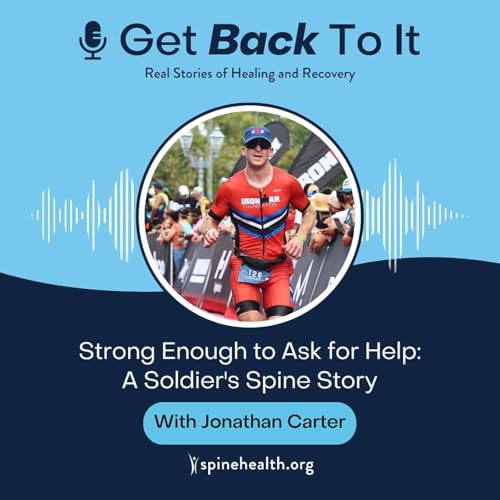
  • Strong Enough to Ask for Help: A Soldier's Spine Story
    Mar 24 2026

    In this episode of Get Back To It, Dr. Rita Roy speaks with Platoon Sergeant Jonathan Carter, whose spine condition began as mild shoulder blade discomfort during his early years of military service and gradually progressed into cervical degenerative disc disease with nerve involvement. What initially seemed like a posture related issue evolved over several years into radiating pain, hand clumsiness, and loss of function, symptoms that were easy to dismiss while meeting the physical and leadership demands of military life.

    After extensive conservative treatment, a sudden worsening of symptoms led to advanced imaging and a definitive diagnosis. Jonathan ultimately underwent a two level cervical fusion to relieve nerve compression and stabilize his spine.

    While surgery quickly resolved many of his neurological symptoms, recovery required patience, discipline, and a renewed focus on rebuilding strength and confidence in his body. Jonathan reflects on navigating injury while serving as a leader, the pressure to push through pain, and the importance of advocating for your health, even in high performance environments like the military.

    Now returning to endurance training, competing in triathlons, and preparing for an ultra marathon, Jonathan’s story highlights that resilience is not just about pushing through, but recognizing when to act, trusting your care team, and rebuilding both physical and mental strength.

    Support the show

    Más Menos
    50 m
  • When Symptoms Blur Together: A Spine Patient’s Story
    Feb 24 2026

    In this episode of Get Back To It, Dr. Rita Roy speaks with Rich Rabin, a technology and product leader whose life was upended by severe nerve pain caused by an L5–S1 disc herniation. What began as manageable glute pain progressed into debilitating nerve symptoms that affected his sleep, mobility, and overall quality of life. After months of conservative treatments—including physical therapy and injections—Rich ultimately underwent a microdiscectomy to relieve nerve compression.

    While surgery addressed the primary issue, recovery proved gradual and unpredictable. Rich shares candidly about the mental and emotional challenges of healing, the importance of self-advocacy, and learning that spine recovery is rarely linear.

    Inspired by his own frustration tracking fluctuating symptoms, Rich created Recoverly, a free iPhone app designed to help patients log daily symptoms and identify trends—supporting clearer communication with healthcare providers.

    Rich’s story is a powerful reminder that healing takes patience; progress isn’t always steady, and resilience can grow from even the most difficult setbacks.

    Support the show

    Más Menos
    34 m
  • A Spine Surgeon’s Journey: Seeing The Operating Room From Both Sides
    Dec 16 2025

    A Spine Surgeon’s Journey: Seeing the Operating Room From Both Sides

    What happens when a spine surgeon becomes a patient?

    In this powerful episode of Get Back To It, Dr. David Polly shares his deeply personal journey of moving from the surgeon’s chair to the patient’s bed. After years of treating complex spine conditions, Dr. Polly experienced firsthand what it’s like to navigate pain, uncertainty, and recovery from the other side of the operating room.

    Through honest reflection, he explores how this experience reshaped his understanding of healing, empathy, and patient care—and how it continues to influence the way he practices medicine today. This conversation offers valuable insight for patients, caregivers, and medical professionals alike, reminding us that recovery is not just physical, but profoundly human.

    🎧 Tune in for a story of resilience, perspective, and what it truly means to Get Back To It.

    Support the show

    Más Menos
    20 m
  • Silver Lining: Growing A Backbone
    Nov 25 2025

    Silver Alkhafaji’s journey through chronic back pain began when she was a teenager and intensified during her PhD studies at UCSF. Misdiagnoses, escalating symptoms, and delayed imaging prolonged her suffering until an MRI finally revealed L5–S1 spondylolisthesis caused by a bilateral pars defect. After conservative care failed, Silver underwent a spinal fusion with laminectomy in December 2023. Recovery was far from linear—marked by setbacks, medication trials, physical therapy challenges, and emotional hurdles—but through perseverance, self-advocacy, and creative expression, she reclaimed her life. Today, Silver embraces healing through writing, community, and continued strength-building. Her story exemplifies the power of persistence, proper diagnosis, and listening to one’s body.

    Support the show

    Más Menos
    39 m
  • From Back Pain to Backstroke: A Young Swimmer’s Resilient Story
    Oct 17 2025

    In this episode of the Get Back To It Podcast, we hear the inspiring journey of 14-year-old athlete Maeve Danaher from Chicago, Illinois. A dedicated competitive swimmer, Maeve’s life changed dramatically when she was diagnosed with double scoliosis — one curve measuring 70 degrees and another at 60. Facing a 10-hour spinal fusion surgery, Maeve’s determination and courage were tested in ways she never imagined.

    Maeve opens up about the emotional toll of preparing for major surgery, the challenges of losing independence, and the long road to recovery marked by pain, patience, and perseverance. With the unwavering support of her parents, medical team, and friends, she learned to walk again just a day after surgery and gradually rebuilt her strength.

    Cleared to return to competitive swimming less than a year later, Maeve’s story is one of resilience, positivity, and youthful optimism. Her journey reminds us that recovery is not only about physical healing, but also about mental strength and hope — showing that even after life-changing surgery, it’s possible to dive back in and keep swimming toward your dreams.

    Support the show

    Más Menos
    30 m