• How To Plan For Your Kids’ College Costs During Divorce
    Sep 22 2026
    Major life transitions like divorce can change almost every aspect of your financial Paying for college can be complicated enough when parents are together. Add divorce, two households, different financial priorities, and potentially very different ideas about who should pay for what, and planning for your child's education can quickly become another source of conflict.Strategic Divorce Consultant Mardi Winder talks with Brian Eyster, creator of the G.R.A.D. Process™, about approaching college planning strategically while keeping the family's larger financial picture in mind.Brian explains why he believes there is no single right way to fund a college education. Rather than automatically choosing a 529 plan, prepaid tuition program, or another commonly recommended option, parents should first determine what they are trying to accomplish and then consider the strategies that best support those goals.For divorced and divorcing parents, these conversations become even more important. Mardi and Brian discuss why parents may want to address future college expenses during the divorce process rather than relying on informal promises about what each parent intends to do years down the road. They also talk about balancing the desire to help children graduate without overwhelming debt with the need for parents to protect their own long-term financial security.Q&AQ: Should every parent use a 529 plan to save for college?A: Not necessarily. Brian explains that 529 plans can be useful tools, but he cautions against assuming they are automatically the best choice for every family. College planning should consider the family's cash flow, existing assets, tax situation, retirement goals, and individual circumstances before deciding where the money should come from.Q: Why should college expenses be discussed during divorce?A: What parents agree to informally today may look very different several years after the divorce. Relationships, finances, and circumstances can change. Discussing expectations during the divorce process gives parents an opportunity to clarify what each person intends to contribute and, where appropriate, address those expectations more specifically in their settlement agreement or divorce decree.Q: How can paying for college affect retirement planning?A: Money used for tuition is money that is no longer available for other purposes, including continued investment for retirement. Brian encourages parents to consider the long-term impact of their college-funding decisions instead of looking only at the immediate tuition bill.Q: What should parents decide before choosing a college-funding strategy?A: Start with the objective. Brian recommends that parents first determine what they actually want to accomplish. Do they intend to pay all tuition, contribute a specific amount, help with certain expenses, or take another approach? Once the objective is clear, they can begin evaluating the different ways to fund it.Q: Is there anything parents should consider when their child turns 18?A: Yes. Brian points out that once children become legal adults, parents may no longer automatically have the authority to step in if a medical or other serious situation occurs. Families should speak with an appropriate legal professional about documents their young adult may need before leaving for college.About the Guest:Brian S. Eyster, CCFC®, CCFS®, ELA™, LIC, CIA is the founder of the G.R.A.D. Process™, a system that helps families pay for their children’s college education without sacrificing their retirement. With 28 years in financial services and a personal background in planning for his own children’s education, he specializes in cash flow management, risk mitigation, and resource allocation. He regularly speaks on topics such as creative funding for college and tax-advantaged strategies, drawing on years of experience helping families navigate complex financial decisions. Brian lives in Metro Detroit with his wife, two children, three cats, and enough guitar, tennis and baseball gear to outfit three generations.To connect with Brian:Website: www.essentialstrategies.netCertified College Funding Specialist: https://www.hireaccfs.com/brian-eysterLinkedIn: https://www.linkedin.com/in/brianseyster/Facebook: https://www.facebook.com/EssentialStrategiesLLCAbout the HostMardi Winder is a Strategic Divorce Consultant and High-Conflict Divorce Coach who helps high-achieving individuals navigate divorce with clarity, confidence, and control. Drawing on more than 30 years of experience in mediation, divorce coaching and conflict resolution, she supports clients in making smart decisions while reducing emotional and financial fallout, particularly in high-conflict, high-asset and complex divorces. Mardi is the founder of Positive Communication Systems, LLC, and the Strategic Divorce Directory, LLC.For Mardi’s gift: The Resilience Building Blueprint: A 28-Day Journey To A Stronger You https://...
    Show more Show less
    32 mins
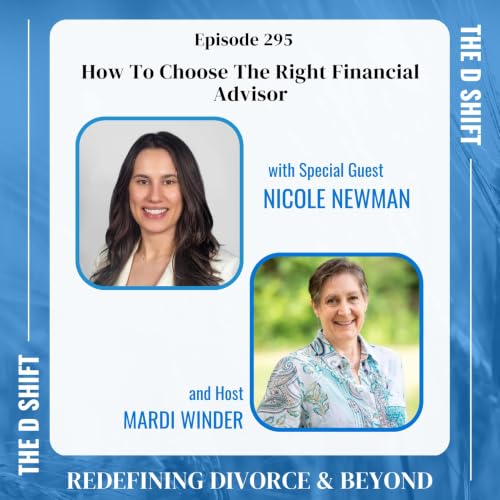
  • How To Choose The Right Financial Advisor
    Sep 17 2026
    Major life transitions like divorce can change almost every aspect of your financial life. If you were not the person who primarily handled investments or long-term financial decisions during your marriage, suddenly being responsible for those choices can feel overwhelming. Even if you were involved in the finances, making decisions on your own after divorce can be very different.Strategic Divorce Consultant Mardi Winder talks with Nicole Newman, MBA, CPA, and Investment Advisor at Stone Creek Advisors, about building financial confidence and finding the right professional to help you make informed decisions after divorce.Nicole explains why financial confidence is not simply something you either have or you don’t. For many women, there are historical and generational reasons why they may not have been encouraged to take an active role in investing and financial decision-making. Divorce can suddenly change that, creating both a challenge and an opportunity to become more engaged in your own financial future.Mardi and Nicole also get very practical about choosing an Investment Advisor. They discuss what it means to work with a fiduciary, why you should interview several professionals before making a decision, what questions to ask about fees and how your money is held, and some of the red flags that should make you stop and ask more questions.Most importantly, becoming financially independent does not mean you need to become a financial expert or make every decision by yourself. It means understanding your options, asking questions, building a trusted professional team, and remaining an active participant in the decisions that affect your future.Questions we explore:Why can financial decisions feel so overwhelming after divorce?If someone else handled much of the financial decision-making during the marriage, divorce may be the first time you are solely responsible for those choices. Even people who understand budgeting and everyday finances may feel less confident when it comes to investing and long-term financial planning.What should you look for when choosing a financial professional?Nicole recommends interviewing several professionals rather than automatically choosing the first person you meet. Ask whether they are a fiduciary, how they are compensated, what fees you will pay, where your assets will be held, and how they will involve you in the decision-making process.What are some red flags when interviewing an Investment Advisor?Vague answers about fees, compensation, or where your money will be held deserve closer attention. Another significant warning sign is anyone promising a specific investment return. A reputable professional should be willing to clearly explain how they work and answer your questions.Do you need significant wealth before talking to an Investment Advisor?Not necessarily. Some advisors have minimum investment requirements and others do not. The important thing is finding someone who will give you appropriate advice based on your actual financial situation rather than simply trying to sell you a product or service.What does financial independence really mean after divorce?Financial independence does not mean doing everything alone. It means developing the confidence to ask questions, understand your choices, work collaboratively with qualified professionals, and take ownership of the decisions affecting your financial future.About the Guest:Nicole Newman, MBA, CEPA, is an Investment Advisor at StoneCreek Advisors, where she works with individuals and families navigating some of life’s most significant transitions—from divorce and loss to business succession. With a background in corporate strategy and mergers & acquisitions, Nicole brings a strategic, big-picture perspective to complex financial decisions. She is particularly passionate about helping women move from financial uncertainty to becoming confident stewards of their money and future. Nicole is known for building clear frameworks that simplify complex financial decisions, helping clients feel informed, empowered, and in control during pivotal moments of change.For Nicole’s gift: https://bookings.cloud.microsoft/bookwithme/user/a46463ea2af748168a1632fbec4345e2%40stonecreek-advisors.com/meetingtype/g1QcOc2BDU-PeXQ28CtY0A2?anonymous&ismsaljsauthenabled=trueTo connect with Nicole:LinkedIn: https://www.linkedin.com/in/nicoledupranewman/ Website: https://www.stonecreek-advisors.com/About the HostMardi Winder is a Strategic Divorce Consultant and High-Conflict Divorce Coach who helps high-achieving individuals navigate divorce with clarity, confidence, and control. Drawing on more than 30 years of experience in mediation, divorce coaching and conflict resolution, she supports clients in making smart decisions while reducing emotional and financial fallout, particularly in high-conflict, high-asset and complex divorces. Mardi is the founder of Positive Communication Systems, LLC, and the Strategic Divorce Directory,...
    Show more Show less
    29 mins
  • Tips For Healthy Coparenting After Divorce
    Sep 15 2026
    The divorce process ends the marriage, but when you have children together, it does not end your relationship with your former spouse. Instead, you are faced with the challenge of creating an entirely different relationship as co-parents.In this episode, Strategic Divorce Consultant Mardi Winder talks with Certified Professional Coach Marisa Belger about what it takes to build a healthy co-parenting relationship after divorce. Marisa brings both professional and personal experience to the conversation, having created a successful co-parenting dynamic involving her children, their fathers, and new partners.Mardi and Marisa discuss why trust is such an important part of co-parenting and why that trust has to be built slowly over time. They explore the importance of communication, flexibility, and giving the other parent some grace when things do not go exactly according to plan. They also talk about recognizing that someone who may not have been the right spouse for you can still be a loving, capable parent to your children.The conversation also looks at the personal growth that can come from divorce and co-parenting. Learning to separate your own hurt, expectations, and emotions from what is actually happening with your children can be difficult, but it can also help you become more intentional about how you respond and the kind of relationship you want to create moving forward.Questions we cover:Can you start preparing for co-parenting before the divorce is final?Yes. Conversations about expectations, communication, boundaries, and what matters most to each parent can begin early and help establish the foundation for the new parenting relationship.Does successful co-parenting mean agreeing on everything?No. Each parent may have a different parenting style. The goal is not to control how the other parent does everything, but to recognize what truly matters and distinguish those issues from differences that may simply require flexibility.Why is trust so important after divorce?Co-parenting requires both parents to rely on one another in an entirely new way. That kind of trust does not automatically carry over from the marriage and often has to be rebuilt gradually.How do you keep old marital conflict from taking over the co-parenting relationship?It requires recognizing that the marriage and the parenting partnership are two different relationships. Old roles, resentments, and patterns may need to be intentionally dismantled so something new can take their place.What can children learn from watching their parents navigate divorce?Children can see that difficult emotions and major life transitions can be handled without pretending everything is fine or allowing those emotions to overwhelm the family. Parents have an opportunity to model resilience, emotional awareness, and the ability to move through difficult change.About the Guest:Marisa Belger is a certified professional coach who supports mothers through divorce and co-parenting. She believes divorce with kids isn't a failure or a detour from your growth. It's the most rigorous personal development curriculum a modern woman can be handed, custom-designed for exactly who she needs to become. Marisa helps high-achieving mothers stop trying to put the old pieces back together and instead get built by the experience, drawing on somatic work, nervous-system science, and contemplative traditions. She coaches women at every stage, from contemplating separation to years deep into a dynamic that isn't working. She also co-parents teenagers across a blended family of six, and knows this terrain from the inside. She is co-author of the bestselling The First Forty Days, with 18+ years writing about women's wellness. You can learn more about Marisa at marisabelger.com. Marisa offers customized 1:1 coaching packages, workshops, and retreats. For Marisa’s gift: https://www.marisabelger.com/stop-the-spin To connect with Marisa:Linkedin: linkedin.com/in/marisabelger/ Website: marisabelger.com IG: @marisabelger About the HostMardi Winder is a Strategic Divorce Consultant and High-Conflict Divorce Coach who helps high-achieving individuals navigate divorce with clarity, confidence, and control. Drawing on more than 30 years of experience in mediation, divorce coaching and conflict resolution, she supports clients in making smart decisions while reducing emotional and financial fallout, particularly in high-conflict, high-asset and complex divorces. Mardi is the founder of Positive Communication Systems, LLC, and the Strategic Divorce Directory, LLC.For Mardi’s gift: The Resilience Building Blueprint: A 28-Day Journey To A Stronger You https://www.divorcecoach4women.com/rbbConnect with Mardi on Social Media:Facebook - https://www.facebook.com/Divorcecoach4womenLinkedIn: https://www.linkedin.com/in/mardiwinder/Instagram: https://www.instagram.com/divorcecoach4women/YouTube: https://www.youtube.com/@divorcecoach4womenThanks for Listening!Thanks so much for listening to...
    Show more Show less
    26 mins
  • Is Your Life After Divorce Stuck in Park, Reverse, or Drive?
    Sep 10 2026
    When life changes unexpectedly, it can be tempting to keep looking backward at what was, remain exactly where you are because moving forward feels uncertain, or wait for someone else to tell you what you should do next. Eventually, however, moving forward requires making a choice about the direction you want your life to take.Today, Mardi Winder talks with Be Jensen, founder and CEO of Life and Career Transformation LLC, about self-worth, personal transformation, and what happens when you stop waiting for other people to recognize your value and begin recognizing it for yourself.Be shares her own experience of feeling overlooked and undervalued professionally and the moment she realized she could no longer depend on someone else to validate her worth or give her permission to pursue what she wanted. That decision ultimately changed far more than her career. It changed the way she communicated, the way she approached her relationships, and the way she saw herself.The conversation then turns to divorce and other major life transitions, when the identity, roles, relationships, and plans you once counted on may suddenly change. Be uses the analogy of a car's gear shift: you can stay in Park, keep looking backward in Reverse, or put your life into Drive and begin moving toward something new.Questions We ExploreQ: Why is it so easy to feel stuck after a major life transition?A: When something important ends, you aren't only dealing with the loss itself. You may also be questioning your identity, your purpose, and what your life is supposed to look like now. Fear and uncertainty can make staying exactly where you are feel safer than deciding what comes next.Q: What does it mean to put your life in “Drive”?A: It doesn't mean pretending the past didn't happen or immediately knowing exactly where you're going. It means beginning to focus on what you have now, who you are now, and the next step you can take toward the life you want to create.Q: Do you need a complete plan before you start moving forward?A: No. Mardi and Be discuss how progress can begin with a very small step. You don't have to transform your entire life overnight. You do have to decide to begin.Q: Why does self-worth matter so much during change?A: Be describes how her own life began changing when she stopped waiting for someone else to validate her value. Recognizing your own worth can influence what you ask for, what you accept, how you communicate, and what you believe is possible for your future.Q: What keeps people looking backward instead of enjoying their lives now?A: Be talks about two powerful “thieves”: regrets about the past and fear of the future. When your attention is consumed by what already happened or what might happen next, it can become difficult to recognize the possibilities that exist in your life today.About the Guest:Be Jensen is the CEO & Founder of Life and Career Transformation, LLC with over 30 years of experience driving personal growth & leadership development, organizational excellence, and workforce advancement. She is a transformational life & executive coach, trainer, and speaker certified by the John C. Maxwell Leadership Team and the Brave Thinking Institute Be draws on her own lived experience to guide clients through powerful breakthroughs & to claim the lives & careers they deserve.For Be’s gift: https://life-career-transformation.com/To connect with Be:Website: https://resilientdivorcesolutions.com/LinkedIn: https://www.linkedin.com/in/life-career-transformation/About the HostMardi Winder is a Strategic Divorce Consultant and High-Conflict Divorce Coach who helps high-achieving individuals navigate divorce with clarity, confidence, and control. Drawing on more than 30 years of experience in mediation, divorce coaching and conflict resolution, she supports clients in making smart decisions while reducing emotional and financial fallout, particularly in high-conflict, high-asset and complex divorces. Mardi is the founder of Positive Communication Systems, LLC, and the Strategic Divorce Directory, LLC.For Mardi’s gift: The Resilience Building Blueprint: A 28-Day Journey To A Stronger You https://www.divorcecoach4women.com/rbbConnect with Mardi on Social Media:Facebook - https://www.facebook.com/Divorcecoach4womenLinkedIn: https://www.linkedin.com/in/mardiwinder/Instagram: https://www.instagram.com/divorcecoach4women/YouTube: https://www.youtube.com/@divorcecoach4womenThanks for Listening!Thanks so much for listening to our podcast! If you enjoyed this episode and think that others could benefit from listening, please share it using the social media buttons on this page.Do you have feedback or questions about this episode? Leave a comment in the section below!Subscribe to the PodcastIf you would like to get automatic updates of new podcast episodes, you can subscribe to the podcast on Apple Podcasts. You can also subscribe in your favorite podcast app.Leave an Apple Podcast ReviewRatings and ...
    Show more Show less
    24 mins
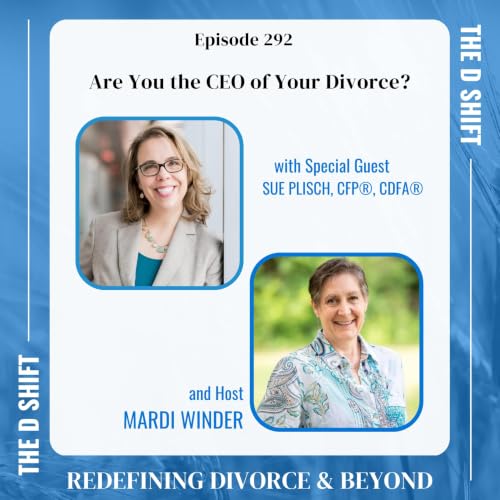
  • Are You the CEO of Your Divorce?
    Sep 8 2026
    A divorce settlement can look good on paper and still create financial problems that don't become obvious until months or even years later. Sometimes nobody is trying to hide money or take advantage of anyone. The problem is simply that the people making the decisions didn't have the complete financial picture.In this episode, Strategic Divorce Consultant Mardi Winder talks with Sue Plisch, CFP® and CDFA®, founder of Resilient Divorce Solutions, about some of the financial mistakes she sees people make during divorce and why understanding the details can matter just as much as agreeing on the numbers.Sue explains why divorcing individuals often need to think of themselves as the CEO of their own divorce and understand the different roles their professional team members play. She and Mardi discuss joint debt, the potential consequences of leaving financial obligations intertwined after divorce, tax concerns when one spouse has traditionally handled the finances, and why a child support or maintenance calculation is only as accurate as the income information entered into it.They also explore why bonuses, rental income, businesses, stock options, RSUs, and other forms of compensation can easily be overlooked when determining someone's true financial picture. The goal isn't to make divorce finances more complicated. It's to understand what you're agreeing to before you agree to it.Questions We ExploreQ: Why can a 50/50 division of assets still produce an unequal financial outcome?A: Assets and obligations that appear equal on paper may have very different financial characteristics. Understanding taxes, debt, liquidity, and how each piece affects your life after divorce can provide a much clearer picture of what a proposed settlement actually means.Q: Should your divorce attorney also be your financial expert?A: Not necessarily. Sue explains that attorneys bring essential legal expertise, but not every attorney has specialized financial training. Understanding which professional should handle which part of the divorce can help you get the information you need without expecting one person to do everything.Q: Why is leaving joint debt after divorce potentially risky?A: A divorce decree may assign responsibility for a debt to one former spouse, but that doesn't necessarily change the underlying agreement with the creditor. Sue discusses why completely disentangling financial lives whenever possible deserves careful attention.Q: Can child support or maintenance calculations be wrong even when an official calculator was used?A: The calculation depends on the information entered. Sue calls it the “garbage in, garbage out” principle. If bonuses, business income, rental properties, stock compensation, or other sources of income aren't included, the resulting number may not reflect the complete financial picture.Q: What if you're worried about tax decisions your spouse made during the marriage?A: Sue and Mardi discuss why this is an issue to raise with qualified tax and financial professionals, particularly when a business, unreported income, unusual withdrawals, or other concerns are involved. The important point is not to ignore those concerns simply because your spouse has always handled the taxes.This conversation is for general educational and informational purposes and is not individualized financial, tax, or legal advice.About the Guest:Sue Plisch, CFP®, CDFA®, is the founder of Resilient Divorce Solutions, LLC, where she helps individuals and couples navigate divorce with financial clarity and confidence. Drawing on her background in mathematics, financial planning, and divorce finance, she translates complex financial decisions into practical, understandable choices. Her goal is to help people make informed decisions that support long-term financial security and a stronger future. For Sue’s gift: https://resilientdivorcesolutions.com/To connect with Sue:Website: https://resilientdivorcesolutions.com/Instagram: https://www.instagram.com/smartsplitsue/ Facebook: https://www.facebook.com/ResilientDivorceSolutionsAbout the HostMardi Winder is a Strategic Divorce Consultant and High-Conflict Divorce Coach who helps high-achieving individuals navigate divorce with clarity, confidence, and control. Drawing on more than 30 years of experience in mediation, divorce coaching and conflict resolution, she supports clients in making smart decisions while reducing emotional and financial fallout, particularly in high-conflict, high-asset and complex divorces. Mardi is the founder of Positive Communication Systems, LLC, and the Strategic Divorce Directory, LLC.For Mardi’s gift: The Resilience Building Blueprint: A 28-Day Journey To A Stronger You https://www.divorcecoach4women.com/rbbConnect with Mardi on Social Media:Facebook - https://www.facebook.com/Divorcecoach4womenLinkedIn: https://www.linkedin.com/in/mardiwinder/Instagram: https://www.instagram.com/divorcecoach4women/YouTube: https://www.youtube.com/@...
    Show more Show less
    28 mins
  • Don’t Wait Until Divorce Is Over to Start Creating What Comes Next
    Sep 3 2026
    It is easy to approach divorce with one goal in mind: just get through it and let everything else go for the time being. Deal with the legal issues, make the financial decisions, manage the conflict, and worry about rebuilding your life once everything is finally over.But what if you didn't have to wait, and it actually serves you to start working on the next chapter of your life now?In this episode, Mardi Winder talks with love and relationship coach Lori Bryant Woolridge and psychologist and wellness coach Lauren Yellen Weinberg, creators of Your FAB Divorce, about approaching divorce as both an ending and an opportunity to begin discovering who you want to become.Lori and Lauren share why they believe emotional work belongs alongside the practical realities of divorce, particularly for women leaving long marriages who may have spent decades defining themselves through their roles as wives, mothers, partners, and caregivers. Rather than simply surviving the process, they encourage women to begin developing greater self-trust, understanding their emotions, and creating a vision for what they want their lives to look like on the other side.Questions We ConsiderQ: Why isn't focusing only on the legal and financial side of divorce enough?A: Those decisions certainly need attention, but Lori and Lauren believe ignoring the emotional side can leave you reaching the end of the divorce without knowing what comes next. Mardi describes this as the “post-divorce void,” when the battle is finally over but the sense of purpose, direction, and identity may not automatically return.Q: What happens when you've spent decades defining yourself through other people?A: Divorce can expose just how much of your identity has been connected to being a spouse, parent, caregiver, or part of a couple. Lori and Lauren encourage women to use the transition to explore who they are outside those roles and what they want for themselves going forward.Q: How can you keep fear and anger from driving the divorce?A: Lori shares the FAB approach: Focus on the present and what matters to you, Accept the realities you cannot control, and remain Bendable when circumstances change. The goal is to stay committed to your larger vision while remaining flexible about how you get there.Q: Why is self-trust so important during a major transition?A: Lauren explains that uncertainty becomes easier to navigate when you trust yourself to make decisions, adapt when circumstances change, and figure things out as you move forward. That self-trust can become part of the foundation for whatever comes next.Q: What if divorce could be more than something you simply survive?A: Lori and Lauren invite women to consider divorce as a transition that can also create space for growth, greater self-awareness, and a new understanding of who they want to become. Their message isn't about pretending divorce is easy. It is about recognizing that the process does not have to put the rest of your life on hold.About the Guests:Lori Bryant Woolridge, CPC, CSC, PCC. Love and Relationship Coach: Certified by the International Coach Federation (ICF), Lori has been coaching and creating personal growth curriculum for nearly 20 years. Lauren Yellin Weinberg, MS, NBC-HWC, Female Power and Wellbeing Coach.Lauren is a National Board Certified Health and Wellness Coach, and a Certified Happiness Coach, with a background as a psychologist and family therapist. Together, Lori and Lauren are the co-creators of Freedom to Flourish, providing self-paced programs, including Your F.A.B. Divorce, group support, and individual coaching designed to help women heal while they deal with the emotional chaos of divorce and prepare to flourish in their freedom.For Lauren and Lori’s gift:The Divorce Survival Toolkit https://lp.constantcontactpages.com/sl/L0aBqrUTo connect with the FAB Divorce team:Website: https://www.freedom-toflourish.com/About the HostMardi Winder is a Strategic Divorce Consultant and High-Conflict Divorce Coach who helps high-achieving individuals navigate divorce with clarity, confidence, and control. Drawing on more than 30 years of experience in mediation, divorce coaching and conflict resolution, she supports clients in making smart decisions while reducing emotional and financial fallout, particularly in high-conflict, high-asset and complex divorces. Mardi is the founder of Positive Communication Systems, LLC, and the Strategic Divorce Directory, LLC.For Mardi’s gift: The Resilience Building Blueprint: A 28-Day Journey To A Stronger You https://www.divorcecoach4women.com/rbbConnect with Mardi on Social Media:Facebook - https://www.facebook.com/Divorcecoach4womenLinkedIn: https://www.linkedin.com/in/mardiwinder/Instagram: https://www.instagram.com/divorcecoach4women/YouTube: https://www.youtube.com/@divorcecoach4womenThanks for Listening!Thanks so much for listening to our podcast! If you enjoyed this episode and think that others could benefit from listening, ...
    Show more Show less
    29 mins
  • Blindsided by Divorce After 50: How Do You Stop Obsessing Over Why?
    Sep 1 2026
    After decades of marriage, hearing that your spouse no longer wants to be married can shake far more than the relationship itself. It can affect your confidence, your sense of identity, and the future you thought you were building together.Strategic Divorce Consultant Mardi Winder talks with Divorce Coach Beth Carroll, who works specifically with women over 50 who have been blindsided by divorce.Drawing from her own experience after a 25-year marriage, Beth talks openly about the constant replay of what happened, waking up thinking about it, questioning what was wrong with her, and wondering whether she had wasted the best years of her life. She shares how she eventually began moving beyond those questions and now helps other women do the same.Mardi and Beth also discuss identity after a long marriage, the difference between helpful support and remaining stuck in the same story, and why emotional overwhelm during divorce can influence important decisions about your future.Questions We ExploreQ: Why can being blindsided by divorce feel so destabilizing?A: When your marriage, family, work, future plans, and identity have been intertwined for decades, the unexpected end of the relationship can leave you questioning not only what happened, but who you are without it.Q: How do you stop constantly thinking about your ex and what went wrong?A: Beth describes moving beyond simply retelling the story and exploring the beliefs and emotional patterns that kept her focused on the relationship. For her, reaching a place of neutrality rather than love, anger, or regret became an important sign that she was moving forward.Q: Can divorce support groups sometimes keep you stuck?A: Support and connection can be incredibly valuable, but Beth and Mardi discuss how groups that continually reinforce the pain without helping members move forward can sometimes become an echo chamber. Beth believes support works best when there is also an intentional path toward healing and growth.Q: Why might being the “good person” hurt you during divorce?A: Beth sees women who are so concerned about appearing reasonable or proving that they were not responsible for the divorce that they may avoid getting appropriate professional support or advocating for their own interests.Q: Are the best years of your life behind you after divorce later in life?A: Absolutely not. Beth's message is that the end of a decades-long marriage does not define the rest of your life. There can still be tremendous opportunity to discover what you want and create a future that belongs to you.About the Guest:Beth Carroll helps women 50+ who were blindsided by divorce stop obsessing over him, release the belief that they weren’t enough, and reclaim their confidence, calm, and sense of self. Using Rapid Reprogramming and somatic processing, Beth teaches why his leaving can feel like proof of your worth, and how to rewire that belief at the root so you can finally move forward.For Beth’s gift:The Blindside Distinction Guide: https://app.bethcarrollcoaching.com/theblindsideddistinction-840544To connect with Beth:Website: https://bethcarrollcoaching.com/Instagram: https://www.instagram.com/bethcarrollcoaching/Facebook: https://www.facebook.com/profile.php?id=61550705971239About the HostMardi Winder is a Strategic Divorce Consultant and High-Conflict Divorce Coach who helps high-achieving individuals navigate divorce with clarity, confidence, and control. Drawing on more than 30 years of experience in mediation, divorce coaching and conflict resolution, she supports clients in making smart decisions while reducing emotional and financial fallout, particularly in high-conflict, high-asset and complex divorces. Mardi is the founder of Positive Communication Systems, LLC, and the Strategic Divorce Directory, LLC.For Mardi’s gift: The Resilience Building Blueprint: A 28-Day Journey To A Stronger You https://www.divorcecoach4women.com/rbbConnect with Mardi on Social Media:Facebook - https://www.facebook.com/Divorcecoach4womenLinkedIn: https://www.linkedin.com/in/mardiwinder/Instagram: https://www.instagram.com/divorcecoach4women/YouTube: https://www.youtube.com/@divorcecoach4womenThanks for Listening!Thanks so much for listening to our podcast! If you enjoyed this episode and think that others could benefit from listening, please share it using the social media buttons on this page.Do you have feedback or questions about this episode? Leave a comment in the section below!Subscribe to the PodcastIf you would like to get automatic updates of new podcast episodes, you can subscribe to the podcast on Apple Podcasts. You can also subscribe in your favorite podcast app.Leave an Apple Podcast ReviewRatings and reviews from our listeners are extremely valuable to us and greatly appreciated. They help our podcast rank higher on Apple Podcasts, which exposes our show to more awesome listeners like you. If you have a minute, please leave an honest review on Apple Podcasts.
    Show more Show less
    21 mins
  • What to Do When Divorce Knocks You Off Your Game
    Aug 27 2026
    Divorce does not happen in isolation. You may be dealing with the end of your marriage while still running a business, leading a team, raising children, managing a household, and showing up in situations where people expect you to function just as you always have.But what happens when you simply don't feel like yourself anymore?Today, Strategic Divorce Consultant Mardi Winder talks with mental performance specialist and psychotherapist Tom Rohrer, PhD, about the connection between emotional experiences and our ability to perform in everyday life.Tom shares how unresolved emotional issues can affect confidence and performance, why taking responsibility is different from taking all the blame, and how realistically examining your role in a relationship can help interrupt unhealthy patterns. He also introduces brainspotting, a therapeutic approach he uses in his work, and discusses the connection between emotional processing, the brain, and the body.Questions We ExploreQ: Why can divorce affect your ability to perform in other areas of life?A: Significant emotional stress does not disappear simply because you walk into the office, attend an event, or need to take care of your family. Tom explains how unresolved emotional experiences can be triggered in situations that require us to perform and function at our usual level.Q: How do you stop blaming yourself for everything that went wrong in the marriage?A: Tom discusses “disputation,” a positive psychology approach that involves examining what actually happened, identifying your realistic share of responsibility, and separating that from the tendency to personalize everything that went wrong. Q: Can changing your own behavior interrupt an unhealthy relationship pattern?A: Sometimes. When one person stops covering, placating, making excuses, or participating in an established dynamic, the pattern itself may begin to change.Q: What is brainspotting?A: Tom describes brainspotting as a therapeutic approach that uses a person’s visual field along with awareness of physical sensations as part of processing emotional experiences. He discusses how it developed from EMDR and how he incorporates it into his work. Q: What if you don't feel confident or capable after divorce?A: Rather than accepting that this is simply who you are now, Tom encourages looking at what may be underneath that loss of confidence and addressing the emotional experiences that may be affecting how you show up today.About the Guest:Tom Rohrer, PhD, is a mental performance specialist and psychotherapist who assists public performers, mainly athletes to: resolve emotional issues that are causing performance problems, integrate mental resource states like confidence, courage, or optimism, and expand their ability to perform in the flow state (zone). He also helps his clients with addiction issues by neutralizing triggers, boosting motivation and commitment. He works individually and offers webinars.To connect with Tom:Website: https://tomrohrer.com/About the HostMardi Winder is a Strategic Divorce Consultant and High-Conflict Divorce Coach who helps high-achieving individuals navigate divorce with clarity, confidence, and control. Drawing on more than 30 years of experience in mediation, divorce coaching and conflict resolution, she supports clients in making smart decisions while reducing emotional and financial fallout, particularly in high-conflict, high-asset and complex divorces. Mardi is the founder of Positive Communication Systems, LLC, and the Strategic Divorce Directory, LLC.For Mardi’s gift: The Resilience Building Blueprint: A 28-Day Journey To A Stronger You https://www.divorcecoach4women.com/rbbConnect with Mardi on Social Media:Facebook - https://www.facebook.com/Divorcecoach4womenLinkedIn: https://www.linkedin.com/in/mardiwinder/Instagram: https://www.instagram.com/divorcecoach4women/YouTube: https://www.youtube.com/@divorcecoach4womenThanks for Listening!Thanks so much for listening to our podcast! If you enjoyed this episode and think that others could benefit from listening, please share it using the social media buttons on this page.Do you have feedback or questions about this episode? Leave a comment in the section below!Subscribe to the PodcastIf you would like to get automatic updates of new podcast episodes, you can subscribe to the podcast on Apple Podcasts. You can also subscribe in your favorite podcast app.Leave an Apple Podcast ReviewRatings and reviews from our listeners are extremely valuable to us and greatly appreciated. They help our podcast rank higher on Apple Podcasts, which exposes our show to more awesome listeners like you. If you have a minute, please leave an honest review on Apple Podcasts.
    Show more Show less
    23 mins