Episodios

  • Trust (not scale) wins: Jeremy Davis shares how to bridge “the gap” in mortgage lending
    Mar 19 2026
    On this episode of Power House, Zeb Lowe sits down with Jeremy Davis to discuss a leadership philosophy rooted in community trust, culture and long-term relationships. Davis shares how growing up in public housing shaped his understanding of how trust actually forms within underserved communities, and why lenders often miss the places where those relationships begin. He explains his concept of “community institutions of trust,” including barbershops, churches and neighborhood gathering spots where reputations and recommendations carry real influence. The conversation explores Davis’ “barbershop to browser” framework, which connects real-world community engagement with digital strategy. Instead of using online platforms to introduce lenders to new audiences, Davis believes digital presence should reinforce trust already built through authentic relationships. Inside Southern Bancorp, Davis has built a culture-first operating model that prioritizes service, consistency and community presence. The results include strong first-time homebuyer growth, deep rural market penetration and rare loan officer retention in today’s competitive mortgage environment. For leaders thinking about the future of lending, Davis offers a simple principle: trust can’t be scaled, but it can be built intentionally. Related to the episode: Zeb Lowe’s LinkedIn Jeremy Davis' LinkedIn Southern Bancorp The Power House podcast brings the biggest names in housing to answer hard-hitting questions about industry trends, operational and growth strategy, and leadership. Join HousingWire’s Zeb Lowe every Thursday morning for candid conversations with industry leaders to learn how they’re differentiating themselves from the competition. Hosted and produced by the HousingWire Content Studio.
    Más Menos
    29 m
  • Dave Savage: The next “great divide” in mortgage is already forming
    Mar 12 2026
    On this episode of Power House, Zeb Lowe sits down with mortgage coach and industry veteran Dave Savage to discuss what separates the industry’s top originators from the rest and why that gap is likely to grow. Savage explains how shifting from a rate-focused sales approach to an advice-driven process transformed his own career and why consistent systems and repeatable customer experiences are the real differentiators among top producers. The conversation also explores the industry’s ongoing challenge with technology adoption and why investing in tools alone isn’t enough. Real competitive advantage, Savage argues, comes when technology becomes embedded in daily workflows and company culture. Looking ahead, Savage believes artificial intelligence will dramatically reshape how borrowers find loan officers and receive guidance. Rather than replacing originators, AI will amplify those who position themselves as trusted advisors. For mortgage professionals navigating a changing market, Savage offers clear guidance: build a personal brand, experiment with AI, and focus on delivering advice—not just transactions. Related to the episode: Zeb Lowe's LinkedIn Dave Savage's LinkedIn The Power House podcast brings the biggest names in housing to answer hard-hitting questions about industry trends, operational and growth strategy, and leadership. Join HousingWire’s Zeb Lowe every Thursday morning for candid conversations with industry leaders to learn how they’re differentiating themselves from the competition. Hosted and produced by the HousingWire Content Studio.
    Más Menos
    29 m
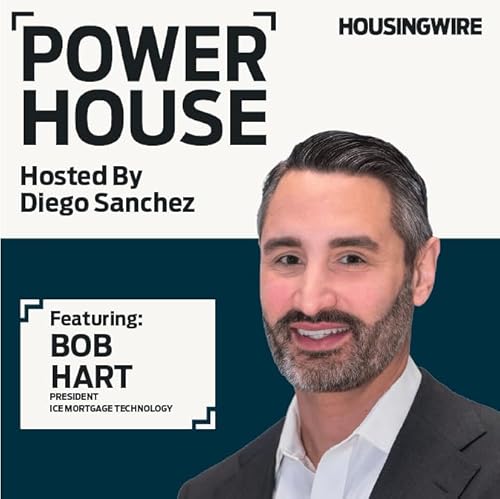
  • Bob Hart on AI, security, and the next phase of mortgage tech
    Mar 11 2026
    As the mortgage industry prepares for one of its largest annual gatherings, Diego Sanchez sits down with Bob Hart to preview what professionals can expect at Experience 2026, hosted by ICE Mortgage Technology at the Wynn Las Vegas. The event will bring together more than 3,000 industry leaders, hundreds of companies, and a full agenda focused on innovation, strategy, and the future of mortgage technology. Hart explains how the conference is designed to give attendees practical insights and tools they can immediately apply to their businesses. The conversation explores key themes shaping this year’s event—including artificial intelligence in mortgage operations, cybersecurity and fraud prevention, market conditions affecting lenders, and leadership development across the industry. Hart also previews new technology investments aimed at creating a more connected ecosystem linking originators, servicers, and consumers. For professionals navigating a rapidly evolving market, this episode offers an inside look at the conversations and innovations shaping the next chapter of mortgage technology. Related to this episode: Bob Hart's LinkedIn ICE Mortgage Technology The Power House podcast brings the biggest names in housing to answer hard-hitting questions about industry trends, operational and growth strategy, and leadership. Join HousingWire’s Zeb Lowe every Thursday morning for candid conversations with industry leaders to learn how they’re differentiating themselves from the competition. Hosted and produced by the HousingWire Content Studio.
    Más Menos
    11 m
  • Why data is the real estate agent’s edge
    Mar 10 2026
    In this episode of Power House, Dave Crosby, Chief Data Officer at Compass, joins the conversation to discuss how data and technology are reshaping the real estate industry. Crosby explains the role of a Chief Data Officer and how organizing data into actionable insights can help agents make better decisions in a rapidly changing market. The discussion explores the growing influence of AI, why its effectiveness depends entirely on data quality, and how companies must build cultures of accountability to successfully adopt new technologies. The episode also highlights Compass’s entrepreneurial approach to supporting agents, the importance of market insights, and why professionals who combine strong networks with data-driven decision-making will have an advantage in the years ahead. Related to this episode: Dave Crosby's LinkedIn Compass The Power House podcast brings the biggest names in housing to answer hard-hitting questions about industry trends, operational and growth strategy, and leadership. Join HousingWire’s Zeb Lowe every Thursday morning for candid conversations with industry leaders to learn how they’re differentiating themselves from the competition. Hosted and produced by the HousingWire Content Studio.
    Más Menos
    22 m
  • From charts to closings: What you should be watching in the market
    Mar 5 2026
    Recorded at the HousingWire Housing Economic Summit at the George Bush Presidential Library in Dallas, this episode shifts the conversation from forecasts to practical application: what should housing professionals actually do with economic data? Odeta Kushi, VP and Deputy Chief Economist at First American, explains why housing economics behaves less like a machine and more like a living organism shaped by labor markets, demographics, inventory dynamics, and consumer psychology. She breaks down the small set of indicators that explain most of the market story — mortgage rate drivers, inventory trends, affordability fundamentals, and demographic demand. The conversation also tackles common misconceptions about down payments, market timing, and the “date the rate” narrative. For loan officers, brokers, and agents trying to make sense of a shifting market, this episode turns economic signals into practical insight. Related to this episode: Zeb’s LinkedIn Odeta's LinkedIn The Power House podcast brings the biggest names in housing to answer hard-hitting questions about industry trends, operational and growth strategy, and leadership. Join HousingWire’s Zeb Lowe every Thursday morning for candid conversations with industry leaders to learn how they’re differentiating themselves from the competition. Hosted and produced by the HousingWire Content Studio.
    Más Menos
    35 m
  • The 80/20 rule of housing economics: Understanding today’s market
    Mar 3 2026
    In this episode, Zeb Lowe speaks with Dr. Jessica Lautz about framing housing economics not as a machine, but as a living organism shaped by human behavior, demographics, and local dynamics. She breaks down the “80/20” of housing fluency (inventory and affordability) and explains why professionals don’t need to be economists, but must clearly understand what’s available and whether buyers can afford it. Dr. Lautz outlines the biggest structural forces shaping today’s market: a persistent inventory shortage, pent-up millennial demand, rising down payments, delayed first-time buyer entry, and shifting household formation patterns. She also challenges national headlines, emphasizing the importance of local data and reminding listeners that affordability extends beyond rates and prices to total cost of ownership. Looking ahead to 2026–2027, she highlights the key signals to watch: construction activity, existing inventory, mortgage applications, and demographic demand. For housing professionals seeking clarity in a noisy market, this conversation turns macro trends into practical insight. Related to this episode: Zeb’s LinkedIn Dr. Jessica Lautz’s LinkedIn The Power House podcast brings the biggest names in housing to answer hard-hitting questions about industry trends, operational and growth strategy, and leadership. Join HousingWire’s Zeb Lowe every Thursday morning for candid conversations with industry leaders to learn how they’re differentiating themselves from the competition. Hosted and produced by the HousingWire Content Studio.
    Más Menos
    26 m
  • Why mortgage marketing fails (Hint: It’s leadership)
    Feb 26 2026
    In this episode of Power House, host Zeb Lowe sits down with mortgage marketing strategist Bri Lees to tackle one of the industry’s biggest tensions: how to create marketing that’s authentic, effective, and still compliant. Bri argues that bland mortgage marketing isn’t a creativity problem; it’s a leadership problem. When executive teams fail to define their compliance philosophy or brand identity, loan officers default to “safe” messaging that feels forgettable. With clear guardrails and alignment, she explains, companies can build marketing that feels human and differentiated without crossing regulatory lines. The conversation reframes compliance not as a creativity killer, but as a strategic constraint that, when clearly defined, can sharpen a brand’s message and strengthen trust. Related to this episode: Zeb’s LinkedIn Bri’s LinkedIn The Power House podcast brings the biggest names in housing to answer hard-hitting questions about industry trends, operational and growth strategy, and leadership. Join HousingWire’s Zeb Lowe every Thursday morning for candid conversations with industry leaders to learn how they’re differentiating themselves from the competition. Hosted and produced by the HousingWire Content Studio.
    Más Menos
    23 m
  • Trapped equity and the next mortgage opportunity
    Feb 19 2026
    HousingWire brought leading housing economists and capital markets experts to Dallas for the Housing Economic Summit with one goal: translate charts and forecasts into what actually matters for professionals trying to close deals every day. In this episode, John Toohig of Raymond James breaks down whole loan trading—the buying and selling of unsecuritized mortgages—and explains why understanding liquidity on the back end is now just as important as originating the loan itself. As originators adjust to life after the 2021–2022 refinance boom, John outlines where the real opportunities are today: HELOCs, second liens, ARMs, and purchase loans—especially in a market full of “trapped equity.” He also explains why mortgage credit is historically clean (perhaps too clean), why banks are re-entering the ARM market, which loan types are hardest to sell in the secondary market, and what separates lenders who consistently move loans from those who struggle with due diligence. For originators, capital markets teams, and executives navigating 2026, this episode turns macro signals into actionable insight. Here’s a glimpse of what you’ll learn: Whole loan trades are faster and simpler than securitization HELOCs and second liens represent major opportunity amid trapped equity Banks are returning — especially in ARMs Credit is extremely “clean,” perhaps tighter than necessary Organized files and disciplined underwriting drive repeat investor demand Related to this episode: John Toohig's Bio John Toohig's LinkedIn The Power House podcast brings the biggest names in housing to answer hard-hitting questions about industry trends, operational and growth strategy, and leadership. Join HousingWire’s Zeb Lowe every Thursday morning for candid conversations with industry leaders to learn how they’re differentiating themselves from the competition. Hosted and produced by the HousingWire Content Studio.
    Más Menos
    21 m